Making Ads Pay: Timeless Tips for Successful Copywriting

making-ads-pay-john-caples


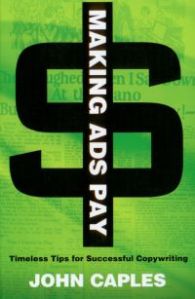
Making Ads Pay: Timeless Tips for Successful Copywriting
by John Caples (1900-1990)

John Caples was a pioneer of direct-response copywriting.  In Chapter 8 he presents as series of paired ads which were tested, followed by analysis of why the winning ads outperformed.  The winner often outperformed the other by a wide margin—up to five times as many responses.

Continue reading “Making Ads Pay: Timeless Tips for Successful Copywriting”

Elmore Leonard’s 10 Rules of Writing

elmore-leonards-10-rules-of-writing


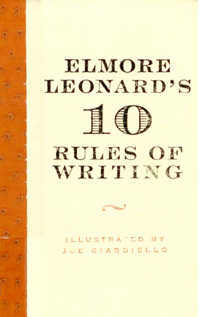
Elmore Leonard’s 10 Rules of Writing

Elmore Leonard’s 10 Rules of Writing offers good advice about writing fiction, although the implicit theme pertains to any writing. Essentially, don’t let your writing style distract from what you are trying to say.

My favorite tip is #10: “Try to leave out the part that readers tend to skip.”

Continue reading “Elmore Leonard’s 10 Rules of Writing”

Break From the Pack: How to Compete in a Copycat Economy

break-from-the-pack


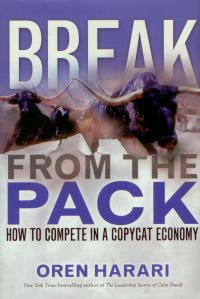
Break From the Pack: How to Compete in a Copycat Economy
by Oren Harari

Break-from-the-pack companies are analogous to the small cluster of runners at the front of a marathon. The Copycat Economy is analogous to the majority of runners who lag behind. In the words of former IBM CEO Sam Palmisano, “Either you innovate or you’re in commodity hell. If you do what everybody else does, you have a low-margin business.”

Continue reading “Break From the Pack: How to Compete in a Copycat Economy”

Scientific Advertising

scientific-advertising


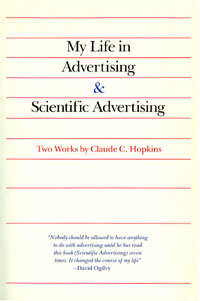
My Life in Advertising and Scientific Advertising
by Claude C. Hopkins (1866-1932)

Claude C. Hopkins was a pioneer in the advertising industry. This volume consists of his two books: Scientific Advertising, written in 1923, and My Life in Advertising, written in 1927. NBC and CBS were founded around the time of Hopkins’ retirement, so his work predated the broadcasting era. The media of his time were newspapers, magazines, and direct mail.

“Salesmanship-in-print is exactly the same as salesmanship-in-person.” If the purpose of advertising is to sell, then its effectiveness can be measured by resulting sales volume. Hopkins tested ads on a small scale before risking money on a large-scale campaign. He also compared results using different headlines in order to discover the best performing approach.

Continue reading “Scientific Advertising”