WCVB-TV Boston: How We Built the Greatest Television Station in America


WCVB-TV Boston: How We Built the Greatest Television Station in America
by Robert M. Bennett (1927-2016)

In this memoir, the highlight of television executive Bob Bennett’s career was launching and growing WCVB-TV, Channel 5 in Boston. A major theme is his commitment to locally-produced programming. Another theme is Bennett’s leadership style, whereby he encouraged new ideas and risk-taking from his lieutenants, and inspired a sense of pride which brought out the best in people at all levels of the organization. It’s also a high-risk, high-reward story that could have turned out very differently.

The book is comprised of Bennett’s recollections interspersed with commentary from former colleagues.

Continue reading “WCVB-TV Boston: How We Built the Greatest Television Station in America”

Every Life a Story: Natalie Jacobson Reporting


Every Life a Story: Natalie Jacobson Reporting
by Natalie Jacobson

Natalie Jacobson was a household name in greater Boston, with a 35-year career as a reporter and news anchor at WCVB, channel 5. For two decades the husband-and-wife team of “Chet and Nat” anchored the 6:00pm and 11:00pm weekday newscasts. This memoir includes stories of her personal life, career, colleagues, significant news events she covered, and some of the people she met. She also shares her views on the decay of broadcast journalism.

Continue reading “Every Life a Story: Natalie Jacobson Reporting”

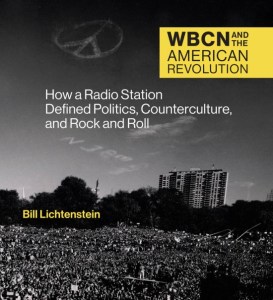
WBCN and the American Revolution


WBCN and the American Revolution: How a Radio Station Defined Politics, Counterculture, and Rock and Roll
by Bill Lichtenstein  

WBCN was a Boston rock and roll radio station from 1968 to 2009. It was instrumental (pun intended) in launching the careers of major bands. It was also part of the social fabric of the Boston college scene. This book and a companion video documentary tell the story of the early years of the station in the context of the era.

Continue reading “WBCN and the American Revolution”

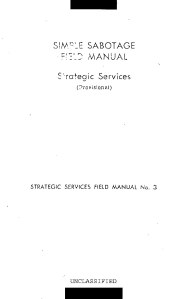
Simple Sabotage Field Manual


Simple Sabotage Field Manual
Office of Strategic Services
William J. Donovan, Director (1883-1959)

The Office of Strategic Services (OSS) was the predecessor of the Central Intelligence Agency (CIA), operating during World War II. This 32-page manual instructs OSS officers on numerous ways citizen-saboteurs can be trained to gum up the works. “Simple sabotage is more than malicious mischief, and it should always consist of acts whose results will be detrimental to the materials and manpower of the enemy.”

“Simple sabotage does not require specially prepared tools or equipment; it is executed by an ordinary citizen who may or may not act individually and without the necessity for active connection with an organized group; and it is carried out in such a way as to involve a minimum danger of injury, detection, and reprisal… Try to commit acts for which large numbers of people could be responsible.” 

Continue reading “Simple Sabotage Field Manual”

The Death of Expertise


The Death of Expertise: The Campaign against Established Knowledge and Why it Matters
by Tom Nichols

This book is about the erosion of respect for facts, logical analysis, and critical thinking. Uninformed opinions carry the same weight as expert opinions. There is no vetting of dubious sources from credible sources. Beliefs are conflated with facts. It is in this climate that hoaxes, conspiracy theories, fake news, propaganda, and all manner of bullshit thrive. Tom Nichols, professor of national security at US Naval War College, examines this phenomenon and some of the causes, including higher education, technology, and the news media.

Continue reading “The Death of Expertise”

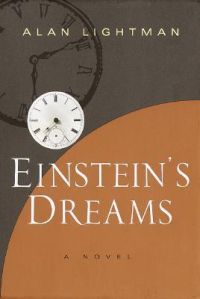
Einstein’s Dreams

einsteins-dreams


Einstein’s Dreams
by Alan P. Lightman

Einstein’s Dreams is historical fiction based on Albert Einstein’s study of the relativity of time, or time dilation.  The book is formatted like a journal of Einstein’s dreams about 30 imaginary worlds where time functions differently. The book was written by Alan Lightman, a physicist and humanities professor at MIT. The author embeds observations on human behavior in  these stories.

Continue reading “Einstein’s Dreams”

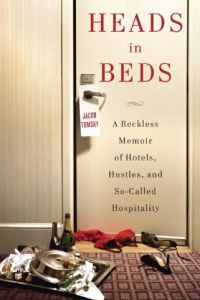
Heads in Beds

heads-in-beds


Heads in Beds: A Reckless Memoir of Hotels, Hustles, and So-Called Hospitality
by Jacob Tomsky

If you travel frequently you might be curious about the inner workings of hotels. The subtitle captures the essence of this book: “a reckless memoir of hotels, hustles, and so-called hospitality.” Jacob Tomsky starts out at a luxury hotel in New Orleans as a valet parking attendant, working his way up to positions of increasing responsibility. Later he moves to New York City and settles in as a front desk agent. He shares many stories about guests and employees, although “to protect the guilty and innocent alike” he has changed the names of the hotels and people he writes about.

Should you feel safe leaving your property unattended in a hotel? Consider the story about Tomsky teaching a coworker how to drive a manual transmission. “We burned the life out of a guest’s clutch teaching Eddie to drive. It smelled like a metal-and-oil barbecue up there.”

Continue reading “Heads in Beds”

Crowdsourcing

crowdsourcing


Crowdsourcing
by Daren C. Brabham

Daren Brabham defines crowdsourcing as “an online, distributed problem-solving and production model that leverages the collective intelligence of online communities to serve specific organizational goal.” He emphasizes that “the locus of control regarding the creative production of goods and ideas exists between the organization and the public, a shared process of bottom-up, open creation by the crowd and top-down management by those charged with serving an organization’s strategic interests.”

Continue reading “Crowdsourcing”