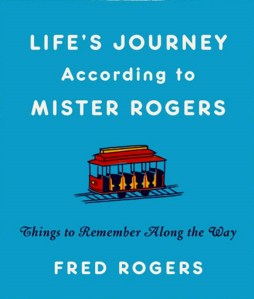
Life’s Journeys According to Mister Rogers: Things to Remember Along the Way by Fred Rogers (1928-2003)
And now a Thanksgiving palette cleanser.
Fred Rogers was the creator and host of the children’s television show Mister Rogers’ Neighborhood from 1968 to 2001. This short book is a posthumously published collection of his writing for adults.
Decisionscape: How Thinking Like an Artist Can Improve Our Decision-Making by Elspeth Kirkman
“Knowingly or not, we often draw on the logic of pictorial space as a metaphor for our decisions. We use phrases like getting things in perspective or blowing them out of proportion… And we implore one another to zoom out or see the big picture.”
Elspeth Kirkman is a behavioral scientist who uses the analogy of art making to explain the psychology of decision making. “I call this mental representation the decisionscape… The central idea of this book is that we could improve our decisions, whether personal or professional, by constructing and analyzing it deliberately, just as an artist approaches the canvas.”
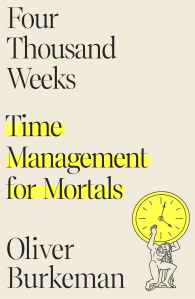
Four Thousand Weeks: Time Management for Mortals by Oliver Burkeman
We live in an era where appliances and software supposedly make our lives easier. “Yet, paradoxically, you only feel busier, more anxious… And becoming ‘more productive’ just seems to cause the belt to speed up.”
We all have a finite amount of time in our lives—in the neighborhood of 4,000 weeks, assuming an 80-year lifespan and rounding to 50 weeks per year. “Our limited time… what Heidegger calls our ‘finitude’… isn’t just one among various things we have to cope with; rather, it’s the thing that defines us, as humans.”
“The world is bursting with wonder, and yet it’s the rare productivity guru who seems to have considered the possibility that the ultimate point of all our frenetic doing might be to experience more of that wonder.”
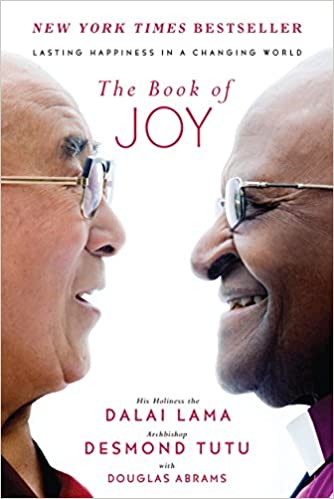
The Book of Joy: Lasting Happiness in a Changing World by the Dalai Lama and Desmond Tutu with Douglas Abrams
To celebrate the Dalai Lama’s 80th birthday, Archbishop Desmond Tutu spent five days in Dharamsala, India discussing the theme of joy with his friend. “Together they explored how we can transform joy from an ephemeral state into an enduring trait, from a fleeting feeling into a lasting way of being.”
What really comes through in this book is that these two have a fun and authentic rapport. The discussion was facilitated by their co-author Douglas Abrams and Thupten Jinpa, who translates for the Dalai Lama when needed.
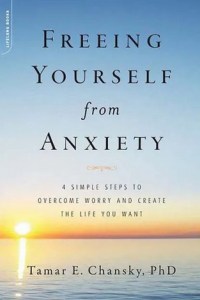
Freeing Yourself from Anxiety: 4 Simple Steps to Overcome Worry and Create the Life You Want by Tamar E. Chansky, Ph.D.
2020 has been a mentally-draining year. In this 287-page book, psychologist Tamar Chansky explains why our minds get overwhelmed with worry and she offers advice on how to deal with it. Here are some highlights.
Anxiety is “the first-reaction of a sensitive system that is wired to keep us alert to danger and protected from harm… But today, with our best interests in mind, anxiety sometimes makes mistakes, overshooting… grabbing your attention from what you need to focus on and insisting that you instead grapple with worst-case scenarios.”
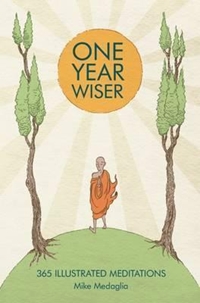
One Year Wiser: 365 Illustrated Meditations by Mike Medaglia
This book provides an illustrated thought to ponder for each day of the year. Each page features words of wisdom from a writer, poet, scientist, spiritual leader, or other historical figure. Pages are labeled January 1 through December 31, without a year so the book can be referred to indefinitely. Below are some sample quotes and illustrations.
“And the day came when the risk to remain tight in a bud was more painful than the risk it took to blossom.” – Anaïs Nin
“Reality is like a face reflected in the blade of a knife; its properties depend on the angle from which we view it.” – Master Hsing Yun
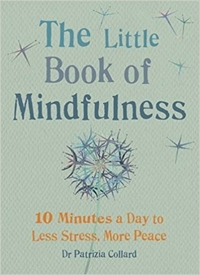
The Little Book of Mindfulness: 10 Minutes a Day to Less Stress, More Peace by Dr. Patrizia Collard
Dr. Patrizia Collard is a psychotherapist, stress management consultant, and lecturer at the University of East London. She writes, “The goal of any mindfulness practice is simply to experience life as it unfolds. To stay present and calm and not slip back into thinking/worrying mode, we choose an anchor of awareness—a point of focus we direct our mind to.”
“Mindfulness is being aware of or bringing attention to this moment in time deliberately and without judging the experience. So, when we go for a mindful walk we really notice every little detail and all we encounter—trees, cars, flowers growing out of small cracks, or a cat crossing the road—rather than creating to-do lists.”
“When we procrastinate and distract ourselves with ‘busyness,’ we avoid engaging with the real thing—our lives… Living in the moment, and seeing everything afresh without judgment and worry lets us experience life rather than simply get through it.”
Happiness: A Guide to Developing Life’s Most Important Skill by Matthieu Ricard
Matthieu Ricard gave up a career in cellular genetics at the Institut Pasteur to study Buddhism in the Himalayas. In this book he shares his wisdom about happiness drawing from thirty-five years of studying Buddhism and psychology.
“A change, even a tiny one, in the way we manage our thoughts and perceive and interpret the world can significantly change our existence. Changing the way we experience transitory emotions leads to a change in our moods and to a lasting transformation of our way of being.”
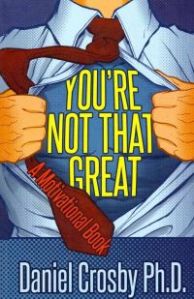
Psychologist Daniel Crosby tells it like it is in this book about the numerous ways human nature can work against us, not the least of which is egoistic self-absorption (solipsism).
“The biggest finding to emerge from the self-esteem movement was that praise did not predict self-esteem, accomplishment did… Many of the theories about self-esteem that had impacted policy were simply junk science.”
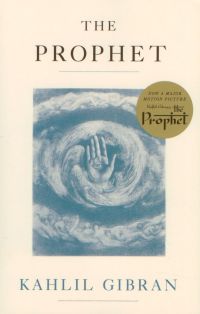
The Prophet offers wisdom on 26 topics—about three pages on each. Gibran writes in poetic prose with a liberal use of archaic words, presumably to sound biblical. Some of the meaning is immediately clear, while other parts require some reflection to decipher the deeper meaning.
On Work. The author stresses the importance of finding work you enjoy. “For if you bake bread with indifference, you bake a bitter bread that feeds but half man’s hunger. And if you grudge the crushing of the grapes, your grudge distils a poison in the wine.”
On Marriage. Gibran observes that marriage is a union between individuals, not a merger. “Let there be spaces in your togetherness, and let the winds of the heavens dance between you… The oak tree and the cypress grow not in each other’s shadow.”

 The Key Point