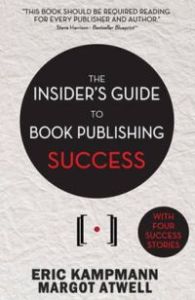
The Insider’s Guide to Book Publishing Success

the-insiders-guide-to-publishing-success


The Insider’s Guide to Book Publishing Success
by Eric Kampmann and Margot Atwell

This book provides insights in to the steps, risks, and numerous decisions involved in publishing a book. There are chapters covering an overview of the publishing industry, the manuscript, production, sales and distribution, marketing and PR, rights, and finance. The final four chapters are short success stories.

“No book should be printed without the advice and assistance of a good editor.” The authors also emphasize the importance of cover copy. “Don’t let the design get in the way or presenting the sales points.”

Continue reading “The Insider’s Guide to Book Publishing Success”
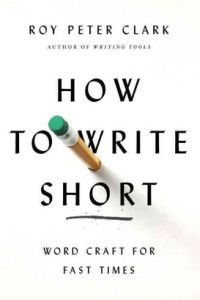
How to Write Short

how-to-write-short


How to Write Short: Word Craft for Fast Times
by Roy Peter Clark

“A time-starved culture bloated with information hungers for the lean, clean, simple, and direct… Think of how grateful you are as a listener when the graduation speaker, no matter how powerful, delivers the goods in ten minutes rather than twenty, or, even better, five minutes rather than ten.”

Continue reading “How to Write Short”

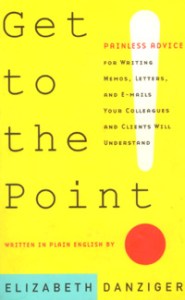
Get to the Point

get-to-the-point-danziger


Get to the Point: Painless advice for writing memos, letters, and e-mails your colleagues and clients will understand
by Elizabeth Danziger

Elizabeth Danziger’s advice on using clear, clutter-free language is consistent with the classic On Writing Well by William Zinsser, but this book is more useful as manual, whereas Zinsser’s book is more conceptual.

When is it appropriate to use which or that? The author provides an informal “just do it” rule and a formal “grammar police” rule.

Continue reading “Get to the Point”

How to Write an Inspired Creative Brief

how-to-write-an-inspired-creative-brief


How to Write an Inspired Creative Brief
by Howard Ibach

In an advertising agency, a creative brief is a set of instructions for the creative team, providing a clear understanding of the communication objectives and expected deliverables.  “If you get the brief wrong, the creative work you see at the end of the process, when your team presents it, will also be wrong.” Garbage in, garbage out.

Continue reading “How to Write an Inspired Creative Brief”

Elmore Leonard’s 10 Rules of Writing

elmore-leonards-10-rules-of-writing


Elmore Leonard’s 10 Rules of Writing

Elmore Leonard’s 10 Rules of Writing offers good advice about writing fiction, although the implicit theme pertains to any writing. Essentially, don’t let your writing style distract from what you are trying to say.

My favorite tip is #10: “Try to leave out the part that readers tend to skip.”

Continue reading “Elmore Leonard’s 10 Rules of Writing”

Words That Work


Words That Work: It’s not what you say, it’s what people hear
By Dr. Frank Luntz

Frank Luntz is a communication strategist for corporate and political clients. Although he’s done a lot of work for Republicans (including the Contract with America) this is not a book about political ideology. It’s about persuasive communication in political campaigns, product marketing, and labor disputes.

Words that work do not happen by chance. Luntz uses market research techniques (polls, focus groups, dial sessions) to test how audiences respond.

Continue reading “Words That Work”

Lapsing Into a Comma


Lapsing Into a Comma: A Curmudgeon’s Guide to the Many Things That Can Go Wrong in Print—and How to Avoid Them
by Bill Walsh

The Internet and print-on-demand technology have enabled almost everyone to become a publisher. In traditional media, professional journalists and authors have their writing cleaned up by copy editors before it is published. The average blogger does not have this luxury.  In Lapsing Into a Comma, Bill Walsh shares his advice on how to handle many common problems that he has encountered as copy editor of the business section at the Washington Post.

Continue reading “Lapsing Into a Comma”