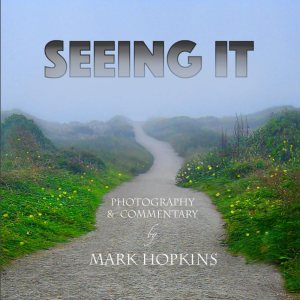
Seeing It: Photography and Commentary


Seeing It: Photography and Commentary
by Mark Hopkins

As art professor Kit White has written, “Observation lies at the heart of the art process.” Learning to see is a fundamental skill taught in observational drawing classes. It’s also fundamental to fine art photography, as Mark Hopkins explains. The title Seeing It refers to being curious and looking beyond the obvious.

“Cameras do not see; that is the task of their owners. And seeing is what this book is about. In particular, it is about seeing opportunities to create worthy photographic images. It is meant to be inspirational, to show how one camera owner’s concentration on visual awareness has created a collection of photographs whose images others might have walked right past.”

“It is about seeing what you see. If by the end of the book you have a better appreciation of what I mean by that, then I will have fulfilled my goal.”

Continue reading “Seeing It: Photography and Commentary”

Art Can Help


Art Can Help
by Robert Adams

Robert Adams, a photographer of the American West for over 50 years, writes about the art of photography. Before commenting on the works of 27 photographers, he shares his views on art in general, and he examines the work of his favorite painter, Edward Hopper.

“It is the responsibility of artists to pay attention to the world, pleasant or otherwise, and to help us live respectfully in it.  Artists do this by keeping their curiosity and moral sense alive, and by sharing with us their gift for metaphor. Often this means finding similarities between observable fact and inner experience.” 

Continue reading “Art Can Help”

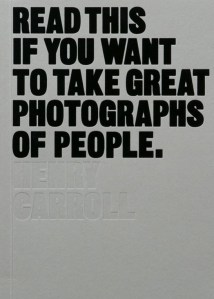
Read This If You Want to Take Great Photographs of People


Read This If You Want to Take Great Photographs of People
by Henry Carroll

“Don’t take pictures of people. Take pictures about people.”

Carroll explains the rules of thumb for a traditional portrait, but the book is mainly about moving beyond that.  “Don’t suppress your subject’s physical nuances. This is what makes them who they are. There are rules in portraiture about how your subjects should stand, what they should do with their hands, and so on. These rules are fine for corporate headshots, because they’re designed to remove any trace of a person’s individuality. But that’s not what we’re about, right?” 

Continue reading “Read This If You Want to Take Great Photographs of People”