How to Read Numbers: A Guide to Stats in the News (and Knowing When to Trust Them) by Tom Chivers and David Chivers
News stories often cite misleading statistics. This book seeks to inform news consumers how to critically examine the claims. It also includes a “statistical style guide” to help journalists report numbers more responsibly.
Agency: The Four Point Plan (F.R.E.E.) for All Children to Overcome the Victimhood Narrative and Discover Their Pathway to Power by Ian V. Rowe
Neil Postman posed this question about public schools: “What kind of public does it create?” Ian Rowe addresses that pertinent question, arguing they are doing a disservice both to students and society, and offers a vision for getting back on track.
The author’s background will provide some context. Rowe immigrated to the United States from Jamaica with his parents and brother in 1968. He attended public schools in New York City, then earned an engineering degree from Cornell and an MBA from Harvard Business School. He worked on postsecondary education philanthropy at the Bill and Melinda Gates Foundation and was an executive in charge of public service campaigns for MTV. He then served as CEO of charter elementary schools in the South Bronx for 10 years before cofounding Vertex Partnership Academies charter high schools.
WHAT IS AGENCY? “My short definition is that it is the force of your free will guided by moral discernment. It is the force that closes the delta between… what is and what ought to be. It is the conviction that we are active players in our own story… Agency is learning to see ourselves not as victims of our circumstances, but rather as architects of our own better futures, and to do so even in the face of real obstacles.”
“However—and this is key—no human being acts alone. Agency is individually practiced, yet socially empowered.”
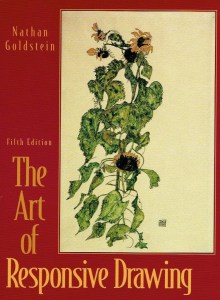
The Art of Responsive Drawing by Nathan Goldstein (1927-2013)
I was prompted to read this book after a discussion with an art professor about what makes a work of art compelling. I commented that spontaneous gesture drawings can capture an intangible quality—energy, attitude, spirit—that is often lost in more technically resolved drawings and paintings. How does an artist preserve the initial spark of interest in a more complete work?
Nathan Goldstein writes about the expressive character of a drawing—that is to say, its psychological appeal grounded by the fundamentals of representational drawing: gesture, shape, line, value, perspective and foreshortening, volume, color, and composition.
“The best drawings always disclose a blend of facts and feelings, and to displace intuition and empathy with a dry intellectual examination of a subject’s structural condition upsets the necessary and delicate balance between discipline and indulgence that gives master drawings their individual character and spirit.”
Back from the Brink: Inside the NYPD and New York City’s Extraordinary 1990s Crime Drop by Peter Moskos
I have previously read Commissioner Bratton’s memoir Turnaround on the dramatic reduction in crime during the 1990s in New York City. Back from the Brink features many more perspectives on the subject. Criminal justice professor Peter Moskos interviewed 50 people at various levels of law enforcement and beyond. Besides these primary sources, the author’s extensive research includes a nine-page bibliography of secondary sources.
This book makes it evident that while superior management of the police department played a central role in crime reduction, this did not happen in a vacuum. There was support from politicians, prosecutors, the Bryant Park and Times Square business improvement districts, the leadership of Port Authority bus terminal, and FBI/NYPD task forces—all working toward a common goal making the city safer.
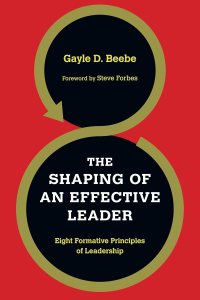
The Shaping of an Effective Leader: Eight Formative Principles of Leadership by Gayle D. Beebe
Westmont College president Gayle Beebe presents his eight principles of effective leadership and weaves in the wisdom of Peter Drucker, under whom he studied. The eight principles are character, competence, chemistry, culture, compatibility, convictions, connections, and commitment.
“Character is the foundation of all leadership responsibilities for all our life.” However, “without threshold competencies, even the most well-meaning individual can do real harm.”
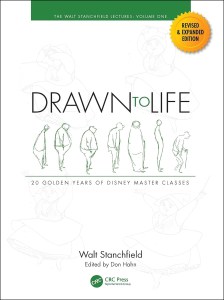
Drawn to Life: 20 Golden Years of Disney Master Classes by Walt Stanchfield (1919-2000). Edited by Don Hahn.
Walt Stanchfield began his animation career in 1937. In the 1980s and 90s he taught figure drawing classes for animators at Disney on Tuesday and Wednesday evenings. Disney producer Don Hahn compiled Stanchfield’s lecture notes and handouts into two volumes. The highlights below from Volume One capture some recurring themes.
The book includes drawings from Stanchfield and his students. This review includes more recent drawings by Brian Kennon, a former Disney artist who attended Stanchfield’s classes in the 1990s.
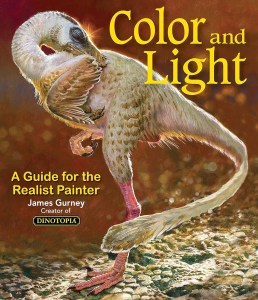
Color and Light: A Guide for the Realist Painter by James Gurney
James Gurney has a talent for explaining complicated topics in simple language. Each of 90 topics is explained on a 2-page spread, illustrated with the author’s plein air, portrait, and fantasy paintings—he is the creator of the Dinotopia series. Color harmony is a recurring theme.
“Viewers will see the subject, but feel the color and light.”
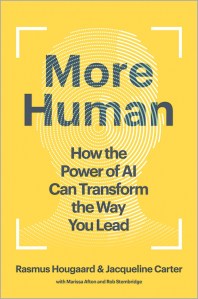
More Human: How the Power of AI Can Transform the Way You Lead by Rasmus Hougaard and Jacqueline Carter
“More human means leveraging AI to unlock the best of our humanity and, simultaneously, to help us overcome some of our limitations. This is the art of the toggle, where we skillfully navigate getting the best of both human capabilities and AI. In this way, we can develop ourselves as better human leaders and thereby create better and more-human workplaces.”
The authors quote Tim Cook, CEO of Apple: “I’m not worried about artificial intelligence giving computers the ability to think like humans. I’m more concerned about people thinking like computers, without values or compassion, without concern for consequence.”
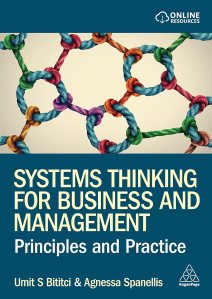
Systems Thinking for Business and Management by Umit S. Bititci and Agnessa Spanellis
Organizations, markets, and economies are systems, analogous to ecosystems. This clearly-written, 278-page textbook written by professors from Edinburgh Business School and the University of Edinburgh introduces key concepts in systems thinking, including methods for modeling them and analyzing their behavior.
It is said that the purpose of higher education is to teach students to think. In this spirit, I believe future decisionmakers and policymakers would be well served by a course in systems thinking. I think every business school should include this subject in its curriculum.
“To understand the real value of systems thinking, we need to recognize that nothing in this world exists in isolation and that everything is connected to something else. Everything is affected by something and potentially affects something else. With systems thinking, one can begin to understand, explain, and predict why complex systems such as organizations, people, and societies behave the way they do.”
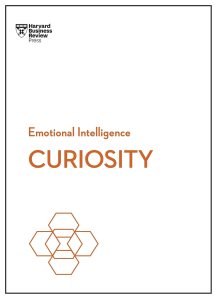
Suffice it to say, I was curious about this anthology of 11 short articles about curiosity. Topics include creativity and exploration, managing complexity, professional relationships, listening, and corporate culture.
 The Key Point