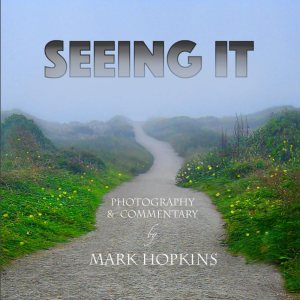
Seeing It: Photography and Commentary


Seeing It: Photography and Commentary
by Mark Hopkins

As art professor Kit White has written, “Observation lies at the heart of the art process.” Learning to see is a fundamental skill taught in observational drawing classes. It’s also fundamental to fine art photography, as Mark Hopkins explains. The title Seeing It refers to being curious and looking beyond the obvious.

“Cameras do not see; that is the task of their owners. And seeing is what this book is about. In particular, it is about seeing opportunities to create worthy photographic images. It is meant to be inspirational, to show how one camera owner’s concentration on visual awareness has created a collection of photographs whose images others might have walked right past.”

“It is about seeing what you see. If by the end of the book you have a better appreciation of what I mean by that, then I will have fulfilled my goal.”

Continue reading “Seeing It: Photography and Commentary”
Visual Intelligence: Sharpen Your Perception


Visual Intelligence: Sharpen Your Perception, Change Your Life
by Amy E. Herman

“Leonardo da Vinci attributed all of his scientific and artistic accomplishments to the same concept, which he called saper vedere—‘knowing how to see.’ We might also call his gift ‘visual intelligence.’”

Amy Herman, who has degrees in law and art history, teaches a course called the Art of Perception to police officers and FBI agents. The book is about how to assess, analyze, and articulate what we observe. To practice these skills, the author presents numerous works of art. She also discusses real-life crime and business cases.

Continue reading “Visual Intelligence: Sharpen Your Perception”

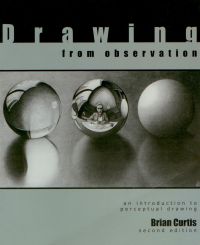
Drawing From Observation

drawing-from-observation


Drawing From Observation
by Brian Curtis

This is a highly informative book about observational drawing. One of the recurring themes is the distinction between what you see (percepts) and what you know (concepts). “There is meaningful conflict between what is perceived (convergence of parallel tracks) and our traditional rational understanding (Euclid’s theorem that parallel lines never meet)… To prevent your concepts from distorting your perceptions you must record the proportion you see, not the proportion you know.”

Continue reading “Drawing From Observation”