Back from the Brink: Inside the NYPD and New York City’s Extraordinary 1990s Crime Drop


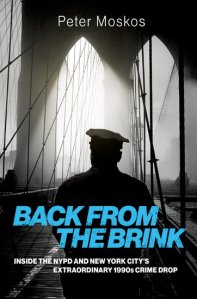
Back from the Brink: Inside the NYPD and New York City’s Extraordinary 1990s Crime Drop
by Peter Moskos

I have previously read Commissioner Bratton’s memoir Turnaround on the dramatic reduction in crime during the 1990s in New York City. Back from the Brink features many more perspectives on the subject. Criminal justice professor Peter Moskos interviewed 50 people at various levels of law enforcement and beyond. Besides these primary sources, the author’s extensive research includes a nine-page bibliography of secondary sources.

This book makes it evident that while superior management of the police department played a central role in crime reduction, this did not happen in a vacuum. There was support from politicians, prosecutors, the Bryant Park and Times Square business improvement districts, the leadership of Port Authority bus terminal, and FBI/NYPD task forces—all working toward a common goal making the city safer.

Continue reading “Back from the Brink: Inside the NYPD and New York City’s Extraordinary 1990s Crime Drop”

The Autobiography of Calvin Coolidge


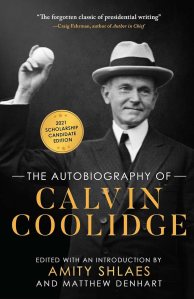
The Autobiography of Calvin Coolidge
by Calvin Coolidge (1872-1933) with introduction and footnotes by Amity Shlaes and Matthew Denhart

Calvin Coolidge became the 30th president of the United States on August 3, 1923 upon the death of President Warren G. Harding. He ran for reelection in 1924 and served one full term of his own. He did not seek reelection in 1928. To give some context of his time, Coolidge was the first president whose inauguration address was broadcast nationwide on the radio, and he was the first president to make a transatlantic telephone call.

Continue reading “The Autobiography of Calvin Coolidge”

Mansfield and Dirksen: Bipartisan Giants of the Senate


Mansfield and Dirksen: Bipartisan Giants of the Senate
by Marc C. Johnson 

In contrast to today’s polarized politics, the US Senate of the 1960s functioned with a great deal more civility and bipartisan cooperation, despite deep political divisions. This book is both a history lesson and a study in the leadership styles majority leader Michael Mansfield (Democrat) and minority leader Everett Dirksen (Republican).

Continue reading “Mansfield and Dirksen: Bipartisan Giants of the Senate”

A Full Life: Reflections at 90


A Full Life: Reflections at 90
by Jimmy Carter (1924-2024)

Jimmy Carter was born on October 1, 1924 and was elected the 39th president of the United States in 1976. The world has changed a lot in the 100 years since Carter grew up in the segregated south. At the same time, many of the issues he writes about sound quite familiar, such as inflation, contested elections, and conflict in the Middle East.

I was surprised by Carter’s emphasis on fiscal discipline—something we haven’t seen in recent administrations. (At the end of the Carter administration, the national debt to GDP ratio was 32%. In 2022 it was 123%.) What also stands out is Carter’s cooperative relationships with presidents Gerald Ford and George H.W. Bush, in stark contrast to more recent polarization.

Continue reading “A Full Life: Reflections at 90”

Modern Police Firearms (1969)


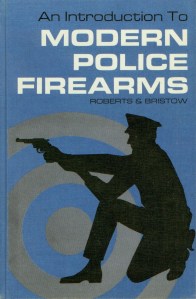
An Introduction to Modern Police Firearms
by Duke Roberts and Allen P. Bristow    

I purchased this textbook for 50 cents at a college library book sale. The distinctive smell of a vintage library book adds to the nostalgic appeal. The book was published in 1969 during the Adam-12 era. This was about 20 years before American police departments made the switch from revolvers to semiautomatic pistols, although the book covers both. There is a chapter on the police shotgun, but nothing about rifles. Other topics include safety, maintenance, ballistics, marksmanship, chemical agents, the legal and ethical use of firearms, and sample Use of Deadly Force policies.

Continue reading “Modern Police Firearms (1969)”

The Profession


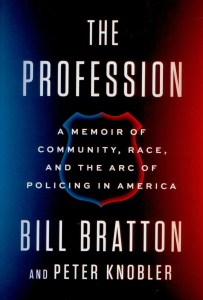
The Profession: a Memoir of Community, Race, and the Arc of Policing in America
by Bill Bratton with Peter Knobler   

Bill Bratton was sworn in as a Boston police officer in 1970 and rose to become chief or commissioner of six major police departments in three different states. He deserves a lot of credit for dramatically reducing crime, most notably as New York City Transit Police chief in the early 1990s and as commissioner of the NYPD in the mid-1990s.

Chapters two through six cover Bratton’s career through his first stint as NYPD commissioner until his falling out with Mayor Giuliani—basically a retelling of Bratton’s first book, Turnaround. Chapter seven covers his years as chief of LAPD; the writers were sloppy with the details in this chapter. Chapter eight is about Bratton’s second turn as NYPD commissioner under Mayor de Blasio.

The remainder of the book deals with contemporary issues related to race, implicit bias, terrorism, and the defund-the-police movement. I imagine Bratton wrote this book out of frustration with the anti-police climate and the resulting unraveling of 25+ years of crime reduction. It is extremely informative and he offers a valuable perspective. I read all 476 pages with great interest.

Continue reading “The Profession”

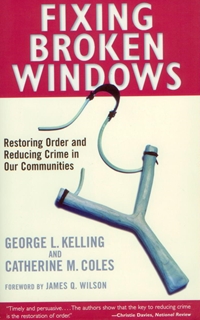
Fixing Broken Windows: Restoring Order and Reducing Crime in Our Communities


Fixing Broken Windows: Restoring Order and Reducing Crime in Our Communities
by George L. Kelling and Catherine M. Coles

The origin of broken windows theory was an article in the March 1982 edition of The Atlantic by George L. Kelling and James Q. Wilson about the link between disorder and serious crime. The term comes from an analogy: “Social psychologists and police officers tend to agree that if a window in a building is broken and is left unrepaired, all the rest of the windows will soon be broken. This is as true in nice neighborhoods as in rundown ones… One unrepaired broken window is a signal that no one cares.”

Continue reading “Fixing Broken Windows: Restoring Order and Reducing Crime in Our Communities”

The Death of Expertise


The Death of Expertise: The Campaign against Established Knowledge and Why it Matters
by Tom Nichols

This book is about the erosion of respect for facts, logical analysis, and critical thinking. Uninformed opinions carry the same weight as expert opinions. There is no vetting of dubious sources from credible sources. Beliefs are conflated with facts. It is in this climate that hoaxes, conspiracy theories, fake news, propaganda, and all manner of bullshit thrive. Tom Nichols, professor of national security at US Naval War College, examines this phenomenon and some of the causes, including higher education, technology, and the news media.

Continue reading “The Death of Expertise”

Affordable Excellence: The Singapore Healthcare Story


Affordable Excellence: The Singapore Healthcare Story
by William A. Haseltine

The Singapore healthcare system produces world-class outcomes at half the cost of Western European countries and less than one-fourth the cost of the United States: Singapore spends 4% of GDP on healthcare; the United States spends 18%.  The World Health Organization ranked Singapore 6th in overall performance; the United States ranked 37th. (See page 200, The World Health Report 2000.)

Looking at costs of specific procedures, ”an angioplasty in the United States is almost $83,000, while in Singapore the cost is about $13,000. A gastric bypass in the United States is almost $70,000, while in Singapore the cost is $15,000. (These figures are in US dollars and include at least one day of hospitalization).”

This book explains how the system works.

Continue reading “Affordable Excellence: The Singapore Healthcare Story”

Healthy Competition


Healthy Competition: What’s Holding Back Health Care and How to Free It
by Michael F. Cannon and Michael D. Tanner

Healthy Competition was published in 2005, but I pulled it off my shelf and reread it in early 2017, in the midst of the discourse about how to “repeal and replace” the Affordable Care Act (ACA, also known as Obamacare). Both the ACA and the proposed replacement focus on insurance, ignoring the exorbitant cost of health care in the United States. In this book, Cato Institute scholars Michael Cannon and Michael Tanner examine how the basic economic principles of price transparency, competition, and consumer choice could lower costs, reduce waste, and increase quality of care.

Continue reading “Healthy Competition”