Vision and Art: The Biology of Seeing by Margaret Livingstone
Unexpectedly, the most fascinating art book I’ve ever read is written by a Harvard Medical School professor of neurophysiology. “This book is about vision—the process of receiving and interpreting light reflected from objects—and what art reveals about how we see.”
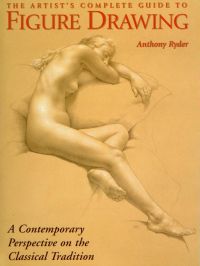
The Artist’s Complete Guide to Figure Drawing: A Contemporary Perspective on the Classical Tradition by Anthony Ryder
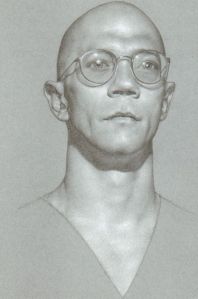
Anthony Ryder presents a thorough and meticulous process for drawing the human figure. This is definitely not a quick sketch approach. “On average, I put in about twelve three-hour sessions for each finished drawing.” Ryder works with either pencil on white paper or pencil and white charcoal on toned paper.
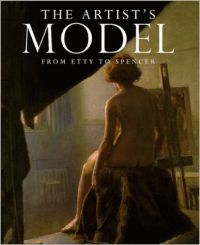
The Artist’s Model: From Etty to Spencer by Martin Postle and William Vaughan
This book is a catalog of figurative artwork produced in Britain from the mid-1800s to the early-1900s, published in conjunction with an exhibition held in 1999. The works, featuring nude and clothed figures, range from anatomical studies to finished drawings and paintings, as well as a few photographs and sculptures. In addition to the artwork, there are four interesting chapters about artists, models, and attitudes of this period. Extensive captions provide additional insights about particular artists and models. A sampling of the artwork follows this review.
A Painter’s Progress: A Portrait of Lucian Freud by David Dawson
A Painter’s Progress is a collection of 241 behind-the-scenes photographs taken by David Dawson, who was Lucian Freud’s assistant for nearly twenty years. Many of the photos taken in Freud’s studio include nude models, portrait sitters, and his whippets, Pluto and Eli. There are photos documenting several iterations of works in progress. Other photos include Freud viewing artwork in museums, meeting prominent people, having breakfast, and relaxing at home. There are also photos showing Freud’s posthumous exhibition being installed at the National Portrait Gallery in London.
The messy walls are a quirky feature of Freud’s studio.
Michael J. Pearce is an art professor who experienced a light bulb moment when he attended a talk in the philosophy department on the topic of emergence by guest speaker Philip Clayton. “Emergence, which describes the characteristics of forms that come out of complex systems, could apply especially well to how we experience art, how we understand aesthetics in relation to our evolving mind, and how we understand the creative process of making representational art… I suddenly realized that considering the relationship between emergence and consciousness could lead to a description of what distinguishes art objects from other things as we perceive them through our senses. Emergence allows us to define art!”
This book presents an interesting framework for thinking about art, although it is written in a dense academic style.
Art and Courage: Stories to Inspire the Artist-Warrior Within by John Paul Thornton
John Paul Thornton asks, “How will you impact the world?” While the book is not entirely autobiographical, the chapter about the author’s own paintings of missing children is the most powerful part of Art and Courage.
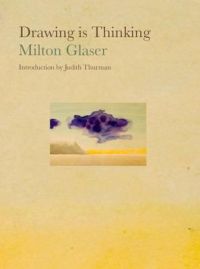
This book starts out with a 13-page interview with Milton Glaser by Peter Mayer followed by 188 pages of Glaser’s art.
A recurring theme in the short text is ambiguity. “I have always been aware of the need to provoke the mind when communicating ideas because that is the only way that you prod someone into understanding anything. That is why ambiguity is such a useful tool… Why are we unmoved by many of the skills of academic painting? Because their information is complete and unambiguous, so you have nothing to add. The philosophy of modernism suggests that the viewer completes the work.”
Milton Glaser is best known as the graphic designer who created the I Love NY logo in 1975. He has also designed and illustrated album covers, book jackets, advertisements, posters, magazines and newspapers, and architectural interiors.
My Life as a Street Painter in Florence, Italy by Kelly Borsheim
American sculptor Kelly Borsheim is living her dream, working as an artist in Florence, Italy (or Firenze as the city is called in Italian). She first visited Florence to see the marble sculptures of Michelangelo in person. Once there, she discovered the world of the Madonnari, meaning street painters. (Madonnaro is masculine singular. Madonnara is feminine singular.)
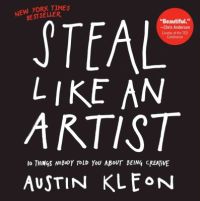
Steal Like an Artist: 10 Things Nobody Told You About Being Creative by Austin Kleon
Austin Kleon writes, “All advice in autobiographical… This book is me talking to a previous version of myself… These ideas apply to anyone who’s trying to inject some creativity into their life and their work. (That should describe all of us.)” The book is thoughtfully written and designed in a creative six-inch by six-inch format.
The idea behind stealing like an artist is that “nothing is completely original… All creative work builds on what came before… If we’re free from the burden of trying to be completely original, we can stop trying to make something out of nothing, and we can embrace influence instead of running away from it.”





 The Key Point