The Lost Art of General Management

the-lost-art-of-general-mgmt

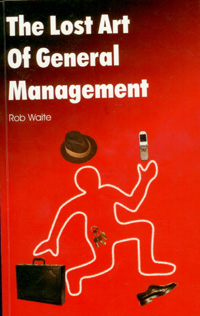
The Lost Art of General Management

by Rob Waite

In The Lost Art of General Management, Rob Waite shares practical insights from his career as a hands-on general manager for various building materials manufacturers in the U.S., Canada, Latin America, and Europe.  Like a good executive communicator, he gets straight to the point.

Waite contends today’s managers have become functionally myopic. A general manager needs to take a broader view, while understanding how the company makes its money and how its customers make money.

Continue reading “The Lost Art of General Management”
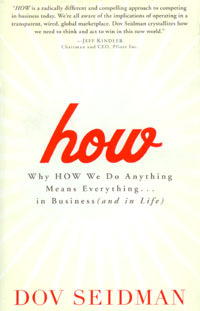
How: Why How We Do Anything Means Everything…in Business (and in Life)

how


How: Why How We Do Anything Means Everything…in Business (and in Life)
by Dov Seidman

The book is about ethics and reputation, value-based cultures vs. rule-based cultures, and as the author likes to say, “getting your hows right.” There are some valuable messages in the book.

Continue reading “How: Why How We Do Anything Means Everything…in Business (and in Life)”

Management Rewired

management-rewired


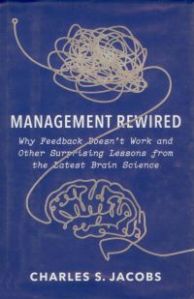
Management Rewired: Why feedback doesn’t work and other surprising lessons from the latest brain science
by Charles S. Jacobs

This book is applies neuroscience research to the field of management.

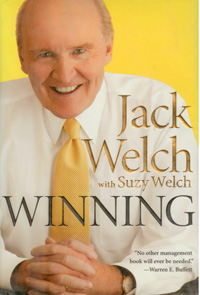
The trend in business has been toward making data-driven decisions, but Charles Jacobs explains why using only the logical side of our brain would lead to myopic decisions.  Fortunately, the prefrontal cortex is connected to the amygdala, the portion of the brain which deals with emotion and memory, and this helps us make judgments based on previous experience.   This reminded me of what Jack Welch has written about managing from the gut, which Welch says is basically pattern recognition.

Continue reading “Management Rewired”

The Toyota Way

the-toyota-way


The Toyota Way
by Jeffrey Liker

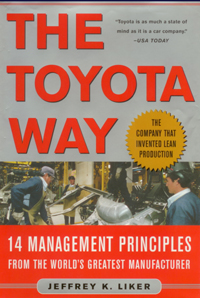
The Toyota Way provides an excellent introduction of the Toyota Production System and insights into the company culture.

Toyota is the leader of lean production. In contrast to batch and queue systems, lean focuses on one-piece flow. The customer is the next process and the ideal batch size is one, so the source of defects can be discovered before thousands of defective parts are made.

Continue reading “The Toyota Way”

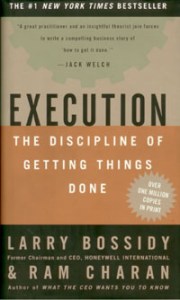
Execution

execution-the-discipline-of-getting-things-done


Execution: The Discipline of Getting Things Done
by Larry Bossidy and Ram Charan

Execution is about linking people, strategy, and operations. “Execution is not just tactics—it is a discipline and a system. It has to be built into a company’s strategy, its goals, and its culture. And the leader of the organization must be deeply engaged in it.” A significant portion of this book deals with managing people, including recognizing and developing future leaders.

Continue reading “Execution”

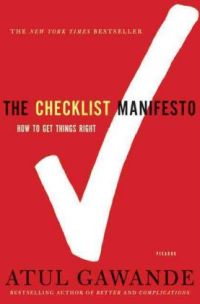
The Checklist Manifesto

the-checklist-manifesto


The Checklist Manifesto: How to Get Things Right
by Atul Gawande

Routine errors are frequently caused by little things that slip through the cracks due to poor communication and distractions.  A simple checklist can eliminate these oversights.  This book explores how checklists can improve quality and efficiency—and even save lives—in a wide range of industries. Given the crisis with health care affordability in the United States, I am impressed with the dramatic cost savings in the medical examples.

Continue reading “The Checklist Manifesto”

The New Economics

the-new-economics


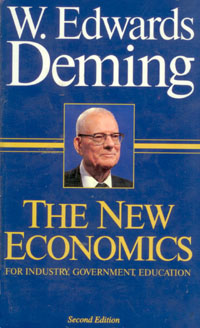
The New Economics for Industry, Government, Education
by W. Edwards Deming (1900-1993)

Deming is a legendary name in quality management, especially in Japan through his consulting work with Japanese industry from 1950 onward. He died in 1993 at age 93 before the second edition of this book went to press.

“This book is for people who are living under the tyranny of the prevailing style of management,” writes Deming in the preface. He has strong convictions, many of which are counter to conventional management thinking.

Continue reading “The New Economics”