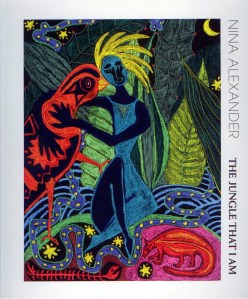
Nina Alexander has been making art for 60 years. Her work has transitioned from metal sculptures to photography, collage, and most recently, the pastels which are featured in this 10×10 inch book. Preceding the artwork is a brief biographical text. The psychology of creating art is a recurring theme.
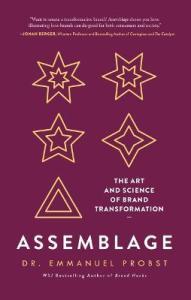
Assemblage: The Art and Science of Brand Transformation by Emmanuel Probst
“Assemblage is a French word that refers to the art and science of blending different eaux-de-vies (brandies) before bottling cognac. It is the craft of the maître de chai (also known as the master blender or cellar master) to select brandies from dozens of samples and craft a unique cognac… Assemblage is also a metaphor for building successful brands.”
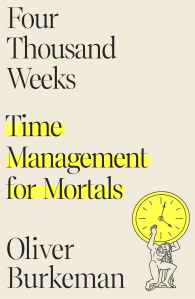
Four Thousand Weeks: Time Management for Mortals by Oliver Burkeman
We live in an era where appliances and software supposedly make our lives easier. “Yet, paradoxically, you only feel busier, more anxious… And becoming ‘more productive’ just seems to cause the belt to speed up.”
We all have a finite amount of time in our lives—in the neighborhood of 4,000 weeks, assuming an 80-year lifespan and rounding to 50 weeks per year. “Our limited time… what Heidegger calls our ‘finitude’… isn’t just one among various things we have to cope with; rather, it’s the thing that defines us, as humans.”
“The world is bursting with wonder, and yet it’s the rare productivity guru who seems to have considered the possibility that the ultimate point of all our frenetic doing might be to experience more of that wonder.”
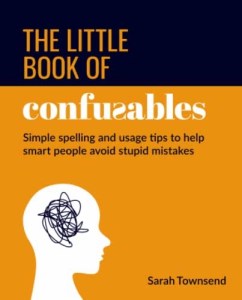
I was happy to learn that French quotation marks are called « guillemet ». I’ll be careful not to confuse that with guillemot, “a sea bird that nests on cliff edges.”
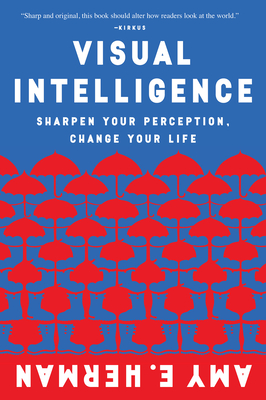
Visual Intelligence: Sharpen Your Perception, Change Your Life by Amy E. Herman
“Leonardo da Vinci attributed all of his scientific and artistic accomplishments to the same concept, which he called saper vedere—‘knowing how to see.’ We might also call his gift ‘visual intelligence.’”
Amy Herman, who has degrees in law and art history, teaches a course called the Art of Perception to police officers and FBI agents. The book is about how to assess, analyze, and articulate what we observe. To practice these skills, the author presents numerous works of art. She also discusses real-life crime and business cases.
Mayhem at Midnight is a children’s book about autism. But that’s not why I’m featuring it. I am compelled to call attention to the story of the author. And that led me to discover some stunning statistics about illiteracy in America.
Creativity: A Short and Cheerful Guide by John Cleese
The central theme of this short book is tapping into your subconscious thoughts for ideas which you can then develop consciously and analytically. Cleese writes, “I began to realize that my unconscious was working on stuff all the time, without my being consciously aware of it.”
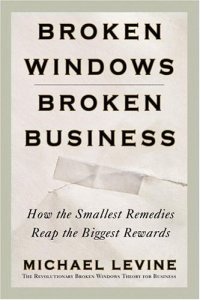
Broken Windows, Broken Business: How the Smallest Remedies Reap the Biggest Rewards by Michael Levine
Broken windows theory came up in a recent conversation. The person I was speaking with said he read the book, but it quickly became apparent that we were talking about two different books. I was talking about Fixing Broken Windows, a book about crime control which I have previously reviewed. He was talking about Broken Windows, Broken Business, which takes the premise of the crime theory and applies it to business.
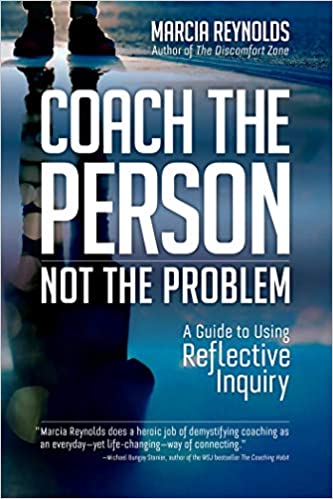
Coach the Person, Not the Problem: A Guide to Using Reflective Inquiry by Marcia Reynolds
Marcia Reynolds trains leaders how to use a coaching approach. “Coaching should be a process of inquiry, not a series of questions. The intent of inquiry is not to find solutions but to provoke critical thinking about our own thoughts. Inquiry helps the people being coached discern gaps in their logic, evaluate their beliefs, and clarify fears and desires affecting their choices. Solutions emerge when thoughts are rearranged and expanded.”
“When people are overwhelmed, stressed, and angry, coaching reminds them of their purpose, visions, and power to move forward.”
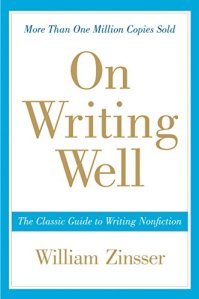
On Writing Well: An Informal Guide to Writing Nonfiction by William Zinsser (1922-2015)
William Zinsser taught nonfiction writing at Yale and he was editor of Book-of-the-Month Club. In a nutshell, the message is that good writing is clear, simple, and unpretentious. My father gave me a copy of the third edition of this book when I graduated from high school in the 1980s. While recently rereading it I was amused by Zinsser’s description of a new invention called a word processor—almost like someone describing their car as a horseless carriage. But otherwise the book stands up to the test of time (and there’s a newer edition available).


 The Key Point