The Tao of Pooh is about “how to stay happy and calm in all circumstances.” Benjamin Hoff uses the characters and stories from Winnie-the-Pooh and The House at Pooh Corner to explain basic concepts of Taoism. He also brilliantly integrates his own brief dialogue with the characters as segues into explanations of Taoist principles. Tao (pronounced DAO) means “the way.”
Lama Marut, aka Brian K. Smith, was a professor of comparative religion, he studied Hinduism and Sanskrit in India, he was a Buddhist monk, and he is the son of a Baptist preacher. So he presents a well-informed viewpoint rather than a myopic dogma. Fortunately, you don’t need to climb a mountain to be enlightened by this wise man; he imparts wisdom in his book, Be Nobody.
Marut writes about living in the iEra. “Our contemporary culture of consumerism, materialism, narcissism, and the worship of fame encourages the idea that we will be happy only when we become exceptional. But maybe we’ve got it wrong—exactly wrong. Maybe our deepest and most authentic happiness will be found only when we finally lay down this heavy burden of trying to be a somebody… Maybe true fulfillment in life requires an emptying, not a filling.”
Taking the Leap: Freeing Ourselves from Old Habits and Fears by Pema Chӧdrӧn
Pema Chӧdrӧn is a Buddhist nun. She writes about “unhooking” ourselves from negative thoughts and emotions.
She tells a story about a Native American grandfather who explains to his grandson the catalyst for violence and cruelty in the world. “He said it was as if two wolves were fighting in his heart. One wolf was vengeful and angry, and the other wolf was understanding and kind. The young man asked his grandfather which wolf would win the fight in his heart. And the grandfather answered, ‘The one that wins will be the one I choose to feed.’” The author explains that emotions have very short natural lifespan, but we extend that “by feeding it with an internal conversation about how another person is the source of our discomfort… This is a very ancient habit.”
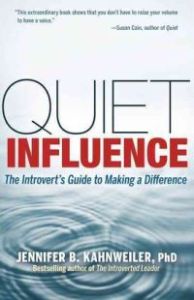
Quiet Influence: The Introvert’s Guide to Making a Difference by Jennifer B. Kahnweiler
Jennifer Kahnweiler observes “that introverts can be highly effective influencers when they stop trying to act like extroverts and instead make the most of their natural, quiet strengths.” She points out some noteworthy introverted influencers, including Eleanor Roosevelt, Charles Darwin, Mahatma Gandhi, Abraham Lincoln, Rosa Parks, Warren Buffet, Condoleezza Rice, Steven Spielberg, and J.K. Rowling. “Quiet influence is not about talking a great game to win the deal. It is a less understood approach to influence and differs from more ‘out there’ talkative methods.”
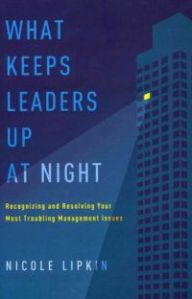
What Keeps Leaders Up at Night: Recognizing and Resolving Your Most Troubling Management Issues by Nicole Lipkin
In this excellent book, clinical psychologist Nicole Lipkin explains the psychology behind many of the human behaviors that affect productivity and sound decision making in the workplace. “Good leadership requires dealing effectively with messy, quirky, unpredictable, confusing, irrational, and clumsy people. That is what makes the business of leadership so insanely difficult and complex.”
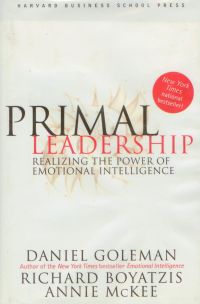
Primal Leadership: Learning to Lead with Emotional Intelligence by Daniel Goleman, Richard Boyatzis, and Annie McKee
Building on the lead author’s prior book, Emotional Intelligence, this book is about “leadership resonance.” The authors also warn about the opposite effect, dissonance, which destroys motivation and productivity. “Great leaders move us. They ignite our passion and inspire the best in us. When we try to explain why they are so effective, we speak of strategy, vision, or powerful ideas. But the reality is much more primal: Great leadership works through the emotions.” The authors cite a University of Maryland study showing that good morale has a positive effect on revenue and customer satisfaction.
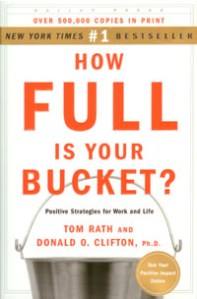
How Full Is Your Bucket? Positive Strategies for Work and Life By Tom Rath and Donald O. Clifton, Ph.D.
This book starts with a brief history of a North Korean POW camp which held 1000 U.S. prisoners. The prisoners had adequate food and shelter. They were not physically tortured. And yet, this camp had the highest POW death rate in U.S. military history.
The weapon of choice was subtle psychological warfare, which eroded trust among fellow prisoners and broke their sense of hope. In essence, the cause of death was extreme negativity.
Real Influence – Persuade Without Pushing and Gain Without Giving In by Mark Goulston and John Ullmen
This book is about the “connected influence model.” Disconnected influence is about “getting what I want.” It’s adversarial and focused on the short-term. Connected influence is oriented around understanding the other party’s situation and “viewing your current actions as a springboard for future relationships, reputation, and results… In the real world, interactions are never isolated. Anything you do might affect your relationships, as well as your reputation, for a long time to come.”
The Time Paradox: The New Psychology of Time That Will Change Your Life by Philip Zimbardo and John Boyd
This book is about time perspective. The authors say that time-balanced people are “more successful in work and career and happier in relationships with family and friends… [and] live more fully in the here and now. Such a person is able to tie the past and the future to the present in meaningful continuity.”
“Explanatory style” is the way we think about life’s events. We can have either an optimistic or a pessimistic explanatory style. Seligman’s research found that changing pessimism into optimism relieves depression.
A pessimistic explanatory style frames negative events in terms that are personal, permanent, and pervasive—I’m a failure, This always happens to me, This screws up my whole life. Seligman offers the ABCDE technique to reframe explanatory style. The letters stand for adversity, belief, consequences, dispute (your negative beliefs), and energize.



 The Key Point