Good to Great

good-to-great


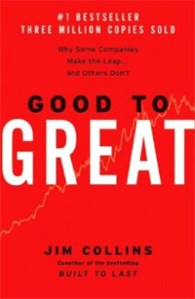
Good to Great: Why Some Companies Make the Leap… and Others Don’t
by Jim Collins

Jim Collins previously co-authored Built to Last, which studied common attributes of enduringly great companies. Good to Great studies companies which made a transition to greatness: 15 years of lagging stock performance followed by 15 years of cumulative stock returns 3 times the overall market.

Continue reading “Good to Great”

Learned Optimism

learned-optimism


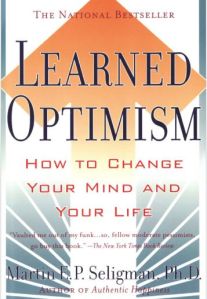
Learned Optimism
by Martin E. P. Seligman

“Explanatory style” is the way we think about life’s events.  We can have either an optimistic or a pessimistic explanatory style.  Seligman’s research found that changing pessimism into optimism relieves depression.

A pessimistic explanatory style frames negative events in terms that are personal, permanent, and pervasive—I’m a failure, This always happens to me, This screws up my whole life.  Seligman offers the ABCDE technique to reframe explanatory style. The letters stand for adversity, belief, consequences, dispute (your negative beliefs), and energize.

Continue reading “Learned Optimism”

The Emotional Intelligence Quick Book

the-emotional-intelligence-quick-book


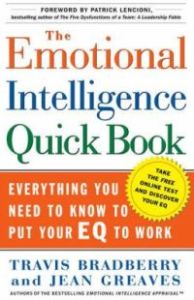
The Emotional Intelligence Quick Book
by Travis Bradberry and Jean Greaves

The Emotional Intelligence Quick Book is a concise and easy to absorb introduction to the topic. “Emotional intelligence is the product of two main skills: personal and social competence. Personal competence focuses more on you as an individual, and is divided into self-awareness and self-management. Social competence focuses more on how you behave with other people, and is divided into social awareness and relationship management.” The authors credit Daniel Goleman with introducing the four-skill model in the book Primal Leadership.

Continue reading “The Emotional Intelligence Quick Book”

Rethinking Reputation

rethinking-reputation


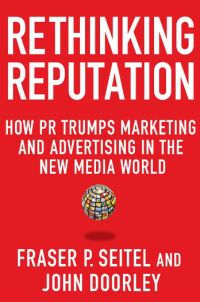
Rethinking Reputation: How PR Trumps Marketing and Advertising in the New Media World
by Fraser P. Seitel and John Doorley

This book gets off to a weak start. Chapter one is not about reputation management. It’s about how a couple of NYU students launched a shoe company on a shoestring budget. (Hint: Find a patent attorney who will work for you without charge.) Chapters three and five sound like they could have been written by publicists for Merck and Johnson & Johnson. In fact, coauthor John Doorley has held positions at both firms (and he teaches at NYU). The chapter on T. Boone Pickens’ energy independence campaign states that he spent $100 million “with more than half focused on paid media.”  That seems to undermine premise of the subtitle.

Continue reading “Rethinking Reputation”

Strength Training Anatomy

strength-training-anatomy


Strength Training Anatomy
by Frédéric Delavier

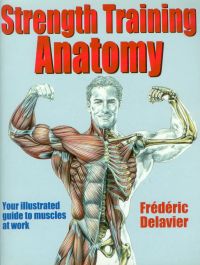
Is your New Year’s resolution to hit the gym, but you don’t really know what to do once you get there?  With Strength Training Anatomy, a picture really is worth 1000 words.

Each page features an illustration of an exercise being performed, with the targeted muscles drawn in red and labeled.  Most of the exercises use either free weights or a weight-training machine; there are some exceptions, such as crunches.  Each page also includes written instructions.  See the sample page below.

Continue reading “Strength Training Anatomy”

Making Ads Pay: Timeless Tips for Successful Copywriting

making-ads-pay-john-caples


Making Ads Pay: Timeless Tips for Successful Copywriting
by John Caples (1900-1990)

John Caples was a pioneer of direct-response copywriting.  In Chapter 8 he presents as series of paired ads which were tested, followed by analysis of why the winning ads outperformed.  The winner often outperformed the other by a wide margin—up to five times as many responses.

Continue reading “Making Ads Pay: Timeless Tips for Successful Copywriting”

Elmore Leonard’s 10 Rules of Writing

elmore-leonards-10-rules-of-writing


Elmore Leonard’s 10 Rules of Writing

Elmore Leonard’s 10 Rules of Writing offers good advice about writing fiction, although the implicit theme pertains to any writing. Essentially, don’t let your writing style distract from what you are trying to say.

My favorite tip is #10: “Try to leave out the part that readers tend to skip.”

Continue reading “Elmore Leonard’s 10 Rules of Writing”

Break From the Pack: How to Compete in a Copycat Economy

break-from-the-pack


Break From the Pack: How to Compete in a Copycat Economy
by Oren Harari

Break-from-the-pack companies are analogous to the small cluster of runners at the front of a marathon. The Copycat Economy is analogous to the majority of runners who lag behind. In the words of former IBM CEO Sam Palmisano, “Either you innovate or you’re in commodity hell. If you do what everybody else does, you have a low-margin business.”

Continue reading “Break From the Pack: How to Compete in a Copycat Economy”