Managing Oneself and What Makes an Effective Executive


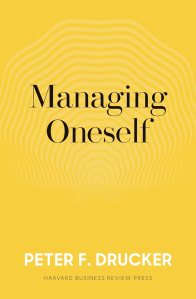
Managing Oneself and What Makes an Effective Executive
by Peter F. Drucker (1909-2005)

Peter Drucker is often referred to as the leading management thinker of the 20th century. His seminal works include Concept of the Corporation (1946) and The Practice of Management (1954). This short volume includes two of Drucker’s articles: “Managing Oneself” and “What Makes an Effective Executive.” Here are some highlights.

Continue reading “Managing Oneself and What Makes an Effective Executive”
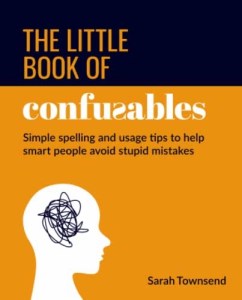
The Little Book of Confusables


The Little Book of Confusables: Simple spelling and usage tips to help smart people avoid stupid mistakes
by Sarah Townsend

This book disambiguates 600 commonly confused words. Examples include: aggravated, agitated; a lot, allot; assume, presume; coherent, cohesive; discreet, discrete; enervate, innervate, innovate; faze, phase; feasible, plausible; flaunt, flout; fortuitous, fortunate; historic, historical; hoard, horde; indolent, insolent; literal, littoral; loath, loathe; sleight, slight; tack, tact; tortuous, torturous; unkempt, unkept; vain, vane, vein; and wet, whet.

I was happy to learn that French quotation marks are called « guillemet ». I’ll be careful not to confuse that with guillemot, “a sea bird that nests on cliff edges.”

Continue reading “The Little Book of Confusables”

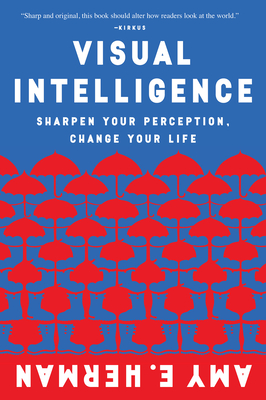
Visual Intelligence: Sharpen Your Perception


Visual Intelligence: Sharpen Your Perception, Change Your Life
by Amy E. Herman

“Leonardo da Vinci attributed all of his scientific and artistic accomplishments to the same concept, which he called saper vedere—‘knowing how to see.’ We might also call his gift ‘visual intelligence.’”

Amy Herman, who has degrees in law and art history, teaches a course called the Art of Perception to police officers and FBI agents. The book is about how to assess, analyze, and articulate what we observe. To practice these skills, the author presents numerous works of art. She also discusses real-life crime and business cases.

Continue reading “Visual Intelligence: Sharpen Your Perception”

TED Talks Storytelling

ted-talks-storytelling


TED Talks Storytelling: 23 Storytelling Techniques from the Best TED Talks
by Akash Karia

The premise of this book is that “the best speakers on the TED stage were the ones who had mastered the art of storytelling.”

The first 30 seconds are critical. “Opening with a story is a tested and proven method for grabbing audience attention and keeping your audience mentally engaged.”

Continue reading “TED Talks Storytelling”

Life’s a Pitch

lifes-a-pitch


Life’s a Pitch: The Essential Guide to Presentations
by Terry Ward

Terry Ward uses a broad definition of the word presentation. “Every time you want to persuade, motivate, or inspire, you are making a presentation… The spoken word is a persuasive media… If you want to move people to action, speak to them.”

“The most important aspect of being an effective presenter is your state of mind… We are talking about adopting a state of mind that is listener focused…The more you disappear into your message, the more your audience will trust and respect you… The speakers we remember most are the ones who talked to us in plain English and with sincerity and simplicity. They were authentic in their intentions to bring value to the listeners.”

A recurring theme in this book is to keep things simple and concise. “Present only information that is CORE—concise, organized, relevant, and essential—to your listener… Make it simple and easy to understand… In fact all four essential elements of communication—behavior, content, interaction, and state of mind—benefit from a focus on keeping it simple.”

Continue reading “Life’s a Pitch”

Pitch Perfect

pitch-perfect


Pitch Perfect: How to Say It Right the First Time, Every Time
by Bill McGowan

Bill McGowan was a broadcast journalist before becoming a media coach and trainer to executives, athletes, and celebrities. This book provides guidance on preparing for media interviews, speeches, conference panels, wedding toasts, eulogies, and other situations.

The Seven Principles of Persuasion are the foundation.

Continue reading “Pitch Perfect”

Planner Pet Peeves and Supplier Pet Peeves

planner-pet-peevessupplier-pet-peeves

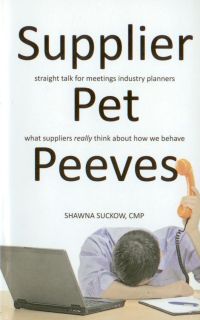
Planner Pet Peeves: Straight talk for meetings industry suppliers; how planners really think, act, and buy

Supplier Pet Peeves: Straight talk for meetings industry planners; what suppliers really think about how we behave

by Shawna Suckow

This is a unique pair of books aimed at educating buyers and sellers in the event industry about how they can work more efficiently with each other. Understanding the other side of the business helps to avoid conflict and streamline communications.  Shawna Suckow has surveyed senior meeting planners and suppliers to uncover their biggest frustrations. Continue reading “Planner Pet Peeves and Supplier Pet Peeves”

The Lost Art of General Management

the-lost-art-of-general-mgmt

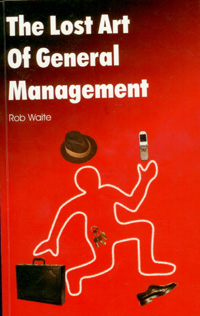
The Lost Art of General Management

by Rob Waite

In The Lost Art of General Management, Rob Waite shares practical insights from his career as a hands-on general manager for various building materials manufacturers in the U.S., Canada, Latin America, and Europe.  Like a good executive communicator, he gets straight to the point.

Waite contends today’s managers have become functionally myopic. A general manager needs to take a broader view, while understanding how the company makes its money and how its customers make money.

Continue reading “The Lost Art of General Management”

The Articulate Executive in Action

the-articulate-executive-in-action


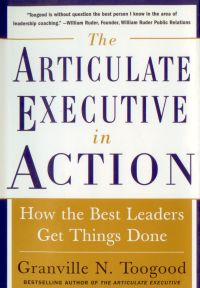
The Articulate Executive in Action
by Granville N. Toogood

This book is about the importance of communication skills in business, with a particular emphasis on meetings and presentations.  “If you’re not competent with language, you’re not likely to connect, no matter how smart you are.” The main theme is what Toogood calls communication value added (CVA), of which there are seven principles: “Never bore. Give value. Rule your PowerPoint—don’t let it rule you. Talk from experience. Know whom you’re talking to. Tell stories. And be ready.”

Continue reading “The Articulate Executive in Action”