Suffice it to say, I was curious about this anthology of 11 short articles about curiosity. Topics include creativity and exploration, managing complexity, professional relationships, listening, and corporate culture.
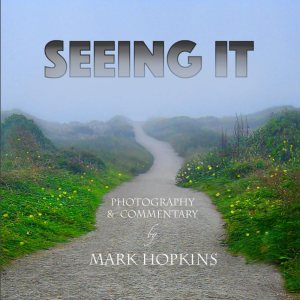
Seeing It: Photography and Commentary by Mark Hopkins (1932-2026)
As art professor Kit White has written, “Observation lies at the heart of the art process.” Learning to see is a fundamental skill taught in observational drawing classes. It’s also fundamental to fine art photography, as Mark Hopkins explains. The title Seeing It refers to being curious and looking beyond the obvious.
“Cameras do not see; that is the task of their owners. And seeing is what this book is about. In particular, it is about seeing opportunities to create worthy photographic images. It is meant to be inspirational, to show how one camera owner’s concentration on visual awareness has created a collection of photographs whose images others might have walked right past.”
“It is about seeing what you see. If by the end of the book you have a better appreciation of what I mean by that, then I will have fulfilled my goal.”
The Little Book of Mindfulness: 10 Minutes a Day to Less Stress, More Peace by Dr. Patrizia Collard
Dr. Patrizia Collard is a psychotherapist, stress management consultant, and lecturer at the University of East London. She writes, “The goal of any mindfulness practice is simply to experience life as it unfolds. To stay present and calm and not slip back into thinking/worrying mode, we choose an anchor of awareness—a point of focus we direct our mind to.”
“Mindfulness is being aware of or bringing attention to this moment in time deliberately and without judging the experience. So, when we go for a mindful walk we really notice every little detail and all we encounter—trees, cars, flowers growing out of small cracks, or a cat crossing the road—rather than creating to-do lists.”
“When we procrastinate and distract ourselves with ‘busyness,’ we avoid engaging with the real thing—our lives… Living in the moment, and seeing everything afresh without judgment and worry lets us experience life rather than simply get through it.”
The Excellence Dividend: Meeting the Tech Tide with Work That Wows and Jobs That Last by Tom Peters
Tom Peters makes a renewed call to excellence in the context of an increasingly data-driven and dehumanized world. His “putting people first” mantra is even more on point than it was when his seminal work In Search of Excellence was published in 1982.
“The primary defenses against AI-driven job destruction are widespread, relatively unconstrained creativity and novel organizational arrangements designed to produce products and services that will stand out in an automated world. I unequivocally believe that such creativity is antithetical to algorithmic optimization of human affairs.”
“So what is this Excellence Dividend? In short, businesses that are committed to excellence in every aspect of their internal and external dealings are likely to be survivors. They are better and more spirited places to work. Their employees are engaged and growing and preparing for tomorrow. Their customers are happier and inclined to spread tales of their excellence far and wide. Their communities welcome them as good neighbors. Their vendors welcome them as reliable partners. That in turn translates directly into bottom-line results and growth. And, AI and robotics notwithstanding, it translates into jobs that last and the likely creation of new jobs as well.”
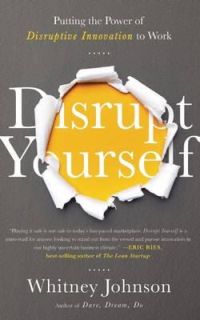
Disrupt Yourself: Putting the Power of Disruptive Innovative to Work by Whitney Johnson
Clayton Christensen introduced the concept of disruptive innovation in The Innovator’s Dilemma, his seminal book which focused on the computer industry. His successive books applied the concept to health care and education. Now, Whitney Johnson writes about disrupting your own career.
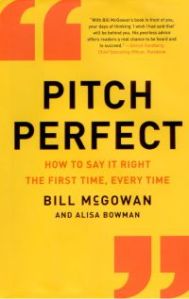
Pitch Perfect: How to Say It Right the First Time, Every Time by Bill McGowan
Bill McGowan was a broadcast journalist before becoming a media coach and trainer to executives, athletes, and celebrities. This book provides guidance on preparing for media interviews, speeches, conference panels, wedding toasts, eulogies, and other situations.
The Seven Principles of Persuasion are the foundation.
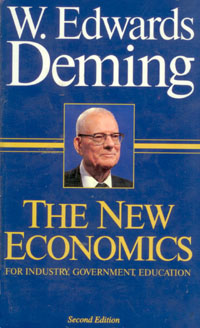
The New Economics for Industry, Government, Education by W. Edwards Deming (1900-1993)
Deming is a legendary name in quality management, especially in Japan through his consulting work with Japanese industry from 1950 onward. He died in 1993 at age 93 before the second edition of this book went to press.
“This book is for people who are living under the tyranny of the prevailing style of management,” writes Deming in the preface. He has strong convictions, many of which are counter to conventional management thinking.
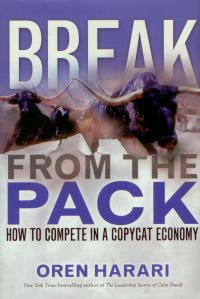
Break From the Pack: How to Compete in a Copycat Economy by Oren Harari
Break-from-the-pack companies are analogous to the small cluster of runners at the front of a marathon. The Copycat Economy is analogous to the majority of runners who lag behind. In the words of former IBM CEO Sam Palmisano, “Either you innovate or you’re in commodity hell. If you do what everybody else does, you have a low-margin business.”
 The Key Point