Understanding Organizations Finally!


Understanding Organizations Finally! Structuring in Sevens
by Henry Mintzberg

The four forms of organization are Personal (autocracy), Programmed (bureaucracy), Professional (meritocracy), and Project (adhocracy). Respectively, the coordinating mechanism of each form is direct supervision, standardization of work, standardization of skills, and mutual adjustment.

That last term should be defined before going further, as Mintzberg uses it throughout the book. “Coordination and control are two different concepts. Mutual adjustment is coordination without control… Currently, the literature of management gives considerable attention to teams, task forces, and networks, all manifestations of mutual adjustment.”

Continue reading “Understanding Organizations Finally!”

The Peter Principle


The Peter Principle: Why Things Always Go Wrong
by Laurence J. Peter (1919-1990) and Raymond Hull (1919-1985)

For anyone who is frustrated with the dysfunction of a bureaucracy, this satirical study of hierarchiology—the social science of hierarchies—will shed some light. The Peter Principle states, “In a hierarchy, everyone tends to rise to his level of incompetence.”

Continue reading “The Peter Principle”

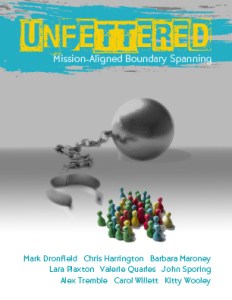
Unfettered: Mission-Aligned Boundary Spanning


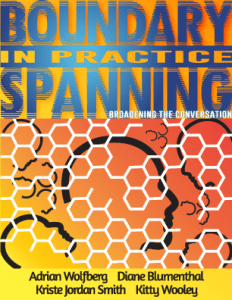
Boundary Spanning in Practice and
Unfettered: Mission-Aligned Boundary Spanning

by Kitty Wooley et al. (interview)

Senior Fellows and Friends is a group of current and former U.S. government employees. Spearheaded by Kitty Wooley, members of the group have published two compilations of articles about breaking through the silo mentality. They encourage inter-agency collaboration throughout the hierarchy to achieve greater institutional learning, more motivated staff, and greater effectiveness in executing organizational missions. While their context is government, the topics also apply to large businesses and nonprofit organizations.

Continue reading “Unfettered: Mission-Aligned Boundary Spanning”

Organize for Complexity


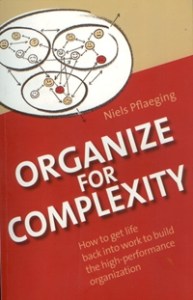
Organize for Complexity: How to get life back into work to build the high-performance organization
by Niels Pflaeging

“As we have seen, the world has already changed—high complexity in value creation has become the norm.” This book proposes a cell-based organizational structure (Beta) better suited to a complex, unpredictable world than the traditional hierarchical system (Alpha). 

Continue reading “Organize for Complexity”

The New Economics

the-new-economics


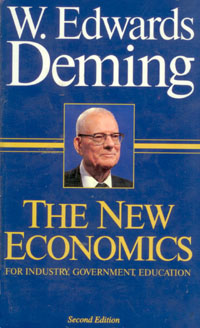
The New Economics for Industry, Government, Education
by W. Edwards Deming (1900-1993)

Deming is a legendary name in quality management, especially in Japan through his consulting work with Japanese industry from 1950 onward. He died in 1993 at age 93 before the second edition of this book went to press.

“This book is for people who are living under the tyranny of the prevailing style of management,” writes Deming in the preface. He has strong convictions, many of which are counter to conventional management thinking.

Continue reading “The New Economics”