Life’s Journeys According to Mister Rogers


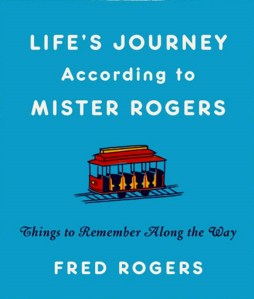
Life’s Journeys According to Mister Rogers: Things to Remember Along the Way
by Fred Rogers (1928-2003)

And now a Thanksgiving palette cleanser.

Fred Rogers was the creator and host of the children’s television show Mister Rogers’ Neighborhood from 1968 to 2001. This short book is a posthumously published collection of his writing for adults.

Continue reading “Life’s Journeys According to Mister Rogers”

Decisionscape: How Thinking Like an Artist Can Improve Our Decision-Making


Decisionscape: How Thinking Like an Artist Can Improve Our Decision-Making
by Elspeth Kirkman

“Knowingly or not, we often draw on the logic of pictorial space as a metaphor for our decisions. We use phrases like getting things in perspective or blowing them out of proportion… And we implore one another to zoom out or see the big picture.”

Elspeth Kirkman is a behavioral scientist who uses the analogy of art making to explain the psychology of decision making. “I call this mental representation the decisionscape… The central idea of this book is that we could improve our decisions, whether personal or professional, by constructing and analyzing it deliberately, just as an artist approaches the canvas.”

Continue reading “Decisionscape: How Thinking Like an Artist Can Improve Our Decision-Making”

The Psychology of Money


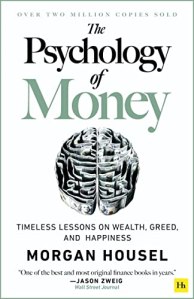
The Psychology of Money: Timeless Lessons on Wealth, Greed, and Happiness
by Morgan Housel

Financial success is a soft skill, writes Morgan Housel, “where how you behave is more important than what you know.” This is a book about developing the mindset of a long-term investor, with a realistic attitude towards risk and reward. The book is conspicuously free of financial jargon and math. Here are some key points.

Continue reading “The Psychology of Money”

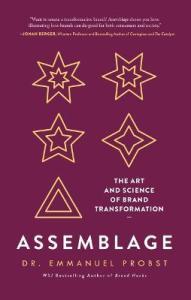
Assemblage: The Art and Science of Brand Transformation


Assemblage: The Art and Science of Brand Transformation
by Emmanuel Probst 

Assemblage is a French word that refers to the art and science of blending different eaux-de-vies (brandies) before bottling cognac. It is the craft of the maître de chai (also known as the master blender or cellar master) to select brandies from dozens of samples and craft a unique cognac… Assemblage is also a metaphor for building successful brands.”

Continue reading “Assemblage: The Art and Science of Brand Transformation”

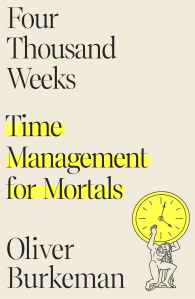
Four Thousand Weeks: Time Management for Mortals


Four Thousand Weeks: Time Management for Mortals
by Oliver Burkeman

We live in an era where appliances and software supposedly make our lives easier. “Yet, paradoxically, you only feel busier, more anxious… And becoming ‘more productive’ just seems to cause the belt to speed up.”

We all have a finite amount of time in our lives—in the neighborhood of 4,000 weeks, assuming an 80-year lifespan and rounding to 50 weeks per year. “Our limited time… what Heidegger calls our ‘finitude’… isn’t just one among various things we have to cope with; rather, it’s the thing that defines us, as humans.”

“The world is bursting with wonder, and yet it’s the rare productivity guru who seems to have considered the possibility that the ultimate point of all our frenetic doing might be to experience more of that wonder.”

Continue reading “Four Thousand Weeks: Time Management for Mortals”

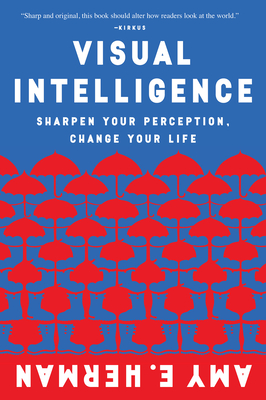
Visual Intelligence: Sharpen Your Perception


Visual Intelligence: Sharpen Your Perception, Change Your Life
by Amy E. Herman

“Leonardo da Vinci attributed all of his scientific and artistic accomplishments to the same concept, which he called saper vedere—‘knowing how to see.’ We might also call his gift ‘visual intelligence.’”

Amy Herman, who has degrees in law and art history, teaches a course called the Art of Perception to police officers and FBI agents. The book is about how to assess, analyze, and articulate what we observe. To practice these skills, the author presents numerous works of art. She also discusses real-life crime and business cases.

Continue reading “Visual Intelligence: Sharpen Your Perception”

Risk Savvy: How to Make Good Decisions


Risk Savvy: How to Make Good Decisions
by Gerd Gigerenzer

Gigerenzer makes a distinction between risk and uncertainty. He uses the term risk “for a world where all alternatives, consequences, and probabilities are known… Most of the time, however, we live in a changing world where some of these are unknown: where we face unknown risks, or uncertainty. The world of uncertainty is huge compared to that of risk… We have to deal with ‘unknown unknowns.’”

Continue reading “Risk Savvy: How to Make Good Decisions”