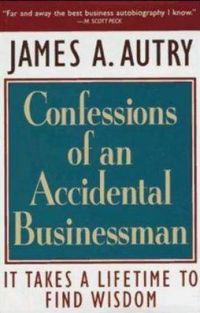
Confessions of an Accidental Businessman: It Takes a Lifetime to Find Wisdom by James A. Autry
James Autry worked his way up from copy editor of Better Homes and Gardens to president of the magazine division. This memoir gets off to a slow start talking about his childhood and military service, but it gets more interesting when he starts to focus on his publishing career.
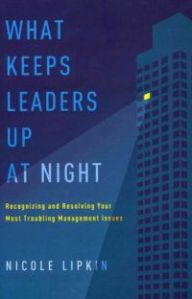
What Keeps Leaders Up at Night: Recognizing and Resolving Your Most Troubling Management Issues by Nicole Lipkin
In this excellent book, clinical psychologist Nicole Lipkin explains the psychology behind many of the human behaviors that affect productivity and sound decision making in the workplace. “Good leadership requires dealing effectively with messy, quirky, unpredictable, confusing, irrational, and clumsy people. That is what makes the business of leadership so insanely difficult and complex.”
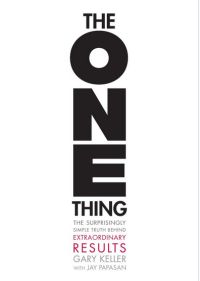
The One Thing: The Surprisingly Simple Truth Behind Extraordinary Results by Gary Keller with Jay Papasan
This book is about finding your focus and making it your top priority in order to achieve extraordinary results. Identifying your focus comes from asking The Focusing Question: “What’s the ONE Thing you can do this week such that by doing it everything else would be easier or unnecessary?”
“The Focusing Question is a double-duty question. It comes in two forms: big picture and small focus. One is about finding the right direction in life and the other is about finding the right action.”
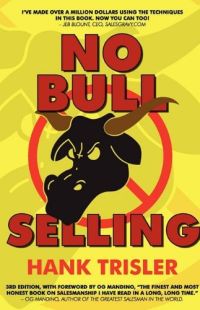
No Bull Selling offers practical sales advice with a sense of humor. Hank Trisler writes, “I’ve been going to sales seminars all my adult life. That’s how I got so misinformed.”
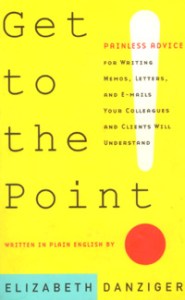
Get to the Point: Painless advice for writing memos, letters, and e-mails your colleagues and clients will understand by Elizabeth Danziger
Elizabeth Danziger’s advice on using clear, clutter-free language is consistent with the classic On Writing Well by William Zinsser, but this book is more useful as manual, whereas Zinsser’s book is more conceptual.
When is it appropriate to use which or that? The author provides an informal “just do it” rule and a formal “grammar police” rule.
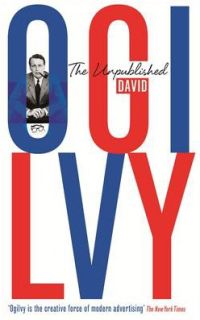
The Unpublished David Ogilvy: His secrets of management, creativity, and success—from private papers and public fulminations
This collection of David Ogilvy’s memos, letters, speech excerpts, and other documents was compiled by an Ogilvy & Mather executive to commemorate the founder’s 75th birthday. The writings span a 50-year period from 1935-1986. The cool thing about this book is that most of the contents were not written with the intent to be published, so it feels like a behind-the-scenes look at his management style as well as his thoughts on various subjects.
The dust jacket sums up Arthur Danto’s definition of art nicely. “A work of art is always defined by two essential criteria: meaning and embodiment, as well as one additional criterion contributed by the viewer: interpretation.”
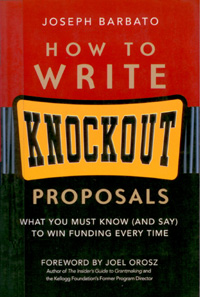
How to Write Knockout Proposals: What you must know (and say) to win funding every time. by Joseph Barbato
The theme of this book boils down to one line on page 117: “Make it as easy as possible for them to give you money.”
Barbato emphasizes the importance of clear writing and attention to detail. He suggests a less-is-more approach: “Instead of offering four prosaic examples of how your project matters, tell one powerful story that drives home the potential of your work.” A template is included in chapter 24, guiding the reader on how to structure a grant proposal.
The book is concise and well organized in 53 two-page chapters. I like this format, but I think more could have been written about cover letters.
Barbato, Joseph. How to Write Knockout Proposals: What You Must Know (and Say) to Win Funding Every Time. Medfield, Massachusetts: Emerson & Church, 2004. Buy from Amazon.com
Disclosure: As an Amazon Associate I earn from qualifying purchases.
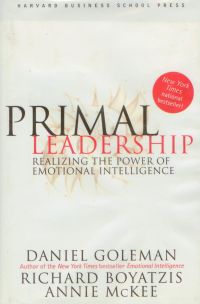
Primal Leadership: Learning to Lead with Emotional Intelligence by Daniel Goleman, Richard Boyatzis, and Annie McKee
Building on the lead author’s prior book, Emotional Intelligence, this book is about “leadership resonance.” The authors also warn about the opposite effect, dissonance, which destroys motivation and productivity. “Great leaders move us. They ignite our passion and inspire the best in us. When we try to explain why they are so effective, we speak of strategy, vision, or powerful ideas. But the reality is much more primal: Great leadership works through the emotions.” The authors cite a University of Maryland study showing that good morale has a positive effect on revenue and customer satisfaction.
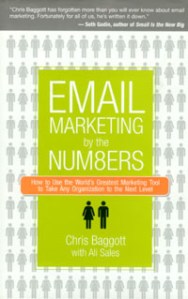
With a title like Email Marketing by the Numbers, one would expect the book to cover testing and analytics. “The organizations that embrace testing as an integral part of their programs simply outperform those that don’t… Rarely can the people within a company judge what is going to be successful outside of it.”

 The Key Point