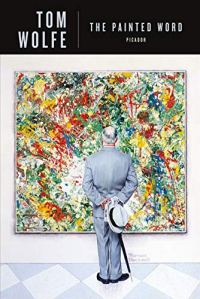
Who decides which art the cool kids are supposed to like? This book answers that question for the Modernism era, and particularly how Abstract Expressionism and Pop Art came into fashion. The book was published in 1975.
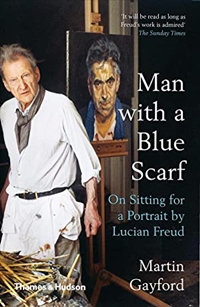
Man with a Blue Scarf: On Sitting for a Portrait by Lucian Freud by Martin Gayford
Art critic and author Martin Gayford sat for two portraits by Lucian Freud: a painting which took 40 sittings spanning eight months (November 2003 to July 2004) and an etching over a similar period of time (August 2004 to April 2005). Through the author’s observations and conversations with the artist over many hours working and dining together, this fascinating book describes the studio set up, the artist’s process and quirks, as well as Freud’s views on art and various other artists.
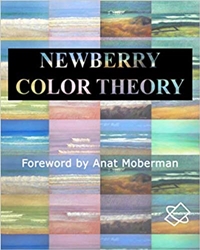
Whether you are an artist or art appreciator who is curious about the process, this short book provides an interesting explanation of color dynamics using 16 pastel drawings of ocean waves as examples of the system in action. Newberry notes that his color theory was developed after writing about Van Gogh, Cezanne, and Monet for his book Evolution Through Art. “One of the things these artists did was to emphasize the color of vibrations of the air between them and the scene—like looking through a semi-transparent screen window.”
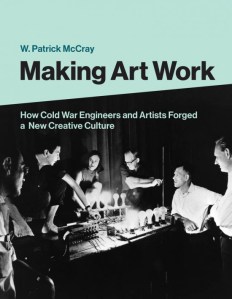
Making Art Work: How Cold War Engineers and Artists Forged a New Creative Culture by W. Patrick McCray
This book picks up where C.P. Snow left off in his 1959 book The Two Cultures. Snow was a British chemist turned novelist who had scientist friends and literary friends, but he observed that these groups were two separate cultures who rarely communicated with each other. Patrick McCray is a history professor at UC Santa Barbara. In Making Art Work, he studies several endeavors to bridge this divide, primarily in the 1960s, but also more recently. Specifically the book is about collaborations between artists and engineers.
An Interview with D.B. Dowd, author of Stick Figures: Drawing as a Human Practice. The discussion topics are primarily from chapters 5-7 of the book.
[01:05] Drawing as a human practice. Drawing as nonlinear thinking. Salience. Tacit Knowledge.
[26:58] Reconceiving art education. Drawing is usually taught as an antecedent for painting. This is fine for people who want to paint. But most people use drawing as a tool for thinking, planning, and communication. Drawing as a way of understanding structures, e.g. in science classes. How STEAM relates to innovation.
[47:45] Illustration and cartooning as part of cultural history.
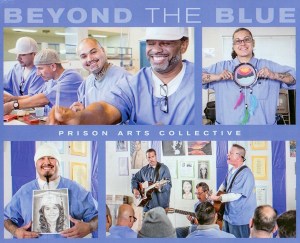
Beyond the Blue: Artwork and Writing from the Prison Arts Collective
This book is a catalog produced in conjunction with an exhibition of artwork created in California prisons. I attended an opening of this traveling exhibition as well as a panel discussion with former participants, teaching artists, and the deputy director of the Prison Arts Collective (PAC). This book is atypical of those normally featured on this site, but I feel it deserves some attention because it presents a perspective from a corner of humanity where voices are normally out of earshot, which may offer some insights into the bigger picture of some of society’s toughest challenges.
I will start with excerpts from the book before making some of my own observations.
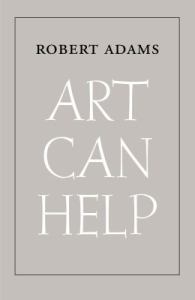
Robert Adams, a photographer of the American West for over 50 years, writes about the art of photography. Before commenting on the works of 27 photographers, he shares his views on art in general, and he examines the work of his favorite painter, Edward Hopper.
“It is the responsibility of artists to pay attention to the world, pleasant or otherwise, and to help us live respectfully in it. Artists do this by keeping their curiosity and moral sense alive, and by sharing with us their gift for metaphor. Often this means finding similarities between observable fact and inner experience.”
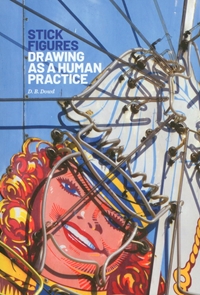
Stick Figures: Drawing as a Human Practice by D.B. Dowd (interview)
D.B. Dowd, professor of art and American culture studies at Washington University and faculty director of the D.B. Dowd Modern Graphic History Library, writes that drawing is above all else a tool for learning. This beautifully printed book covers drawing as a means of discovery and communication, confusion between visual modes, a nostalgic look at the field of illustration, and musings about the teaching of art.
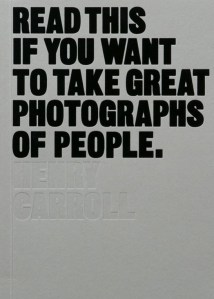
Read This If You Want to Take Great Photographs of People by Henry Carroll
“Don’t take pictures of people. Take pictures about people.”
Carroll explains the rules of thumb for a traditional portrait, but the book is mainly about moving beyond that. “Don’t suppress your subject’s physical nuances. This is what makes them who they are. There are rules in portraiture about how your subjects should stand, what they should do with their hands, and so on. These rules are fine for corporate headshots, because they’re designed to remove any trace of a person’s individuality. But that’s not what we’re about, right?”
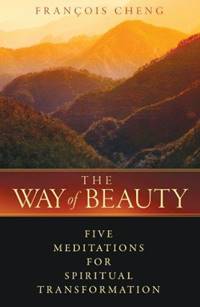
The Way of Beauty: Five Meditations for Spiritual Transformation by François Cheng
François Cheng is a Chinese-French writer who references art and language from both cultures as well as Taoism in his discussion of beauty. Cheng presents some interesting ideas, particularly in the fourth and fifth meditations, within an overall esoteric and meandering text.
Becoming
My favorite thought from this book is the idea of beauty as an experience as opposed to an attribute. “True beauty does not reside only in what is already manifest as beauty… It is a becoming, and the dimension of spirit or soul is vital to it… Beauty is always a becoming, an advent, if not to say an epiphany… Beauty implies interconnectedness, interaction, an encounter between the elements that constitute an occurrence of beauty, between the beauty present and the gaze that beholds it.”
 The Key Point