Composition: Understanding Line, Notan, and Color by Arthur Wesley Dow (1857-1922)
Composition is “the ‘putting together’ of lines, masses and colors to make a harmony. Design, understood in its broad sense, is a better word, but popular usage has restricted it to decoration.”
In the visual arts, “there are three structural elements with which harmonies may be built up” – line, notan, and color.
An Interview with D.B. Dowd, author of Stick Figures: Drawing as a Human Practice. The discussion topics are primarily from chapters 5-7 of the book.
[01:05] Drawing as a human practice. Drawing as nonlinear thinking. Salience. Tacit Knowledge.
[26:58] Reconceiving art education. Drawing is usually taught as an antecedent for painting. This is fine for people who want to paint. But most people use drawing as a tool for thinking, planning, and communication. Drawing as a way of understanding structures, e.g. in science classes. How STEAM relates to innovation.
[47:45] Illustration and cartooning as part of cultural history.
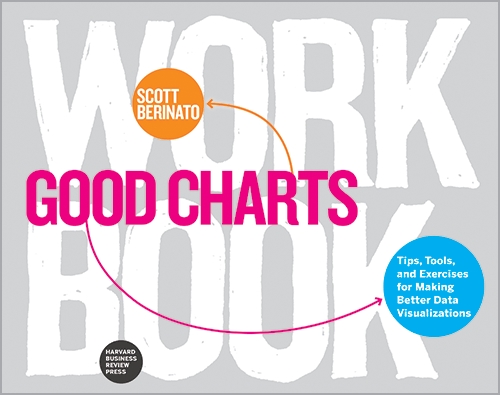
Good Charts Workbook: Tips, Tools, and Exercises for Making Better Data Visualizations by Scott Berinato
A good visual representation of data can be invaluable for communicating the meaning behind the numbers. This book walks the reader through the thought process and choices in creating visualizations for a variety of cases. “It’s rare you don’t have to make a trade-off to create a good chart… Most of the time there isn’t one right answer, one right chart.” The main topics covered in the book are clarity, color, chart types, and persuasion.
Clarity. Berinato emphasizes decluttering to put the focus on what you want to communicate. “Take stuff away… Remove redundancy… Limit color and eye travel… Use your headline to describe the main idea of a chart, not its structure.”
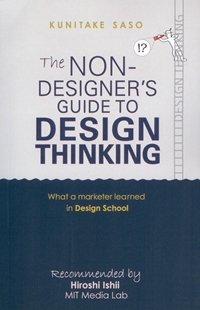
The Non-Designer’s Guide to Design Thinking: What a Marketer Learned in Design School by Kunitake Saso
“The design thinking process is not a collection of steps… [It] is characterized by switching between four different modes as needed, and advancing work through short cycles… You go back and forth between the phases again and again, slowly raising the quality of your output; therefore, it is better to think of it as a compass than as a map.”
The Four Modes of Design Thinking:
Research
Analysis
Synthesis
Prototyping
The author says that 80% of the value is created in the synthesis and prototyping stages.
RESEARCH. The subjects of design research interviews are often “extreme users with strong preferences, or experts in the field and very familiar with the trends” rather than average users.
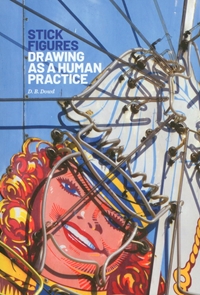
Stick Figures: Drawing as a Human Practice by D.B. Dowd (interview)
D.B. Dowd, professor of art and American culture studies at Washington University and faculty director of the D.B. Dowd Modern Graphic History Library, writes that drawing is above all else a tool for learning. This beautifully printed book covers drawing as a means of discovery and communication, confusion between visual modes, a nostalgic look at the field of illustration, and musings about the teaching of art.
101 Things I Learned in Fashion School by Alfredo Cabrera with Matthew Frederick
“In my years of teaching, I have found that the greater obstacle… is not the acquiring of technical proficiency… but in accepting the need to design for real people… It took me years as a working designer to realize the importance of identifying a real living customer and recognizing what he or she will and won’t wear. Far from being anti-creative, it was for me the beginning of true creativity. For what is creativity if it isn’t to take something existing in one’s head and give it relevance in the real world?”
Alfredo Cabrera has taught and critiqued at Parsons The New School for Design, Fashion Institute of Technology, and Pratt Institute. Here’s a sampling of the insights he shares in the book.
“Simple clothes aren’t simple to design. When superfluous design elements are eliminated from a garment, more subtle considerations—proportion, line, fit—are magnified. This calls for a refined understanding of anatomy (e.g. how the neckline sits in relation to the clavicle), geometry, balance, positive and negative space, and the harmony of parts to whole.”
101 Things I Learned in Architecture School by Matthew Frederick
Matthew Frederick presents 101 concepts in his “primer of architectural literacy.” Here is a sampling of his insights.
“Our experience of an architectural space is strongly influenced by how we arrive in it. A tall, bright space will feel taller and brighter if counterpointed by a low-ceilinged, softly lit space. A monumental or sacred space will feel more significant when placed at the end of a sequence of lesser spaces. A room with south-facing windows will be more strongly experienced after one passes through a series or north-facing spaces.”
This book starts out with a 13-page interview with Milton Glaser by Peter Mayer followed by 188 pages of Glaser’s art.
A recurring theme in the short text is ambiguity. “I have always been aware of the need to provoke the mind when communicating ideas because that is the only way that you prod someone into understanding anything. That is why ambiguity is such a useful tool… Why are we unmoved by many of the skills of academic painting? Because their information is complete and unambiguous, so you have nothing to add. The philosophy of modernism suggests that the viewer completes the work.”
Milton Glaser is best known as the graphic designer who created the I Love NY logo in 1975. He has also designed and illustrated album covers, book jackets, advertisements, posters, magazines and newspapers, and architectural interiors.
The Laws of Simplicity: Design, Technology, Business, Life by John Maeda
Complex systems and information overload can drive us crazy. John Maeda explains the remedy. “Simplicity is about subtracting the obvious, and adding the meaningful.” The ten laws of simplicity are:
Reduce – The simplest way to achieve simplicity is through thoughtful reduction
Organize – Organization makes a system of many appear fewer.
Time – Savings in time feel like simplicity.
Learn – Knowledge makes everything simpler.
Differences – Simplicity and complexity need each other.
Context – What lies in the periphery of simplicity is definitely not peripheral.
Emotion – More emotions are better than less.
Trust – In Simplicity we trust.
Failure – Some things can never be made simple.
The One – Simplicity is about subtracting the obvious, and adding the meaningful.
Here’s my favorite line in the book: “While great art makes you wonder, great design makes things clear.” I think this thought applies to graphic design, product design, and even process design.
John Maeda is a graphic designer and computer scientist. He wrote this book while he was a professor at MIT Media Lab. Subsequently he was president of Rhode Island School of Design (RISD).
Maeda, John. The Laws of Simplicity: Design, Technology, Business, Life. Cambridge, Massachusetts: MIT, 2006. Buy from Amazon.com
Disclosure: As an Amazon Associate I earn from qualifying purchases.








 The Key Point