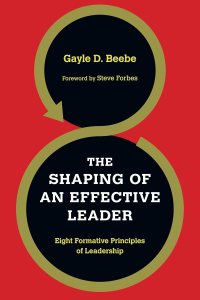
The Shaping of an Effective Leader: Eight Formative Principles of Leadership by Gayle D. Beebe
Westmont College president Gayle Beebe presents his eight principles of effective leadership and weaves in the wisdom of Peter Drucker, under whom he studied. The eight principles are character, competence, chemistry, culture, compatibility, convictions, connections, and commitment.
“Character is the foundation of all leadership responsibilities for all our life.” However, “without threshold competencies, even the most well-meaning individual can do real harm.”
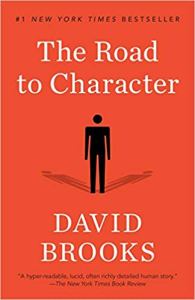
New York Times columnist David Brooks frames character as eulogy virtues as opposed to résumé virtues. “Most of us have clearer strategies for how to achieve career success than we do for how to develop a profound character.”
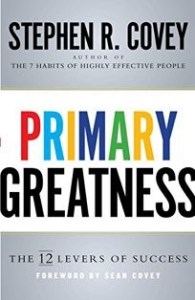
Primary Greatness: The 12 Levers of Success by Stephen R. Covey
This is a book about integrity and character. It is about leadership as well as personal development. “There’s no such thing as organizational behavior, only individual behavior… Leadership is communicating to another person their worth and potential so clearly they are inspired to see it in themselves… The common thread in the best thinking on management and leadership is this: People both want and need to feel that their lives and work have meaning.”
“Primary greatness is who you really are—your character, your integrity, your deepest motives and desires. Secondary greatness is popularity, title, position, fame, fortune, and honors… Going for secondary greatness without primary greatness doesn’t work. People don’t build successful lives on the unstable sands of what is outwardly or temporarily popular, but they do build successful lives on the bedrock of principles that do not change.”
“Character is foundational. All else builds on this cornerstone. Even the very best structure, system, style, and skills can’t compensate completely for deficiencies in character… People get lost when they use a local norm or internal standard to justify covert or corrupt business practices… Universal principles like respect, empathy, honesty, and trust ultimately govern.”
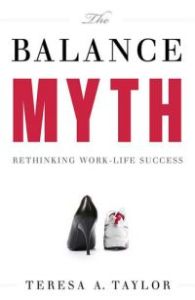
The Balance Myth: Rethinking Work-Life Success by Teresa A. Taylor
Teresa Taylor is a former COO of a Qwest Communications. She writes about how she navigated her career while also juggling the demands of her personal life as a wife and mother of two boys. As the title implies, she found that “trying to achieve this mythical ‘balance’ simply causes us endless frustration.” She uses layers of clothing as an analogy. You can add or remove layers to adapt to changing circumstances. “Thinking in layers allows you to integrate your work and your personal time to create one life and one family.”
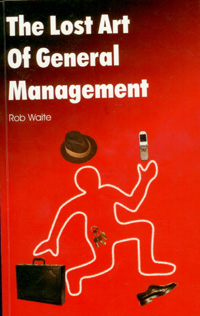
In The Lost Art of General Management, Rob Waite shares practical insights from his career as a hands-on general manager for various building materials manufacturers in the U.S., Canada, Latin America, and Europe. Like a good executive communicator, he gets straight to the point.
Waite contends today’s managers have become functionally myopic. A general manager needs to take a broader view, while understanding how the company makes its money and how its customers make money.
 The Key Point