The New Economics

the-new-economics


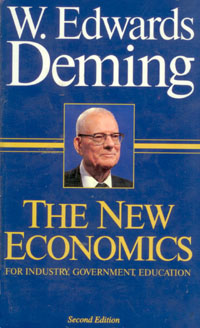
The New Economics for Industry, Government, Education
by W. Edwards Deming (1900-1993)

Deming is a legendary name in quality management, especially in Japan through his consulting work with Japanese industry from 1950 onward. He died in 1993 at age 93 before the second edition of this book went to press.

“This book is for people who are living under the tyranny of the prevailing style of management,” writes Deming in the preface. He has strong convictions, many of which are counter to conventional management thinking.

Continue reading “The New Economics”
Good to Great

good-to-great


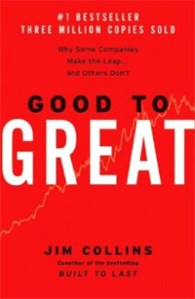
Good to Great: Why Some Companies Make the Leap… and Others Don’t
by Jim Collins

Jim Collins previously co-authored Built to Last, which studied common attributes of enduringly great companies. Good to Great studies companies which made a transition to greatness: 15 years of lagging stock performance followed by 15 years of cumulative stock returns 3 times the overall market.

Continue reading “Good to Great”

The Experience Economy


The Experience Economy: Work is Theatre & Every Business is a Stage
by B. Joseph Pine II and James H. Gilmore

The Experience Economy is about the progression of economic value:

  • Commodities – coffee beans
  • Goods – ground coffee
  • Services – a cup of coffee at a diner
  • Experiences – cup of coffee at a fine restaurant or trendy café

“Commodities are fungible, goods are tangible, services intangible, and experiences memorable… The easiest way to turn a service into an experience is to provide poor service.”

Continue reading “The Experience Economy”

The Powell Principles


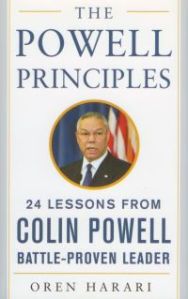
The Powell Principles: 24 Lessons From Battle-Proven Leader Colin Powell
by Oren Harari

Business professor Oren Harari (1949-2010) encapsulated Colin Powell’s (1937-2021) lessons of leadership in 24 three-page chapters. “The Powell Principles constitute a clear, strategic, philosophical, value-based, and ethical blueprint. The blueprint guides Powell, but the blueprint has enormous flexibility and opportunism built into it.” The 24 lessons are:

Continue reading “The Powell Principles”

The No Asshole Rule


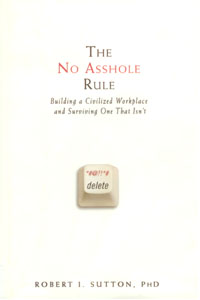
The No Asshole Rule: Building a Civilized Workplace and Surviving One That Isn’t
by Robert I. Sutton

Assholes create a toxic work environment, destroying productivity. Sutton introduces the Total Cost of Assholes (TCA) metric. In the case of a salesman named Ethan, the cost was estimated at $160,000, including time spent by Ethan’s manager, HR professionals, senior executives, outside counsel, as well as the costs related to high turnover of support staff.

Sutton warns not to hire wimps and polite clones. “A series of controlled experiments and field studies in organizations show that when teams engage in conflict over ideas in an atmosphere of mutual respect, they develop better ideas and perform better. For this reason, Intel requires all new employees to take “constructive confrontation class.”


Sutton, Robert I. The No Asshole Rule: Building a Civilized Workplace and Surviving One That Isn’t. New York: Business Plus, 2010. Buy from Amazon.com


Disclosure: As an Amazon Associate I earn from qualifying purchases.

The Innovator’s Dilemma

the-innovators-dilemma-2


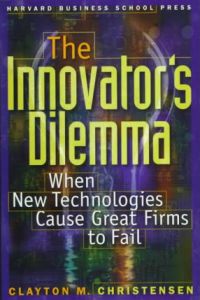
The Innovator’s Dilemma
by Clayton Christensen

Why have many once market-leading companies failed to stay relevant?  It would be easy to assume that they had stagnant engineers or complacent management, but Clayton Christensen concludes otherwise: “Because they carefully studied market trends and systematically allocated investment capital to innovations that promised the best returns, they lost their positions of leadership.”

How is that possible? The key is to understand the distinction between sustaining and disruptive innovation.  Large companies are good are sustaining innovation—product improvements demanded by existing customers.

Continue reading “The Innovator’s Dilemma”

18 Minutes


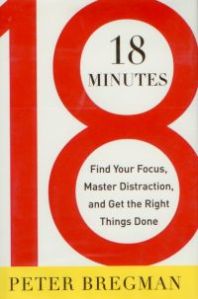
18 Minutes: Find Your Focus, Master Distraction, and Get the Right Things Done
by Peter Bregman

Peter Bregman writes, “The world doesn’t reward perfection. It rewards productivity.”  18 Minutes is a book about choosing your priorities and getting things done.

The author suggests finding your focus based on your strengths, weaknesses, differences, and passions. “Assert your differences… Don’t waste your year trying to blend in… Understand your obsessions and you will understand your natural motivation.”

Continue reading “18 Minutes”

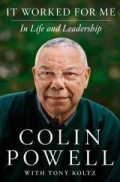
It Worked For Me In Life and Leadership

it-worked-for-me


It Worked For Me: In Life and Leadership
by Colin Powell with Tony Koltz

Few people have the range of experiences of Colin Powell (1937-2021): from janitor of a Pepsi bottler to National Security Advisor, from Chairman of the Joint Chiefs to Secretary of State. In It Worked For Me he shares stories in a conversational style, many of which include a leadership lesson. And yes, he also includes a chapter on his infamous United Nation presentation, arguably the low point of his career.

It was interesting to hear what it was like to work with Ronald Reagan. In the chapter called Squirrels, Reagan seemed detached from the dilemma Powell was explaining to him (he seemed more interested in the squirrels outside his window), but upon reflection Powell figured out that Reagan wanted his subordinates to make their own decisions. In a separate incident involving a confrontation between U.S. and Iranian naval forces, Reagan was very decisive in his presidential decision when the matter required his approval.

Continue reading “It Worked For Me In Life and Leadership”