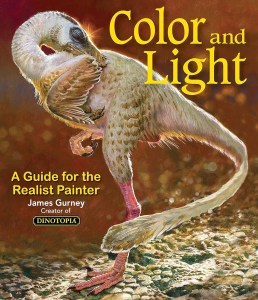
Color and Light: A Guide for the Realist Painter by James Gurney
James Gurney has a talent for explaining complicated topics in simple language. Each of 90 topics is explained on a 2-page spread, illustrated with the author’s plein air, portrait, and fantasy paintings—he is the creator of the Dinotopia series. Color harmony is a recurring theme.
“Viewers will see the subject, but feel the color and light.”
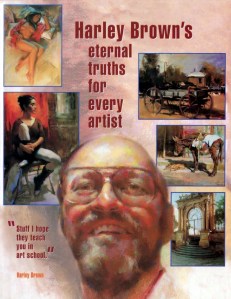
Harley Brown’s Eternal Truths for Every Artist by Harley Brown
Harley Brown is an artist and art instructor who works in pastel and oil paint. In this book he shares his advice on how to paint a variety of subjects with attention to designing an interesting composition with harmonious colors and the integration of light and shadow.
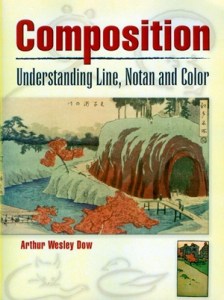
Composition: Understanding Line, Notan, and Color by Arthur Wesley Dow (1857-1922)
Composition is “the ‘putting together’ of lines, masses and colors to make a harmony. Design, understood in its broad sense, is a better word, but popular usage has restricted it to decoration.”
In the visual arts, “there are three structural elements with which harmonies may be built up” – line, notan, and color.
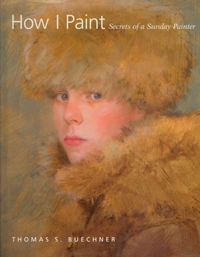
How I Paint: Secrets of a Sunday Painter by Thomas S. Buechner (1926-2010)
Paintings by Thomas Buechner hang in the collections of the Metropolitan Museum of Art and the Smithsonian American Art Museum. This book is primarily about technique, featuring dozens of the author’s still lifes, landscapes, portraits, and figures along with commentary about the process. “One purpose of this book is to make looking at pictures, at the surface of the original work, a source of insight and pleasure.”
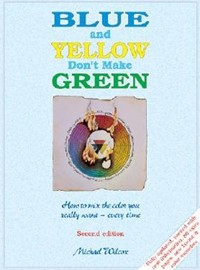
Blue and Yellow Don’t Make Green: How to mix the color you want—every time by Michael Wilcox
“Have you ever wondered why it is so difficult to mix the exact colors that you need? And why it is so easy to mix dull, grayed colors, commonly known as mud?… In order to obtain a wider range of colors we purchase a variety of reds, yellows and blues, together with several greens, oranges, violets, browns, and grays. Painting starts to become expensive and confusing.”
The main premise of this book is that the three-primary color system needs to be abandoned in favor a six-color system. To begin, we need to understand how portions of the color spectrum are either absorbed or reflected by a surface. A surface appears black because it absorbs all colors. A surface appears white if it reflects all colors.
So what happens if you mix pure yellow and pure blue?
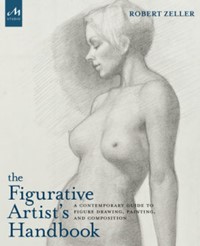
The Figurative Artist’s Handbook: A Contemporary Guide to Figure Drawing, Painting, and Composition by Robert Zeller
Unlike other figure drawing instruction books, this one begins with a 67-page crash course in art history. “Figurative art always conveys a narrative, a point of view. At the present, it is considered vital for a figurative artist to have his or her own artistic voice, and to exhibit some originality. How can you hope to be original, to continue the conversation, if you do not listen to the past, to those who have come before you?”
The instructional chapters of the book are divided by pose category: Standing Figure, Front View; Standing Figure, Back View; Reclining Figure; Portrait Drawing; and Portrait Painting. Here are some of the common themes.
“Gesture is a river of movement, energy, and rhythm that flows through the figure in any given pose… Once you understand gesture you will be able to see the essential rhythm of a pose, which will allow you to properly plan your drawing. Think of gesture as a conceptual road map. Before you start drawing with your hand, first learn to draw with your eyes… Begin by scanning the entire figure for gestures that flow through the various forms, learning to see how all of the parts of the figure are connected… Learn to see this axis of energy first so that when you draw, you will be able to forge greater unity among the various parts of the figure.”
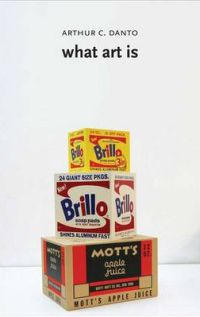
The dust jacket sums up Arthur Danto’s definition of art nicely. “A work of art is always defined by two essential criteria: meaning and embodiment, as well as one additional criterion contributed by the viewer: interpretation.”
 The Key Point