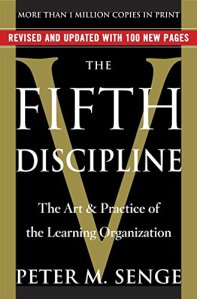
The Fifth Discipline: The Art and Practice of the Learning Organization by Peter M. Senge
Senge writes, “I believe that, the prevailing system of management is, at its core, dedicated to mediocrity. It forces people to work harder and harder to compensate for failing to tap the spirit and collective intelligence that characterizes working together at their best.”
The subtitle is about the learning organization, but the book is also very much about systems thinking.
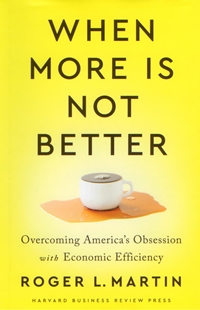
When More Is Not Better: Overcoming America’s Obsession with Economic Efficiency by Roger L. Martin
Roger Martin, dean of the Rotman School of Management at the University of Toronto from 1998 to 2013, writes about a fragile imbalance in the U.S. economy and the erosion of the middle class. Major themes include efficiency vs. resilience, reductionist thinking vs. complex adaptive systems, and gaming the system. He cites examples of companies where an obsession with efficiency was catastrophic, and conversely, where slack is the secret sauce. He offers policy solutions in such areas as antitrust, taxation, stockholder voting rights, and education.
The Shareholder Value Myth: How putting shareholders first harms investors, corporations, and the public by Lynn Stout (1957-2018)
Business schools and law schools teach that the purpose of a corporation is to maximize shareholder wealth. “Shareholder wealth, in turn, is typically measured by share price—meaning share price today, not share price next year or next decade.” Lynn Stout (1957-2018), who was a business law professor at Cornell, makes the case that this is both untrue and harmful.
“United States corporate law does not, and never has, required directors of public corporations to maximize either share price or shareholder wealth… State statutes similarly refuse to mandate shareholder primacy… As long as boards do not use their power to enrich themselves, the [business judgment rule] gives them a wide range of discretion to run public corporations with other goals in mind, including growing the firm, creating quality products, protecting employees, and serving the public interest. Chasing shareholder value is a managerial choice, not a legal requirement.”
Effectiveness in Context: A Manual for Brand Building by Les Binet and Peter Field
Binet and Field have analyzed 18 years of data (1998-2016) from the London-based Institute of Practitioners in Advertising’s IPA Databank, “the confidential data submitted alongside entries to the biennial IPA Effectiveness Awards competition.” This book presents their findings on what works best—in general and in various contexts.
Topics include market penetration, brand-building vs. sales activation, emotional vs. rational consideration, share of voice, pricing, and innovation.
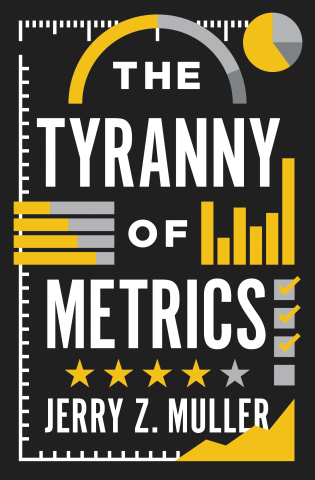
“This book argues that while they are a potentially valuable tool, the virtues of accountability metrics have been oversold, and their costs are often underappreciated.” There are chapters on the dysfunction of “metric fixation” in colleges and universities; schools; medicine; policing; the military; business; and philanthropy. Problems include gaming the system, costs exceeding benefits, and diverting effort from the core mission. A major theme is metrics as a substitute for competent judgment.
 The Key Point