Boards that Lead: When to Change, When to Partner, and When to Stay Out of the Way by Ram Charan, Dennis Carey, Michael Useem
“A board can be a destroyer or a creator of value.” This book presents an excellent analysis of how the inept boards of Hewlett-Packard, Motorola, and AIG destroyed shareholder value; interesting insights into the turnarounds of Apple and Tyco; CEO succession at Ford, 3M, and GlaxoSmithKline; and Procter & Gamble’s acquisition of Gillette.
The Prophet offers wisdom on 26 topics—about three pages on each. Gibran writes in poetic prose with a liberal use of archaic words, presumably to sound biblical. Some of the meaning is immediately clear, while other parts require some reflection to decipher the deeper meaning.
On Work. The author stresses the importance of finding work you enjoy. “For if you bake bread with indifference, you bake a bitter bread that feeds but half man’s hunger. And if you grudge the crushing of the grapes, your grudge distils a poison in the wine.”
On Marriage. Gibran observes that marriage is a union between individuals, not a merger. “Let there be spaces in your togetherness, and let the winds of the heavens dance between you… The oak tree and the cypress grow not in each other’s shadow.”
Everybody Writes: Your Go-To Guide to Creating Ridiculously Good Content by Ann Handley
Everybody Writes is a catchy title, although a more accurate one would be Writing Tips for Content Marketing.
Here’s the secret formula: “The multiplication signs are important, because if the value of any one of these things (Utility, Inspiration, or Empathy) is zero, then the sum of your content is a big fat zero, too… Utility x Inspiration x Empathy = Quality Content.” I think she means product—not sum—but I like the idea.
Being Mortal: Medicine and What Matters in the End by Atul Gawande, M.D.
This book is about aging with autonomy and dying with dignity.
“The waning days of our lives are given over to treatments that addle our brains and sap our bodies for a sliver’s chance of benefit. They are spent in institutions—nursing homes and intensive care units—where regimented, anonymous routines cut us of from all the things that matter to us in life. Our reluctance to honestly examine the experience of aging and dying has increased the harm we inflict on people and denied them the basic comforts they most need… What if there are better approaches, right in front of your eyes, waiting to be recognized?”
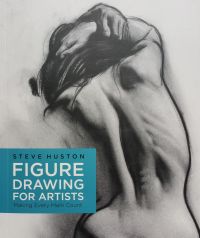
Figure Drawing For Artists: Making Every Mark Count by Steve Huston
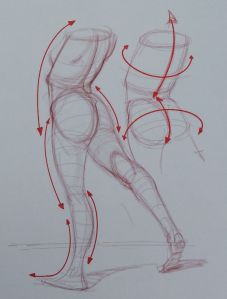
The two most fundamental concepts in Steve Huston’s approach to figure drawing are structure and gesture—the parts and the relationship between the parts.
“To understand and use the idea of structure well, it’s best to think like a sculptor, meaning we build our drawing and painting (as in sculpture) through a series of constructed forms… Think of it as the scaffold on which to hang your designs and rendering techniques.”
“Constructed forms automatically feel three dimensional when done well because the lines move over the form. Another way to think of it is that every mark we make, whether carefully rendered or loosely sketched, should act as a visual arrow.”
“Gesture is the connection, the relationship between the shapes… Gesture is the lifeline embedded inside any living form… This gestural idea makes your art look natural… It keeps our drawings from looking stiff, mechanical, and pieced together. It’s what gives the subject a lively and organic quality.”
Gesture is the long axis curve of the structure. “Gesture is defined by the long axis because all body parts connect end to end… Any artist who just focuses on the pieces ends up with pieced-together results. Art’s job is to orchestrate life into something powerful, effecting, and meaningful—something greater than the individual parts… Gesture is the chef’s secret sauce.”
“The longer and more graceful the gestural curve, the more smoothly the eye moves over the various forms… Always err on the side of the more dynamic. That means, if the gesture is curved, make it more curved. If the shadow is dark, make it a little darker.”
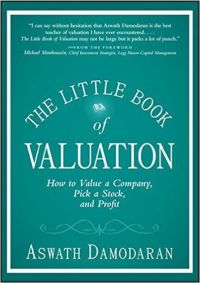
The Little Book of Valuation: How to Value a Company, Pick a Stock, and Profit by Aswath Damodaran
How do you determine if a stock is overpriced or a bargain? NYU finance professor Aswath Damodaran explains.
“There are dozens of valuation models but only two valuation approaches: intrinsic and relative… The intrinsic value of an asset is determined by the cash flows you expect that asset to generate over its life and how uncertain you feel about these cash flows. Assets with high and stable cash flows should be worth more than assets with low and volatile cash flows… In relative valuation, assets are valued by looking at how the market prices similar assets.”
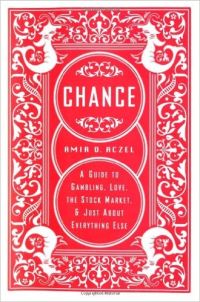
Chance: A Guide to Gambling, Love, The Stock Market, and Just About Everything Else By Amir D. Aczel (1950-2015)
This is a book about probability, the “quantitative measure of the likelihood of a given event.” The author applies probability theory in numerous scenarios.
Assuming a World War II pilot had a 2% chance of being shot down on each mission, what are the chances of a pilot being shot down in 50 missions? Nope—it is not 50 x 0.02. Using the law of unions of independent events, the answer is 1 – 0.9850 = 64%. In another example, there are three overnight couriers with an on-time record of 90%, 88%, and 92% respectively. If someone sent an important document using all three services, what is the probability of at least one of them delivering on time? The answer is 1 – (0.10 x 0.12 x 0.08) = 99.904%.
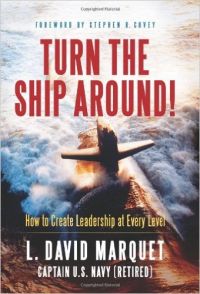
Turn the Ship Around: How to Create Leadership at Every Level by L. David Marquet , Captain, U.S. Navy (Retired)
Capt. Marquet writes about implementing a profoundly different management approach when he took command of the worst performing submarine in the U.S. Navy. “Within a year, the situation was totally turned around. We went from worst to first in most measures of performance, including the one I valued the most—our ability to retain our sailors and officers.”
“Disengaged, dissatisfied, uncommitted employees erode an organization’s [productivity] while breaking the spirits of their colleagues.” Marquet found the root cause of the problem to be the leader-follower structure, in which subordinates “have limited decision-making authority and little incentive to give the utmost of their intellect, energy, and passion… We had 135 men on board and only 5 of them fully engaged their capacity to observe, analyze, and problem solve.”
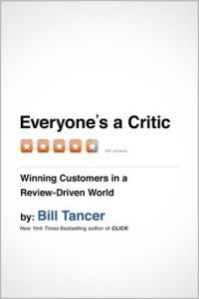
Everyone’s a Critic: Winning Customers in a Review-Driven World by Bill Tancer
I must admit that I approached this book with a certain bias. Having read a lot of Amazon reviews, it becomes apparent there are a lot of games being played in the world of online reviews. Bill Tancer acknowledges the shenanigans, but focuses on using customer reviews to drive revenue and to provide competitive intelligence.
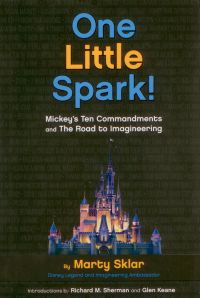
One Little Spark! Mickey’s Ten Commandments and The Road to Imagineering by Marty Sklar (1934-2017) with introductions by Richard M. Sherman and Glen Keane
Marty Sklar was hired by Walt Disney in 1955, prior to the opening of Disneyland. He rose through the ranks to president of Imagineering, the group responsible for Disney’s theme parks worldwide. He retired in 2009 after a 54-year career with the company.
The first part of the book explains Mickey’s Ten Commandments, guiding principles developed by Sklar in 1983. The second half of the book consists of career advice from 75 Imagineers. The most prominent recurring theme in this book is storytelling.

 The Key Point