Affordable Excellence: The Singapore Healthcare Story


Affordable Excellence: The Singapore Healthcare Story
by William A. Haseltine

The Singapore healthcare system produces world-class outcomes at half the cost of Western European countries and less than one-fourth the cost of the United States: Singapore spends 4% of GDP on healthcare; the United States spends 18%.  The World Health Organization ranked Singapore 6th in overall performance; the United States ranked 37th. (See page 200, The World Health Report 2000.)

Looking at costs of specific procedures, ”an angioplasty in the United States is almost $83,000, while in Singapore the cost is about $13,000. A gastric bypass in the United States is almost $70,000, while in Singapore the cost is $15,000. (These figures are in US dollars and include at least one day of hospitalization).”

This book explains how the system works.

Continue reading “Affordable Excellence: The Singapore Healthcare Story”

Narrative and Numbers


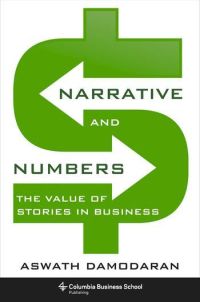
Narrative and Numbers: The Value of Stories in Business
by Aswath Damodaran

Aswath Damodaran is a professor of finance at NYU who has written several books on business valuation, including The Little Book of Valuation: How to Value a Company, Pick a Stock, and Profit.

In this book, he computes valuation based on the business narrative. “One of the most important lessons I have learned is that a valuation that is not backed up by a story is both soulless and untrustworthy and that we remember stories better than spreadsheets.” Conversely, “when a storyteller has wandered into fantasyland, the easiest way to bring him or her back to Earth is with data that suggests the journey is either impossible or improbable.” Thus, “you need to bring both stories and numbers into play in investing and business, and valuation is the bridge between the two.”

Continue reading “Narrative and Numbers”

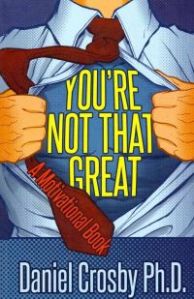
You’re Not That Great


You’re Not That Great
by Daniel Crosby

Psychologist Daniel Crosby tells it like it is in this book about the numerous ways human nature can work against us, not the least of which is egoistic self-absorption (solipsism).

“The biggest finding to emerge from the self-esteem movement was that praise did not predict self-esteem, accomplishment did… Many of the theories about self-esteem that had impacted policy were simply junk science.”

Continue reading “You’re Not That Great”

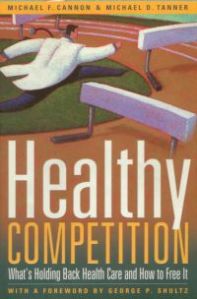
Healthy Competition


Healthy Competition: What’s Holding Back Health Care and How to Free It
by Michael F. Cannon and Michael D. Tanner

Healthy Competition was published in 2005, but I pulled it off my shelf and reread it in early 2017, in the midst of the discourse about how to “repeal and replace” the Affordable Care Act (ACA, also known as Obamacare). Both the ACA and the proposed replacement focus on insurance, ignoring the exorbitant cost of health care in the United States. In this book, Cato Institute scholars Michael Cannon and Michael Tanner examine how the basic economic principles of price transparency, competition, and consumer choice could lower costs, reduce waste, and increase quality of care.

Continue reading “Healthy Competition”

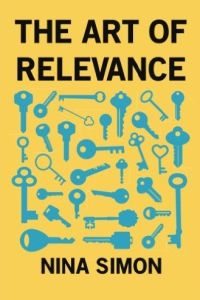
The Art of Relevance

the-art-of-relevance


The Art of Relevance
by Nina Simon

This book explains how museums and other nonprofit organizations can expand audiences and build stronger connections with targeted communities. The author is executive director of the Santa Cruz Museum of Art & History (MAH).

“I believe relevance unlocks new ways to build deep connections with people who don’t immediately self-identify with our work. I believe relevance is the key to a locked room where meaning lives… Behind the door is a room that holds something powerful—information, emotion, experience, value… Relevance is the key to that door.”

“Instead of talking about ‘traditional’ approaches and ‘new’ ones, I find it more productive to talk about insiders and outsiders…”

Continue reading “The Art of Relevance”

Urgent Care: 10 Cures for America’s Ailing Healthcare System

urgent-care-minda-wilson


Urgent Care: 10 Cures for America’s Ailing Healthcare System
by Minda Wilson, J.D.

As I write this in early 2017, there is much chatter about the potential repeal and replacement of the Patient Protection and Affordable Care Act (ACA) commonly known as Obamacare. I was motivated to read this book to get beyond the myopic hysteria and gain a deeper understanding of the problems and possible solutions presented by healthcare attorney Minda Wilson.

“The United States has the world’s highest [per-capita] healthcare cost, double that of Canada… The number one cause of personal bankruptcy in the United States is due to overbearing healthcare costs… A devastating illness means that, beyond your deductible, you could be responsible for a minimum of 30 percent of the medical bills incurred if you stay in-network. If you go outside of your network, then you could be responsible for between 50 percent and 100 percent of every bill.”

Wilson asks, “Why did the [ACA] focus on providing insurance and not healthcare?” I think this is the fundamental issue. The cost of insurance is a function of the cost of claims. So if the main focus is on subsidizing premiums, the law simply masked the underlying problem rather than solving it. “To be clear, deductibles, copays, and/or the costs of excluded care or limits on care were not included in this measure of affordability.”

Continue reading “Urgent Care: 10 Cures for America’s Ailing Healthcare System”

The Truth About Art: Reclaiming Quality

the-truth-about-art


The Truth About Art: Reclaiming Quality
by Patrick Doorly

“A bad work of art is an oxymoron, like bad skill,” writes Patrick Doorly, art history professor at Oxford University. “Art is high-quality endeavor.”

“Quality is not a thing but an event. When the subject [viewer] becomes aware of the object [art], quality describes the relationship that binds them… Beauty does not lie in the eye of the beholder, but that eye and the mind behind it form one half of the dynamic relationship we experience as beauty.”

The quality experience is preverbal. “It operates prior to intellectualization.”

Continue reading “The Truth About Art: Reclaiming Quality”

The Art of Seeing

the-art-of-seeing


The Art of Seeing: An Interpretation of the Aesthetic Encounter
by Mihaly Csikszentmihalyi and Rick E. Robinson

This book explores the enjoyment of viewing art within the framework of flow, the psychology of optimal experience. Flow is an intrinsically rewarding feeling of total involvement in an activity. To be fully engaged in a state of flow, one must be skilled and challenged. The author studied museum professionals as a proxy for the more general art viewing population.

“The experience is one of an initial perceptual hook followed by a more detached, intellectual appreciation that returns the viewer to the work with a deeper understanding.”

“The best examples of objects containing such challenges are works whose meaning appears to be inexhaustible.” As one respondent put it, “‘A good painting will never be used up.’”

Four dimensions of aesthetic experience are explored: cognitive, perceptual, emotional, and communicative.

Continue reading “The Art of Seeing”

Fart Proudly

fart-proudly


Fart Proudly: Writings of Benjamin Franklin You Never Read in School
Compiled and Edited by Carl Japikse

Benjamin Franklin is well known as an important figure in American history. He was a printer, publisher, postmaster, inventor, and ambassador. He helped draft the Declaration of Independence and the Constitution. But he also had a sense of humor. This book contains a collection of his humorous writing, including hoaxes and political satire. Much of these works were written anonymously or under pseudonyms, such as a Richard Saunders, publisher of Poor Richard’s Almanack.

Here are some excerpts.

A Letter to the Royal Academy, 1781. The Royal Academy of Brusselles held a contest in which scientists submitted solutions to a given theoretical problem. Franklin submitted this suggestion for a contest theme with more practical value: “My Prize Question therefore should be, To discover some Drug wholesome and not disagreeable, to be mixed with our common Food, or Sauces, that shall render the Natural Discharges of Wind from our Bodies, not only inoffensive, but agreeable as Perfumes.”

Continue reading “Fart Proudly”