The Tao of Twitter

the-tao-of-twitter


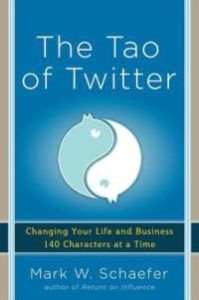
The Tao of Twitter: Changing Your Life and Business 140 Characters at a Time
by Mark W. Schaefer

Twitter is a “non-intuitive communication platform” but Mark Schaefer has figured it out and experienced tangible results. “My four largest customers, five most important collaborators, and my teaching position at Rutgers University all came to me via Twitter connections.”

Continue reading “The Tao of Twitter”

The Higher Education Bubble

the-higher-education-bubble


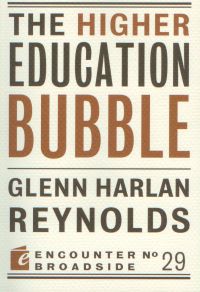
The Higher Education Bubble
by Glenn Harlan Reynolds

In the first decade of the new millennium we saw the dot-com bubble and housing bubble end badly. In this concise 48-page booklet, University of Tennessee law professor Glenn Harlan Reynolds explains why higher education will be the next bubble to burst. “Bubbles burst when there are no longer enough excessively optimistic and ignorant folks to fuel them.”

Continue reading “The Higher Education Bubble”

Pyramids Are Tombs

pyramids-are-tombs


Pyramids Are Tombs
by Joe Phelps

Pyramids Are Tombs covers two major topics: organizational structure and integrated marketing communications.

Many companies claim to be focused on the customer, but Joe Phelps walks the walk. His marketing agency is structured around “self-directed, client-centered teams” which he describes as “the optimum model for today’s knowledge workers.”

Continue reading “Pyramids Are Tombs”

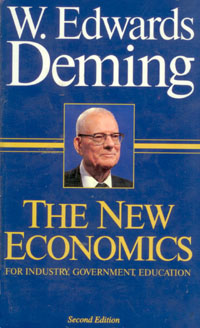
The New Economics

the-new-economics


The New Economics for Industry, Government, Education
by W. Edwards Deming (1900-1993)

Deming is a legendary name in quality management, especially in Japan through his consulting work with Japanese industry from 1950 onward. He died in 1993 at age 93 before the second edition of this book went to press.

“This book is for people who are living under the tyranny of the prevailing style of management,” writes Deming in the preface. He has strong convictions, many of which are counter to conventional management thinking.

Continue reading “The New Economics”

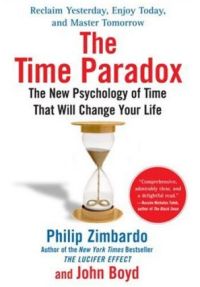
The Time Paradox

the-time-paradox


The Time Paradox: The New Psychology of Time That Will Change Your Life
by Philip Zimbardo and John Boyd

This book is about time perspective.  The authors say that time-balanced people are “more successful in work and career and happier in relationships with family and friends… [and] live more fully in the here and now. Such a person is able to tie the past and the future to the present in meaningful continuity.”

Continue reading “The Time Paradox”

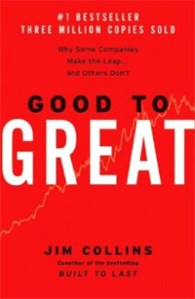
Good to Great

good-to-great


Good to Great: Why Some Companies Make the Leap… and Others Don’t
by Jim Collins

Jim Collins previously co-authored Built to Last, which studied common attributes of enduringly great companies. Good to Great studies companies which made a transition to greatness: 15 years of lagging stock performance followed by 15 years of cumulative stock returns 3 times the overall market.

Continue reading “Good to Great”

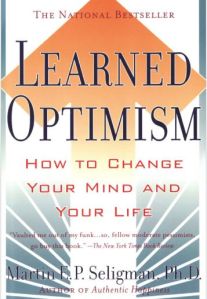
Learned Optimism

learned-optimism


Learned Optimism
by Martin E. P. Seligman

“Explanatory style” is the way we think about life’s events.  We can have either an optimistic or a pessimistic explanatory style.  Seligman’s research found that changing pessimism into optimism relieves depression.

A pessimistic explanatory style frames negative events in terms that are personal, permanent, and pervasive—I’m a failure, This always happens to me, This screws up my whole life.  Seligman offers the ABCDE technique to reframe explanatory style. The letters stand for adversity, belief, consequences, dispute (your negative beliefs), and energize.

Continue reading “Learned Optimism”

The Emotional Intelligence Quick Book

the-emotional-intelligence-quick-book


The Emotional Intelligence Quick Book
by Travis Bradberry and Jean Greaves

The Emotional Intelligence Quick Book is a concise and easy to absorb introduction to the topic. “Emotional intelligence is the product of two main skills: personal and social competence. Personal competence focuses more on you as an individual, and is divided into self-awareness and self-management. Social competence focuses more on how you behave with other people, and is divided into social awareness and relationship management.” The authors credit Daniel Goleman with introducing the four-skill model in the book Primal Leadership.

Continue reading “The Emotional Intelligence Quick Book”

Rethinking Reputation

rethinking-reputation


Rethinking Reputation: How PR Trumps Marketing and Advertising in the New Media World
by Fraser P. Seitel and John Doorley

This book gets off to a weak start. Chapter one is not about reputation management. It’s about how a couple of NYU students launched a shoe company on a shoestring budget. (Hint: Find a patent attorney who will work for you without charge.) Chapters three and five sound like they could have been written by publicists for Merck and Johnson & Johnson. In fact, coauthor John Doorley has held positions at both firms (and he teaches at NYU). The chapter on T. Boone Pickens’ energy independence campaign states that he spent $100 million “with more than half focused on paid media.”  That seems to undermine premise of the subtitle.

Continue reading “Rethinking Reputation”