Intellectual Property Law

intellectual-property-law-saunders


Intellectual Property Law: Legal Aspects of Innovation and Competition
by Kurt M. Saunders, J.D., LL.M.

Intellectual Property Law covers trade secrets, patents, copyrights, trademarks, the right of publicity, protecting intellectual property internationally, and best practices for the handling of unsolicited ideas. Selected cases illustrate the legal theory with real-world conflicts, and explain the legal precedents established by the courts.

Although written as a business-school textbook, this book would also be a pertinent reference for professionals in a range of industries in the knowledge economy. Awareness of the law can help executives protect their rights and stay out of trouble.

In a global economy, how do you fight counterfeit products? What can you do about gray market sales? The chapter on international aspects explains the relevant treaties, notably the TRIPS Agreement, as well as the role of the WTO and the ITC.

What happens when a small business, which has been using a common law trademark for 50 years, is sued for infringement by a newer company which has registered the trademark with the USPTO? The answer is that concurrent use is allowed until the federal trademark owner competes directly. One of the purposes of trademark law is to prevent confusion in the mind of the consumer as to the origin of the product.

Continue reading “Intellectual Property Law”
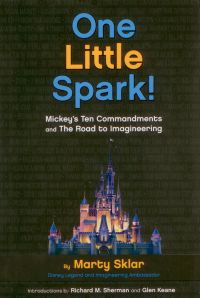
One Little Spark

one-little-spark


One Little Spark! Mickey’s Ten Commandments and The Road to Imagineering
by Marty Sklar (1934-2017) with introductions by Richard M. Sherman and Glen Keane

Marty Sklar was hired by Walt Disney in 1955, prior to the opening of Disneyland. He rose through the ranks to president of Imagineering, the group responsible for Disney’s theme parks worldwide. He retired in 2009 after a 54-year career with the company.

The first part of the book explains Mickey’s Ten Commandments, guiding principles developed by Sklar in 1983. The second half of the book consists of career advice from 75 Imagineers. The most prominent recurring theme in this book is storytelling.

Continue reading “One Little Spark”

A Technique for Producing Ideas

a-technique-for-producing-ideas


A Technique for Producing Ideas
by James Webb Young

This concise booklet was first published in the 1940s by James Webb Young, who became vice president of the advertising firm J. Walter Thompson and the first chairman of The Advertising Council. He wrote it in response to the question, “How do you get ideas?”

Before explaining the process, Young presents two principles.

Continue reading “A Technique for Producing Ideas”

Steal Like an Artist

steal-like-an-artist


Steal Like an Artist: 10 Things Nobody Told You About Being Creative
by Austin Kleon

Austin Kleon writes, “All advice in autobiographical… This book is me talking to a previous version of myself… These ideas apply to anyone who’s trying to inject some creativity into their life and their work. (That should describe all of us.)” The book is thoughtfully written and designed in a creative six-inch by six-inch format.

The idea behind stealing like an artist is that “nothing is completely original… All creative work builds on what came before… If we’re free from the burden of trying to be completely original, we can stop trying to make something out of nothing, and we can embrace influence instead of running away from it.”

Continue reading “Steal Like an Artist”

The Myths of Creativity

the-myths-of-creativity


The Myths of Creativity: The Truth About How Innovative Companies and People Generate Great Ideas
by David Burkus

“Creativity is the starting point for all innovation, and most organizations rely on innovation to create a competitive advantage.” In this interesting book, management professor David Burkus debunks 10 myths of creativity, citing academic research and examples from business.

Continue reading “The Myths of Creativity”

Six Thinking Hats

six-thinking-hats-edward-de-bono


Six Thinking Hats
by Edward de Bono, M.D.

The Six Thinking Hats offers “an alternative to the argument system, which was never intended to be constructive or creative.” The emphasis is on “how we design a way forward—not on who is right and who is wrong.”

A major benefit is time savings. De Bono claims that ABB reduced their multinational project team discussions from 21 days to two days using the Six Hats method. “In the United States, managers spend nearly 40 percent of their time in meetings… Instead of rambling, ego-driven meetings, meetings are now constructive, productive, and much faster.”

Continue reading “Six Thinking Hats”

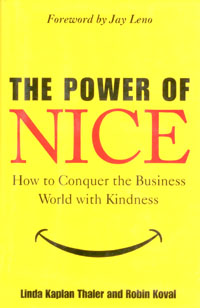
The Power of Nice

the-power-of-nice


The Power of Nice: How to Conquer the Business World With Kindness
by Linda Kaplan Thaler and Robin Koval

You may not be familiar with the authors’ names, but you are probably familiar with their work. They are the founding partners of the advertising agency responsible for the Aflac duck campaign.  One of them wrote the “I want to be a Toys R Us Kid” jingle earlier in her career.

Their message is that being nice (but not phony) in personal and professional encounters builds goodwill, which can lead to big and small rewards.  Many examples are included in the book.

Continue reading “The Power of Nice”

Rodin on Art and Artists

rodin-on-art-and-artists


Rodin on Art and Artists
Conversations with Paul Gsell. Translated by Romilly Fedden.

Paul Gsell asked Auguste Rodin questions about his creative process and about art in general.  This book is, for the most part, a transcript of those conversations.

Rodin’s favorite subject was the human figure. “Beauty is character and expression. Well, there is nothing in nature which has more character than the human body… The human body is, above all, the mirror of the soul, and from the soul comes its greatest beauty.”

Continue reading “Rodin on Art and Artists”

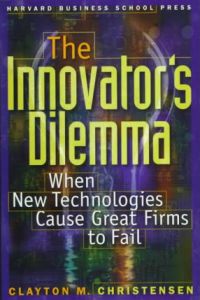
The Innovator’s Dilemma

the-innovators-dilemma-2


The Innovator’s Dilemma
by Clayton Christensen

Why have many once market-leading companies failed to stay relevant?  It would be easy to assume that they had stagnant engineers or complacent management, but Clayton Christensen concludes otherwise: “Because they carefully studied market trends and systematically allocated investment capital to innovations that promised the best returns, they lost their positions of leadership.”

How is that possible? The key is to understand the distinction between sustaining and disruptive innovation.  Large companies are good are sustaining innovation—product improvements demanded by existing customers.

Continue reading “The Innovator’s Dilemma”