Decisionscape: How Thinking Like an Artist Can Improve Our Decision-Making


Decisionscape: How Thinking Like an Artist Can Improve Our Decision-Making
by Elspeth Kirkman

“Knowingly or not, we often draw on the logic of pictorial space as a metaphor for our decisions. We use phrases like getting things in perspective or blowing them out of proportion… And we implore one another to zoom out or see the big picture.”

Elspeth Kirkman is a behavioral scientist who uses the analogy of art making to explain the psychology of decision making. “I call this mental representation the decisionscape… The central idea of this book is that we could improve our decisions, whether personal or professional, by constructing and analyzing it deliberately, just as an artist approaches the canvas.”

Continue reading “Decisionscape: How Thinking Like an Artist Can Improve Our Decision-Making”
Nine Lies About Work: A Freethinking Leader’s Guide to the Real World


Nine Lies About Work: A Freethinking Leader’s Guide to the Real World
by Marcus Buckingham and Ashley Goodall 

Conventional management practices are based on a mindset of conformity and control. The authors, in contrast, argue the key to optimum performance is encouraging individuals make the most of their idiosyncratic strengths. The authors study team performance and employee engagement for ADP Research Institute and Cisco respectively.

Continue reading “Nine Lies About Work: A Freethinking Leader’s Guide to the Real World”

An interview with Mark C. Crowley, author of Lead from the Heart

An interview with Mark C. Crowley
author of Lead from the Heart:
Transformational Leadership for the 21st Century

December 16, 2020 — 63 minutes — Book ReviewAmazon

      • [0:01:04] Employee engagement.
      • [0:13:16] Hiring people with heart.
      • [0:18:56] Connect on a personal level. Manager as a coach.
      • [0:21:43] If you don’t give a shit about people, none of this is going to work.
      • [0:24:28] Maximize employee potential.
      • [0:26:27] Flow.
      • [0:32:25] The boss who doesn’t care about you.
      • [0:34:10] Value and honor achievements.
      • [0:37:17] The heart is a feeling, sensing organ.
      • [0:42:23] Work From Home.
      • [0:49:44] How the wrong people get promoted.
      • [0:55:58] Organizational culture and values.

Transcript
Continue reading “An interview with Mark C. Crowley, author of Lead from the Heart”

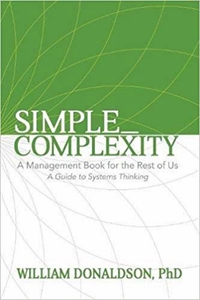
Simple Complexity: a Management Book for the Rest of Us, a Guide to Systems Thinking


Simple Complexity: a Management Book for the Rest of Us, a Guide to Systems Thinking
by William Donaldson

This book is about applying the principles of complexity and systems thinking to management. “Every organization is a system—in fact, a system of systems, perfectly designed to get the results it is getting today… Systems thinking is the unifying discipline that brings clarity to all of the other disciplines at work in your enterprise… The key, defining concept of systems thinking to remember is that nothing in the system is ever unconnected.”

Donaldson emphasizes the importance of context. “You have to ensure everyone has shared mental models of the enterprise and its management system… Remembering that context can enhance learning and comprehension by 50-100 percent, you must give employees context for both the part of the system they play a role in and the whole system.”

Continue reading “Simple Complexity: a Management Book for the Rest of Us, a Guide to Systems Thinking”

Turn the Ship Around

turn-the-ship-around


Turn the Ship Around: How to Create Leadership at Every Level
by L. David Marquet , Captain, U.S. Navy (Retired)

Capt. Marquet writes about implementing a profoundly different management approach when he took command of the worst performing submarine in the U.S. Navy. “Within a year, the situation was totally turned around. We went from worst to first in most measures of performance, including the one I valued the most—our ability to retain our sailors and officers.”

“Disengaged, dissatisfied, uncommitted employees erode an organization’s [productivity] while breaking the spirits of their colleagues.” Marquet found the root cause of the problem to be the leader-follower structure, in which subordinates “have limited decision-making authority and little incentive to give the utmost of their intellect, energy, and passion… We had 135 men on board and only 5 of them fully engaged their capacity to observe, analyze, and problem solve.”

Continue reading “Turn the Ship Around”

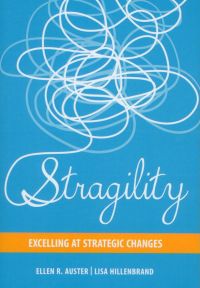
Stragility

stragility


Stragility: Excelling at Strategic Changes
by Ellen R. Auster and Lisa Hillenbrand

“Tragically, more than 70 percent of change efforts fail and in most cases the organization emerges weaker—exhausted, demoralized, and confused.”  To combat this, authors Auster and Hillenbrand have coined the portmanteau word “Stragility” to represent a skill set for “strategic, agile, people-powered change… Without ongoing agility, even good strategies will fail.”

Continue reading “Stragility”

Strengths Finder 2.0

strengths-finder-2-0


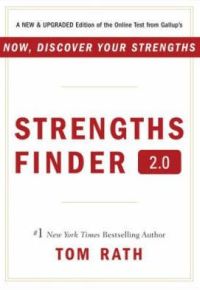
Strengths Finder 2.0
by Tom Rath

The premise of this book is that people are happiest and most productive when their work is well suited to their strengths. Conversely, many people pursue the “path of most resistance.” The book includes a code to access an online assessment which will identify your top five strengths.

“Gallup has surveyed more than 10 million people worldwide on the topic of employee engagement… People who do have the opportunity to focus on their strengths every day are six times as likely to be engaged in their jobs and more than three times as likely to report having an excellent quality of life in general.”

Continue reading “Strengths Finder 2.0”

What Keeps Leaders Up at Night

what-keeps-leaders-up-at-night


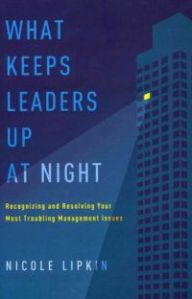
What Keeps Leaders Up at Night: Recognizing and Resolving Your Most Troubling Management Issues
by Nicole Lipkin

In this excellent book, clinical psychologist Nicole Lipkin explains the psychology behind many of the human behaviors that affect productivity and sound decision making in the workplace. “Good leadership requires dealing effectively with messy, quirky, unpredictable, confusing, irrational, and clumsy people. That is what makes the business of leadership so insanely difficult and complex.”

Continue reading “What Keeps Leaders Up at Night”