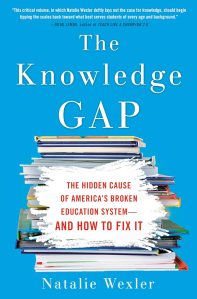
The Knowledge Gap


The Knowledge Gap: The Hidden Cause of America’s Broken Education System — and How to Fix It
by Natalie Wexler

I have been seeing a steady flow of articles about the stunted literacy among high school graduates and college students.* Wexler’s excellent reportage indirectly points to a root cause: flawed reading pedagogy in elementary school. In a nutshell, the book explains the dire consequences of the shift from phonics-based reading instruction to “whole language” (aka “balanced literacy”) methods which focus on reading “skills” independent of content.

Aside from this prevailing method being unsupported by cognitive science—and never mind that the whole point of reading is to comprehend meaning—it creates a compounding problem in other subjects like science, history, and civics because students acquire knowledge and understanding by building on existing knowledge. So, if the seeds aren’t planted in elementary school, high school teachers have no foundation to build upon.

Chapter 11 makes me wonder if the mind-boggling surge in learning disability diagnoses* may be explained, in part, by the trend toward ineffective reading instruction, that is to say reading inabilities rather than cognitive disabilities.

Continue reading “The Knowledge Gap” →
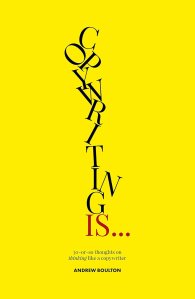
Copywriting Is…


Copywriting Is… 30-or-So Thoughts on Thinking Like a Copywriter
by Andrew Boulton  

Andrew Boulton is an advertising copywriter, lecturer, and columnist from the U.K. He is clearly a man of letters, but apparently not a numbers guy: this book has neither chapter numbers nor page numbers. I counted 36 chapters and 220 pages in which Boulton reflects on the creative practice of copywriting. Here are some highlights.

“We are in the business of purposeful attention—getting noticed, of course, but then doing something meaningful with that attention…The very nature of the job is to be, not the loudest voice, but the most compelling—to say something conventional and familiar in a way that feels extraordinary and unavoidable.”

Continue reading “Copywriting Is…” →

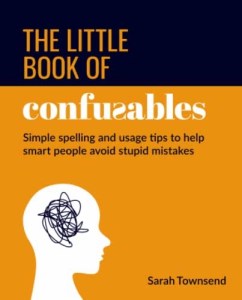
The Little Book of Confusables


The Little Book of Confusables: Simple spelling and usage tips to help smart people avoid stupid mistakes
by Sarah Townsend

This book disambiguates 600 commonly confused words. Examples include: aggravated, agitated; a lot, allot; assume, presume; coherent, cohesive; discreet, discrete; enervate, innervate, innovate; faze, phase; feasible, plausible; flaunt, flout; fortuitous, fortunate; historic, historical; hoard, horde; indolent, insolent; literal, littoral; loath, loathe; sleight, slight; tack, tact; tortuous, torturous; unkempt, unkept; vain, vane, vein; and wet, whet.

I was happy to learn that French quotation marks are called « guillemet ». I’ll be careful not to confuse that with guillemot, “a sea bird that nests on cliff edges.”

Continue reading “The Little Book of Confusables” →

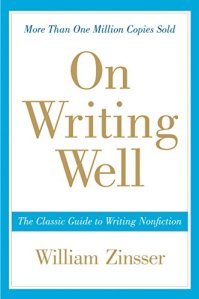
On Writing Well


On Writing Well: An Informal Guide to Writing Nonfiction
by William Zinsser (1922-2015)

William Zinsser taught nonfiction writing at Yale and he was editor of Book-of-the-Month Club. In a nutshell, the message is that good writing is clear, simple, and unpretentious. My father gave me a copy of the third edition of this book when I graduated from high school in the 1980s. While recently rereading it I was amused by Zinsser’s description of a new invention called a word processor—almost like someone describing their car as a horseless carriage. But otherwise the book stands up to the test of time (and there’s a newer edition available).

Continue reading “On Writing Well” →

An interview with Peter McGraw author of Shtick to Business

An interview with Peter McGraw
author of Shtick to Business: What the masters of comedy can teach you
about breaking rules, being fearless, and building a serious career.

October 15, 2020 — 38 minutes — Book Review — Amazon

  • [00:58] “that guy”
  • [03:53] behavioral economics
  • [06:59] group genius
  • [12:09] liminal spaces
  • [15:45] warm team and feature creep
  • [23:26] two paths to a creative solution
  • [26:18] writing is a cheat code for life
  • [34:19] where you find a lot of growth

Transcript Continue reading “An interview with Peter McGraw author of Shtick to Business” →

Copywriting Made Simple


Copywriting Made Simple: How to Write Powerful and Persuasive Copy that Sells
by Tom Albrighton

This is an excellent introduction to copywriting, offering general advice on the process as well as specific tips for print advertisements, audio and video scripts, sales letters, emails, brochures, and social media posts. The book is divided into three parts: plan your copy, write your copy, and improve your copy.

Continue reading “Copywriting Made Simple” →

Federal Plain Language Guidelines


Federal Plain Language Guidelines

Although oriented towards helping U.S. government employees write clear regulations, the Federal Plain Language Guidelines offers great advice for any nonfiction writer. It includes a section on writing content for web sites.

Here are some highlights.

“Address one person, not a group. Remember that even though your document may affect a thousand or a million people, you are speaking to the one person who is reading it. When your writing reflects this… [it] has a greater impact.”

Continue reading “Federal Plain Language Guidelines” →

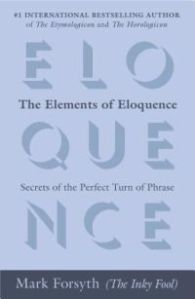
The Elements of Eloquence

the-elements-of-eloquence


The Elements of Eloquence: Secrets of the Perfect Turn of Phrase
by Mark Forsyth

The Elements of Eloquence is about “the figures of rhetoric, which are the techniques for making a single phrase striking and memorable… They are the formulas for producing great lines.” Mark Forsyth writes with a sense of humor and he quotes examples from The Beatles, John F. Kennedy, Shakespeare, and Yoda.

Continue reading “The Elements of Eloquence” →