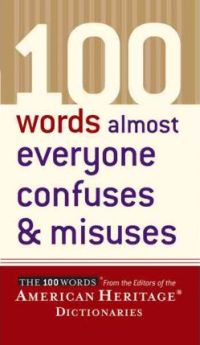
100 Words Almost Everyone Confuses and Misuses
by the Editors of the American Heritage Dictionaries
Here are some examples of frequently misused words from the book.
Continue reading “100 Words Almost Everyone Confuses and Misuses”
100 Words Almost Everyone Confuses and Misuses
by the Editors of the American Heritage Dictionaries
Here are some examples of frequently misused words from the book.
Continue reading “100 Words Almost Everyone Confuses and Misuses”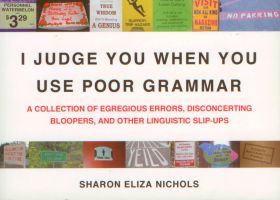
I Judge You When You Use Poor Grammar: A Collection of Egregious Errors, Disconcerting Bloopers, and Other Linguistic Slip-Ups
by Sharon Eliza Nichols
This collection of linguistically impaired signs includes dangling modifiers, apostrophe errors, misspellings, and other amusing misadventures. As a coffee table book, it is sure to get a few laughs.
Here are some examples:
Continue reading “I Judge You When You Use Poor Grammar”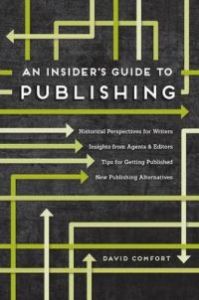
An Insider’s Guide to Publishing
by David Comfort
An Insider’s Guide to Publishing is a well-researched dose of reality for aspiring novelists looking to get their work published. Although not mentioned on the cover, the content is specifically for writers of fiction. It is organized into 58 short chapters grouped in 13 parts, making it convenient to read in small increments of spare time. David Comfort demonstrates a sense of humor in his own writing and his selection of quotes from others.
Continue reading “An Insider’s Guide to Publishing”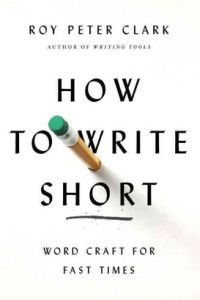
How to Write Short: Word Craft for Fast Times
by Roy Peter Clark
“A time-starved culture bloated with information hungers for the lean, clean, simple, and direct… Think of how grateful you are as a listener when the graduation speaker, no matter how powerful, delivers the goods in ten minutes rather than twenty, or, even better, five minutes rather than ten.”
Continue reading “How to Write Short”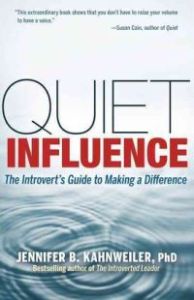
Quiet Influence: The Introvert’s Guide to Making a Difference
by Jennifer B. Kahnweiler
Jennifer Kahnweiler observes “that introverts can be highly effective influencers when they stop trying to act like extroverts and instead make the most of their natural, quiet strengths.” She points out some noteworthy introverted influencers, including Eleanor Roosevelt, Charles Darwin, Mahatma Gandhi, Abraham Lincoln, Rosa Parks, Warren Buffet, Condoleezza Rice, Steven Spielberg, and J.K. Rowling. “Quiet influence is not about talking a great game to win the deal. It is a less understood approach to influence and differs from more ‘out there’ talkative methods.”
Continue reading “Quiet Influence: The Introvert’s Guide to Making a Difference”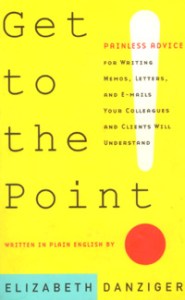
Get to the Point: Painless advice for writing memos, letters, and e-mails your colleagues and clients will understand
by Elizabeth Danziger
Elizabeth Danziger’s advice on using clear, clutter-free language is consistent with the classic On Writing Well by William Zinsser, but this book is more useful as manual, whereas Zinsser’s book is more conceptual.
When is it appropriate to use which or that? The author provides an informal “just do it” rule and a formal “grammar police” rule.
Continue reading “Get to the Point”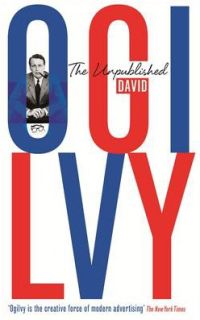
The Unpublished David Ogilvy: His secrets of management, creativity, and success—from private papers and public fulminations
This collection of David Ogilvy’s memos, letters, speech excerpts, and other documents was compiled by an Ogilvy & Mather executive to commemorate the founder’s 75th birthday. The writings span a 50-year period from 1935-1986. The cool thing about this book is that most of the contents were not written with the intent to be published, so it feels like a behind-the-scenes look at his management style as well as his thoughts on various subjects.
Continue reading “The Unpublished David Ogilvy”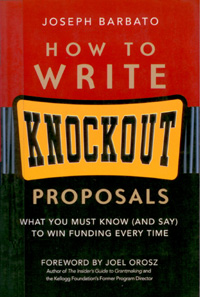
How to Write Knockout Proposals: What you must know (and say) to win funding every time.
by Joseph Barbato
The theme of this book boils down to one line on page 117: “Make it as easy as possible for them to give you money.”
Barbato emphasizes the importance of clear writing and attention to detail. He suggests a less-is-more approach: “Instead of offering four prosaic examples of how your project matters, tell one powerful story that drives home the potential of your work.” A template is included in chapter 24, guiding the reader on how to structure a grant proposal.
The book is concise and well organized in 53 two-page chapters. I like this format, but I think more could have been written about cover letters.
Disclosure: As an Amazon Associate I earn from qualifying purchases.
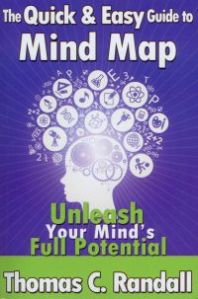
The Quick and Easy Guide to Mind Map
by Thomas C. Randall
This book introduces the topic of mind mapping. A mind map is a diagram used to visually communicate the relationships between ideas. The mind map starts with a keyword or short phrase. Lines are drawn out to sub-ideas, then to sub-sub-ideas if applicable.
The book explains several uses for mind maps, such as:
Continue reading “The Quick and Easy Guide to Mind Map”
Elmore Leonard’s 10 Rules of Writing
Elmore Leonard’s 10 Rules of Writing offers good advice about writing fiction, although the implicit theme pertains to any writing. Essentially, don’t let your writing style distract from what you are trying to say.
My favorite tip is #10: “Try to leave out the part that readers tend to skip.”
Continue reading “Elmore Leonard’s 10 Rules of Writing” The Key Point