Good Business

good-business-mihaly-csikszentmihalyi


Good Business: Leadership, Flow, and the Making of Meaning
by Mihaly Csikszentmihalyi (1934-2021)

Good Business is about enjoyment of work and productivity. It is based on the author’s research on flow, the psychology of optimal experience.

Flow is “a deep sense of enjoyment.” To be fully engaged in a state of flow, one must be skilled and challenged. “Basically, the more a person feels skilled, the more her moods will improve; while the more challenges that are present, the more her attention will become focused and concentrated.”

Continue reading “Good Business”

Strengths Finder 2.0

strengths-finder-2-0


Strengths Finder 2.0
by Tom Rath

The premise of this book is that people are happiest and most productive when their work is well suited to their strengths. Conversely, many people pursue the “path of most resistance.” The book includes a code to access an online assessment which will identify your top five strengths.

“Gallup has surveyed more than 10 million people worldwide on the topic of employee engagement… People who do have the opportunity to focus on their strengths every day are six times as likely to be engaged in their jobs and more than three times as likely to report having an excellent quality of life in general.”

Continue reading “Strengths Finder 2.0”

Nonprofit Meetings, Minutes & Records

nonprofit-meetings-minutes-records-nolo


Nonprofit Meetings, Minutes & Records: How to Run Your Nonprofit Corporation So You Don’t Run Into Trouble, Second Edition
by Anthony Mancuso

This book offers some good insights for anyone who serves on the board of a nonprofit organization, especially the board secretary. If the board of directors ignores its bylaws and state nonprofit laws, the organization could lose its tax-exempt status. Director liability is another concern.

Continue reading “Nonprofit Meetings, Minutes & Records”

The New Rules of Marketing and PR

the-new-rules-of-marketing-and-pr-4th


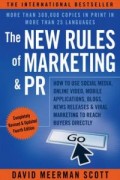
The New Rules of Marketing and PR, Fourth Edition
by David Meerman Scott

David Meerman Scott is an experienced marketing executive who says that interruption-based marketing techniques are ineffective. “I’ve done it the old way. It doesn’t work anymore.” Under the new rules, marketers publish their own content and speak directly with buyers.

“The Internet has made public relations public again… Your newsroom is for your buyers, not just the media… By building a media room that targets buyers, you will not only enhance those pages as a powerful marketing tool but also make a better media site for journalists.”

Continue reading “The New Rules of Marketing and PR”

Big Data Marketing

big-data-marketing


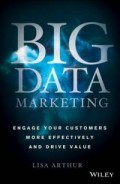
Big Data Marketing: Engage Your Customers More Effectively and Drive Value
by Lisa Arthur

“Why don’t you know your customers better?” Lisa Arthur’s diagnosis: “Your data is fragmented.”

“Today’s marketers must engage buyers and prospects with conversations, solicit and act on customer feedback, and deliver experiences that are personalized, timely, and relevant.” Big data marketing makes this possible.

Continue reading “Big Data Marketing”

The Five Most Important Questions You Will Ever Ask About Your Organization

the-five-most-important-questions


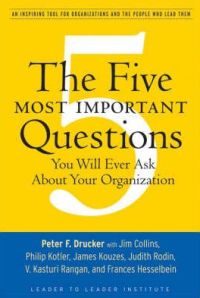
The Five Most Important Questions You Will Ever Ask About Your Organization
by Peter F. Drucker (1909-2005) et al

This book offers a strategic planning framework for nonprofit organizations. It can help board members set the direction by asking five questions.

What is our mission? The mission must reflect opportunities, competence, and commitment. Drucker cautions, “Never subordinate the mission in order to get money. If there are opportunities that threaten the integrity of the organization, you must say no.”

Continue reading “The Five Most Important Questions You Will Ever Ask About Your Organization”

Content Marketing: Think Like a Publisher

content-marketing-rebecca-lieb


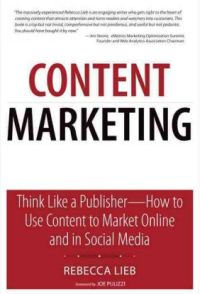
Content Marketing: Think Like a Publisher—How to Use Content to Market Online and in Social Media
by Rebecca Lieb

“Instead of advertising, the shift is toward publishing… Companies are sharing: knowledge, expertise, and how-to. They know customers who might not have 30 seconds to spend on watching one of their ads might gladly surrender 30 minutes to dive into truly useful content.”

Continuing the ‘think like a publisher’ theme, an editorial calendar “ties that broader schedule together with specifics such as holidays, trade shows, company announcements, events (such as webinars), or new product launches… The editorial calendar also serves as an invaluable map for repurposing content.”

Continue reading “Content Marketing: Think Like a Publisher”

The Art Forger

the-art-forger


The Art Forger
by B.A. Shapiro

The Art Forger is a novel inspired by a Hollywood-style art museum robbery that took place in Boston in 1990. It is about a struggling artist who is offered a lot of money and a career-changing opportunity if she will create a forgery from one of the stolen paintings.

She takes possession of an original Degas painting in her studio. Or does she? As she studies details of the painting, she begins to doubt its authenticity. Is she forging a forgery?

Continue reading “The Art Forger”

An Insider’s Guide to Publishing

an-insiders-guide-to-publishing-david-comfort


An Insider’s Guide to Publishing
by David Comfort

An Insider’s Guide to Publishing is a well-researched dose of reality for aspiring novelists looking to get their work published. Although not mentioned on the cover, the content is specifically for writers of fiction. It is organized into 58 short chapters grouped in 13 parts, making it convenient to read in small increments of spare time. David Comfort demonstrates a sense of humor in his own writing and his selection of quotes from others.

Continue reading “An Insider’s Guide to Publishing”

Six Thinking Hats

six-thinking-hats-edward-de-bono


Six Thinking Hats
by Edward de Bono, M.D.

The Six Thinking Hats offers “an alternative to the argument system, which was never intended to be constructive or creative.” The emphasis is on “how we design a way forward—not on who is right and who is wrong.”

A major benefit is time savings. De Bono claims that ABB reduced their multinational project team discussions from 21 days to two days using the Six Hats method. “In the United States, managers spend nearly 40 percent of their time in meetings… Instead of rambling, ego-driven meetings, meetings are now constructive, productive, and much faster.”

Continue reading “Six Thinking Hats”