Good Charts Workbook: Tips, Tools, and Exercises for Making Better Data Visualizations


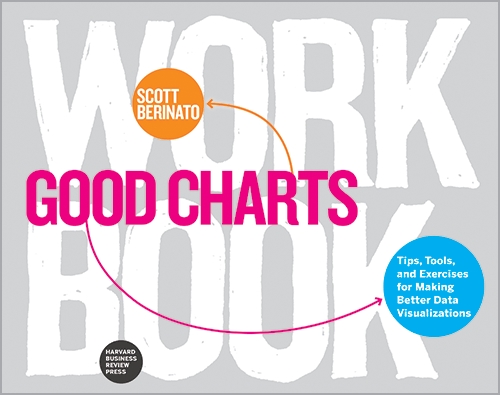
Good Charts Workbook: Tips, Tools, and Exercises for Making Better Data Visualizations
by Scott Berinato

A good visual representation of data can be invaluable for communicating the meaning behind the numbers. This book walks the reader through the thought process and choices in creating visualizations for a variety of cases. “It’s rare you don’t have to make a trade-off to create a good chart… Most of the time there isn’t one right answer, one right chart.” The main topics covered in the book are clarity, color, chart types, and persuasion.

Clarity. Berinato emphasizes decluttering to put the focus on what you want to communicate. “Take stuff away… Remove redundancy… Limit color and eye travel… Use your headline to describe the main idea of a chart, not its structure.”

Continue reading “Good Charts Workbook: Tips, Tools, and Exercises for Making Better Data Visualizations”

Rethinking Risk Management: Critically Examining Old Ideas and New Concepts


Rethinking Risk Management: Critically Examining Old Ideas and New Concepts
by Rick Nason

Rick Nason challenges the status quo of risk management which mindlessly follows third-party frameworks and does too little independent thinking. He argues that risk management acts as “The Department of No” while ignoring upside risk. He envisions risk management as a strategic player in value creation rather than a cost center.

Continue reading “Rethinking Risk Management: Critically Examining Old Ideas and New Concepts”

Art Can Help


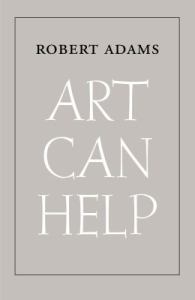
Art Can Help
by Robert Adams

Robert Adams, a photographer of the American West for over 50 years, writes about the art of photography. Before commenting on the works of 27 photographers, he shares his views on art in general, and he examines the work of his favorite painter, Edward Hopper.

“It is the responsibility of artists to pay attention to the world, pleasant or otherwise, and to help us live respectfully in it.  Artists do this by keeping their curiosity and moral sense alive, and by sharing with us their gift for metaphor. Often this means finding similarities between observable fact and inner experience.” 

Continue reading “Art Can Help”

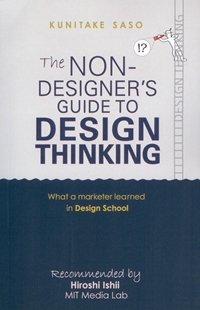
The Non-Designer’s Guide to Design Thinking


The Non-Designer’s Guide to Design Thinking: What a Marketer Learned in Design School
by Kunitake Saso

“The design thinking process is not a collection of steps… [It] is characterized by switching between four different modes as needed, and advancing work through short cycles… You go back and forth between the phases again and again, slowly raising the quality of your output; therefore, it is better to think of it as a compass than as a map.”

The Four Modes of Design Thinking:

  1. Research
  2. Analysis
  3. Synthesis
  4. Prototyping

The author says that 80% of the value is created in the synthesis and prototyping stages.

RESEARCH. The subjects of design research interviews are often “extreme users with strong preferences, or experts in the field and very familiar with the trends” rather than average users.

Continue reading “The Non-Designer’s Guide to Design Thinking”

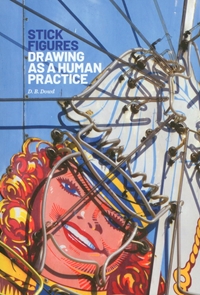
Stick Figures: Drawing as a Human Practice


Stick Figures: Drawing as a Human Practice
by D.B. Dowd (interview)

D.B. Dowd, professor of art and American culture studies at Washington University and faculty director of the D.B. Dowd Modern Graphic History Library, writes that drawing is above all else a tool for learning. This beautifully printed book covers drawing as a means of discovery and communication, confusion between visual modes, a nostalgic look at the field of illustration, and musings about the teaching of art.

Continue reading “Stick Figures: Drawing as a Human Practice”

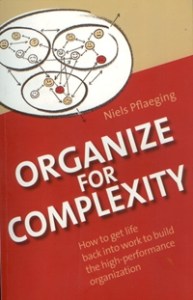
Organize for Complexity


Organize for Complexity: How to get life back into work to build the high-performance organization
by Niels Pflaeging

“As we have seen, the world has already changed—high complexity in value creation has become the norm.” This book proposes a cell-based organizational structure (Beta) better suited to a complex, unpredictable world than the traditional hierarchical system (Alpha). 

Continue reading “Organize for Complexity”

I, Pencil


I, Pencil
by Leonard E. Read

This is the story of how a simple pencil is manufactured using numerous raw materials from all over the world, as told in the first person by the pencil itself.  It was first published in 1958 to explain how free-market economies work and to discredit centrally-planned economies, such as the Soviet Union. While trade barriers are not expressly discussed in the story, the reader can infer potential consequences rippling through the supply chain.

Continue reading “I, Pencil”

The Soft Edge: Where Great Companies Create Lasting Success


The Soft Edge: Where Great Companies Create Lasting Success
by Rich Karlgaard

It is noteworthy that a prominent business journalist from Silicon Valley—where technology and IPOs dominate headlines—wrote a book about the human factors of business success. “The yin and yang of effective management has always been about the search for the right spot between data truth and human truth.”

“Hard-edge execution is all about managing exactly to the numbers. The people who live on the hard edge of business are good at making the trains run on time. They focus on profit. Their language is time, money, and numbers. Every company in the world needs these employees.”

“Soft-edge excellence—in trust, smarts, teams, taste, and story—tends to attract loyal customers and committed employees.” Karlgaard says the soft edge is “the heart and soul” of your company.

Continue reading “The Soft Edge: Where Great Companies Create Lasting Success”

One Year Wiser: 365 Illustrated Meditations


One Year Wiser: 365 Illustrated Meditations
by Mike Medaglia

This book provides an illustrated thought to ponder for each day of the year.  Each page features words of wisdom from a writer, poet, scientist, spiritual leader, or other historical figure. Pages are labeled January 1 through December 31, without a year so the book can be referred to indefinitely. Below are some sample quotes and illustrations.

“And the day came when the risk to remain tight in a bud was more painful than the risk it took to blossom.” – Anaïs Nin

“Reality is like a face reflected in the blade of a knife; its properties depend on the angle from which we view it.” – Master Hsing Yun

Continue reading “One Year Wiser: 365 Illustrated Meditations”