Only the Paranoid Survive


Only the Paranoid Survive: How to Exploit the Crisis Points that Challenge Every Company
by Andrew S. Grove (1936-2016)

“A strategic inflection point is a time in the life of a business when its fundamentals are about to change. The change can mean an opportunity to rise to new heights. But it may just as likely signal the beginning of the end.”

Andy Grove (1936-2016), former chairman of Intel, describes six categories of 10X changes: competition, technology, customers, suppliers, complementors, and regulation. “When a Wal-Mart moves into a small town, the environment changes for every retailer in that town. A 10X factor has arrived. When the technology for sound in movies became popular, every silent actor and actress personally experienced the 10X factor of technological change. When container shipping revolutionized sea transportation, a 10X factor reordered the major ports around the world.”

Continue reading “Only the Paranoid Survive”

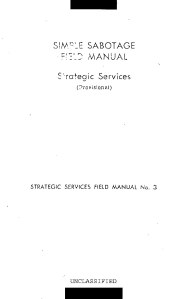
Simple Sabotage Field Manual


Simple Sabotage Field Manual
Office of Strategic Services
William J. Donovan, Director (1883-1959)

The Office of Strategic Services (OSS) was the predecessor of the Central Intelligence Agency (CIA), operating during World War II. This 32-page manual instructs OSS officers on numerous ways citizen-saboteurs can be trained to gum up the works. “Simple sabotage is more than malicious mischief, and it should always consist of acts whose results will be detrimental to the materials and manpower of the enemy.”

“Simple sabotage does not require specially prepared tools or equipment; it is executed by an ordinary citizen who may or may not act individually and without the necessity for active connection with an organized group; and it is carried out in such a way as to involve a minimum danger of injury, detection, and reprisal… Try to commit acts for which large numbers of people could be responsible.” 

Continue reading “Simple Sabotage Field Manual”

The Way of Beauty


The Way of Beauty: Five Meditations for Spiritual Transformation
by François Cheng

François Cheng is a Chinese-French writer who references art and language from both cultures as well as Taoism in his discussion of beauty. Cheng presents some interesting ideas, particularly in the fourth and fifth meditations, within an overall esoteric and meandering text.

Becoming

My favorite thought from this book is the idea of beauty as an experience as opposed to an attribute. “True beauty does not reside only in what is already manifest as beauty… It is a becoming, and the dimension of spirit or soul is vital to it… Beauty is always a becoming, an advent, if not to say an epiphany… Beauty implies interconnectedness, interaction, an encounter between the elements that constitute an occurrence of beauty, between the beauty present and the gaze that beholds it.” 

Continue reading “The Way of Beauty”

Nolo’s Quick LLC


Nolo’s Quick LLC: All You Need to Know About Limited Liability Companies
by Anthony Mancuso

“The limited liability company (LLC) is a relatively new business ownership structure that combines the best features of the corporation and the partnership. It gives small business owners corporate-style protection from personal liability while retaining the pass-through income tax treatment enjoyed by sole proprietorships (the legal term for one-person businesses) and partnerships.” LLC owners are called members.

To determine if an LLC is the best fit for your business, the author explains the advantages and disadvantages of various business structures in comparison to LLCs, including sole proprietorship, general partnership, limited partnership, C corporation, S corporation, RLLP, Series LLP, L3C, and benefit corporations.

Continue reading “Nolo’s Quick LLC”

The Take-Charge Patient: How You Can Get the Best Medical Care


The Take-Charge Patient: How You Can Get the Best Medical Care
by Martine Ehrenclou

Being a take-charge patient is about being a proactive member of your health care team. The book includes advice on primary care and specialist physician visits, avoiding medication errors, surgeries and hospital stays, patient advocates, and some tips on dealing with insurance and billing.

The author recommends you prepare three documents.

Continue reading “The Take-Charge Patient: How You Can Get the Best Medical Care”

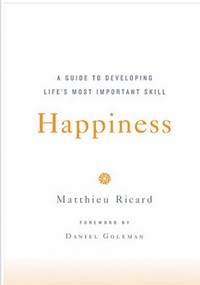
Happiness


Happiness: A Guide to Developing Life’s Most Important Skill
by Matthieu Ricard

Matthieu Ricard gave up a career in cellular genetics at the Institut Pasteur to study Buddhism in the Himalayas. In this book he shares his wisdom about happiness drawing from thirty-five years of studying Buddhism and psychology.

“A change, even a tiny one, in the way we manage our thoughts and perceive and interpret the world can significantly change our existence. Changing the way we experience transitory emotions leads to a change in our moods and to a lasting transformation of our way of being.”

Continue reading “Happiness”

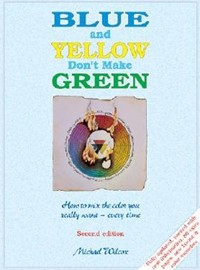
Blue and Yellow Don’t Make Green


Blue and Yellow Don’t Make Green: How to mix the color you want—every time
by Michael Wilcox

“Have you ever wondered why it is so difficult to mix the exact colors that you need? And why it is so easy to mix dull, grayed colors, commonly known as mud?… In order to obtain a wider range of colors we purchase a variety of reds, yellows and blues, together with several greens, oranges, violets, browns, and grays. Painting starts to become expensive and confusing.”

The main premise of this book is that the three-primary color system needs to be abandoned in favor a six-color system. To begin, we need to understand how portions of the color spectrum are either absorbed or reflected by a surface. A surface appears black because it absorbs all colors. A surface appears white if it reflects all colors.

So what happens if you mix pure yellow and pure blue?

Continue reading “Blue and Yellow Don’t Make Green”

Choosing Civility


Choosing Civility: The Twenty-Five Rules of Considerate Conduct
by P.M. Forni

Choosing Civility is about counteracting the “coarsening of America.”  It was published in 2002, but is more relevant than ever.

“Being civil means being constantly aware of others and weaving restraint, respect, and consideration into the fabric of this awareness… When we approach others assuming that they are good, honest, and sensitive, we often encourage them to be just that.”

“Every act of kindness is, first of all, an act of attention… When we relate to the world as if we were on automatic pilot, we can hardly be at our best in our encounters with our fellow human beings.”

“Restraint is our inner designated driver. We all have it, and we all can learn to summon it whenever we need it… Restraint is an infusion of thinking—and thoughtfulness—into everything we do.”

Continue reading “Choosing Civility”

The Figurative Artist’s Handbook: A Contemporary Guide to Figure Drawing, Painting, and Composition


The Figurative Artist’s Handbook: A Contemporary Guide to Figure Drawing, Painting, and Composition
by Robert Zeller

Unlike other figure drawing instruction books, this one begins with a 67-page crash course in art history. “Figurative art always conveys a narrative, a point of view. At the present, it is considered vital for a figurative artist to have his or her own artistic voice, and to exhibit some originality. How can you hope to be original, to continue the conversation, if you do not listen to the past, to those who have come before you?”

The instructional chapters of the book are divided by pose category: Standing Figure, Front View; Standing Figure, Back View; Reclining Figure; Portrait Drawing; and Portrait Painting. Here are some of the common themes.

“Gesture is a river of movement, energy, and rhythm that flows through the figure in any given pose… Once you understand gesture you will be able to see the essential rhythm of a pose, which will allow you to properly plan your drawing. Think of gesture as a conceptual road map. Before you start drawing with your hand, first learn to draw with your eyes… Begin by scanning the entire figure for gestures that flow through the various forms, learning to see how all of the parts of the figure are connected… Learn to see this axis of energy first so that when you draw, you will be able to forge greater unity among the various parts of the figure.”

Continue reading “The Figurative Artist’s Handbook: A Contemporary Guide to Figure Drawing, Painting, and Composition”