Shop Class as Soulcraft: An Inquiry into the Value of Work


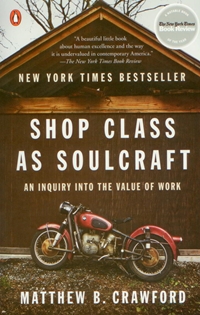
Shop Class as Soulcraft: An Inquiry into the Value of Work
by Matthew B. Crawford

This book is primarily about restoring honor to the manual trades. Crawford writes about the “rich cognitive challenges and psychic nourishment” that come with “the experience of making things and fixing things.”

It makes sense to start with some context about the author’s career path. “I started working as an electrician’s helper shortly before I turned fourteen… When I couldn’t get a job with my college degree in physics, I was glad to have something to fall back on, and went into business for myself.” Later, Crawford went back to school and earned a Ph.D. in political philosophy. He took a job as executive director of a think tank, but he found the work dispiriting. “Despite the beautiful ties I wore, it turned out to be a more proletarian existence than I had known as a manual worker.” After only five months, he quit and opened a motorcycle repair shop. “Perhaps most surprising, I often find manual work more engaging intellectually.”

Continue reading “Shop Class as Soulcraft: An Inquiry into the Value of Work”

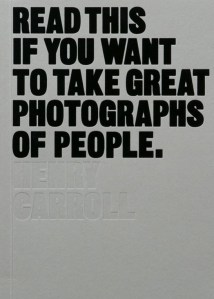
Read This If You Want to Take Great Photographs of People


Read This If You Want to Take Great Photographs of People
by Henry Carroll

“Don’t take pictures of people. Take pictures about people.”

Carroll explains the rules of thumb for a traditional portrait, but the book is mainly about moving beyond that.  “Don’t suppress your subject’s physical nuances. This is what makes them who they are. There are rules in portraiture about how your subjects should stand, what they should do with their hands, and so on. These rules are fine for corporate headshots, because they’re designed to remove any trace of a person’s individuality. But that’s not what we’re about, right?” 

Continue reading “Read This If You Want to Take Great Photographs of People”

Federal Plain Language Guidelines


Federal Plain Language Guidelines

Although oriented towards helping U.S. government employees write clear regulations, the Federal Plain Language Guidelines offers great advice for any nonfiction writer. It includes a section on writing content for web sites.

Here are some highlights.

Address one person, not a group. Remember that even though your document may affect a thousand or a million people, you are speaking to the one person who is reading it. When your writing reflects this… [it] has a greater impact.”

Continue reading “Federal Plain Language Guidelines”

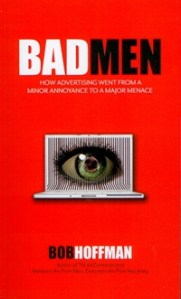
BadMen: How Advertising Went From a Minor Inconvenience to a Major Menace


BadMen: How Advertising Went from a Minor Inconvenience to a Major Menace
by Bob Hoffman

In this concise, informative, hilariously irreverent, and brutally honest book, former advertising agency CEO Bob Hoffman explains why ad tech is bad for advertisers, publishers, and consumers. He also calls on advertisers to stop enabling this menace.

“Surveillance marketing is powered largely by advertisers through the tracking of our movements on the web. This is called ‘ad tech.’”

Continue reading “BadMen: How Advertising Went From a Minor Inconvenience to a Major Menace”

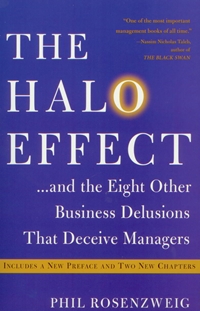
The Halo Effect and the Eight Other Business Delusions That Deceive Managers


The Halo Effect and the Eight Other Business Delusions That Deceive Managers
by Phil Rosenzweig

Many business books and articles have been written about what Phil Rosenzweig calls “the mother of all business questions… What leads to high performance?” This book explains why much of this analysis is “riddled with errors.”

Using the examples of Cisco, ABB, and others, the author demonstrates the phenomenon. When times were good—strong revenue growth and a soaring stock price—these companies were praised for their exemplary strategy, culture, and CEO. When financial performance fell, the same strategy, culture, and CEO were ripped apart as severely flawed.

Why does this happen? Because we love stories. “As long as Cisco was growing and profitable and setting records for its share price, managers and journalists and professors inferred that it had a wonderful ability to listen to its customers, a cohesive culture, and a brilliant strategy. And when the bubble burst, observers were quick to make the opposite attribution. It all made sense. It told a coherent story.”

“Yet there’s a bit more to it. Our desire to tell stories, to provide a coherent direction to events, may also cause us to see trends that do not exist or infer causes incorrectly. We may ignore facts because they don’t fit into our story.”

How does this happen? Introducing the Halo Effect. 

Continue reading “The Halo Effect and the Eight Other Business Delusions That Deceive Managers”

Fixing Broken Windows: Restoring Order and Reducing Crime in Our Communities


Fixing Broken Windows: Restoring Order and Reducing Crime in Our Communities
by George L. Kelling and Catherine M. Coles

The origin of broken windows theory was an article in the March 1982 edition of The Atlantic by George L. Kelling and James Q. Wilson about the link between disorder and serious crime. The term comes from an analogy: “Social psychologists and police officers tend to agree that if a window in a building is broken and is left unrepaired, all the rest of the windows will soon be broken. This is as true in nice neighborhoods as in rundown ones… One unrepaired broken window is a signal that no one cares.”

Continue reading “Fixing Broken Windows: Restoring Order and Reducing Crime in Our Communities”

Using Systems Thinking to Solve Real-World Problems


Using Systems Thinking to Solve Real-World Problems
by Jamie P. Monat and Thomas F. Gannon

“Systems thinking focuses on the relationships among system components and the interactions of the system with its environment, as opposed to focusing on the components themselves… Those relationships typically dominate the behavior of systems.” As an antidote to myopia, systems thinking takes a holistic and integrative approach.

Continue reading “Using Systems Thinking to Solve Real-World Problems”

Primary Greatness: The 12 Levers of Success


Primary Greatness: The 12 Levers of Success
by Stephen R. Covey

This is a book about integrity and character. It is about leadership as well as personal development. “There’s no such thing as organizational behavior, only individual behavior… Leadership is communicating to another person their worth and potential so clearly they are inspired to see it in themselves… The common thread in the best thinking on management and leadership is this: People both want and need to feel that their lives and work have meaning.”

“Primary greatness is who you really are—your character, your integrity, your deepest motives and desires. Secondary greatness is popularity, title, position, fame, fortune, and honors… Going for secondary greatness without primary greatness doesn’t work. People don’t build successful lives on the unstable sands of what is outwardly or temporarily popular, but they do build successful lives on the bedrock of principles that do not change.”

“Character is foundational. All else builds on this cornerstone. Even the very best structure, system, style, and skills can’t compensate completely for deficiencies in character… People get lost when they use a local norm or internal standard to justify covert or corrupt business practices… Universal principles like respect, empathy, honesty, and trust ultimately govern.” 

Continue reading “Primary Greatness: The 12 Levers of Success”

A Consumer’s Guide to Information

a-consumers-guide-to-information


A Consumer’s Guide to Information: How to Avoid Losing Your Mind on the Internet
by Katherine Pickering Antonova

“Critical thinking is a rational process of sorting and weighing information so that we can find what we need and have confidence in what we know… We have to train ourselves to work past our first reactions… Even people who have many years of training and experience in research fields still need to constantly remind themselves to question their own biases.”

The theme of this book by history professor Katherine Pickering Antonova is evidence-based critical thinking. She covers the structure of logical arguments, logical fallacies, reliability of sources, the charade of opposing-view talking head television, search engine tips, and some basic concepts about science and statistics.

Continue reading “A Consumer’s Guide to Information”

The Little Book of Mindfulness: 10 Minutes a Day to Less Stress, More Peace


The Little Book of Mindfulness: 10 Minutes a Day to Less Stress, More Peace
by Dr. Patrizia Collard

Dr. Patrizia Collard is a psychotherapist, stress management consultant, and lecturer at the University of East London.  She writes, “The goal of any mindfulness practice is simply to experience life as it unfolds. To stay present and calm and not slip back into thinking/worrying mode, we choose an anchor of awareness—a point of focus we direct our mind to.”

“Mindfulness is being aware of or bringing attention to this moment in time deliberately and without judging the experience. So, when we go for a mindful walk we really notice every little detail and all we encounter—trees, cars, flowers growing out of small cracks, or a cat crossing the road—rather than creating to-do lists.”

“When we procrastinate and distract ourselves with ‘busyness,’ we avoid engaging with the real thing—our lives… Living in the moment, and seeing everything afresh without judgment and worry lets us experience life rather than simply get through it.”

Continue reading “The Little Book of Mindfulness: 10 Minutes a Day to Less Stress, More Peace”