101 Things I Learned in Advertising School


101 Things I Learned in Advertising School
by Tracy Arrington with Matthew Frederick

“To some, advertising has no soul, no center… It’s the art of lying.” Advertising executive Tracy Arrington writes, “I would argue the opposite. Advertising is the art of telling the truth. An ad campaign succeeds when it brings forward an embedded truth—about the product or service, our needs or idiosyncrasies as consumers, our daily foibles, or the fixations and biases of our culture. An ad campaign resonates when it shows us, at some level, who we are.”

Here’s a sampling of the expertise shared by the author. 

Continue reading “101 Things I Learned in Advertising School”

A Technique for Producing Ideas

a-technique-for-producing-ideas


A Technique for Producing Ideas
by James Webb Young

This concise booklet was first published in the 1940s by James Webb Young, who became vice president of the advertising firm J. Walter Thompson and the first chairman of The Advertising Council. He wrote it in response to the question, “How do you get ideas?”

Before explaining the process, Young presents two principles.

Continue reading “A Technique for Producing Ideas”

Marketing Insights from A to Z

marketing-insights-a-to-z


Marketing Insights from A to Z: 80 Concepts Every Manager Needs to Know
by Philip Kotler

Professor Kotler covers a lot of ground quickly as he reflects on 80 marketing-related topics—the average chapter length is 2.3 pages. “My 40-year career in marketing has produced some knowledge and even a little wisdom…  Zen emphasizes learning by means of meditation and direct, intuitive insights. The thoughts in this book are a result of my meditations on these fundamental marketing concepts and principles.”

In the chapter on customer satisfaction, Kotler comments on the impact of customer retention on profitability.

Continue reading “Marketing Insights from A to Z”

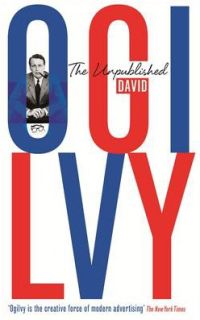
The Unpublished David Ogilvy

the-unpublished-david-ogilvy-2


The Unpublished David Ogilvy: His secrets of management, creativity, and success—from private papers and public fulminations

This collection of David Ogilvy’s memos, letters, speech excerpts, and other documents was compiled by an Ogilvy & Mather executive to commemorate the founder’s 75th birthday. The writings span a 50-year period from 1935-1986. The cool thing about this book is that most of the contents were not written with the intent to be published, so it feels like a behind-the-scenes look at his management style as well as his thoughts on various subjects.

Continue reading “The Unpublished David Ogilvy”

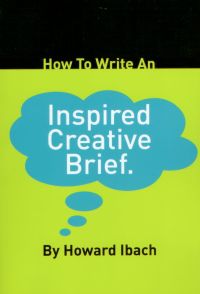
How to Write an Inspired Creative Brief

how-to-write-an-inspired-creative-brief


How to Write an Inspired Creative Brief
by Howard Ibach

In an advertising agency, a creative brief is a set of instructions for the creative team, providing a clear understanding of the communication objectives and expected deliverables.  “If you get the brief wrong, the creative work you see at the end of the process, when your team presents it, will also be wrong.” Garbage in, garbage out.

Continue reading “How to Write an Inspired Creative Brief”

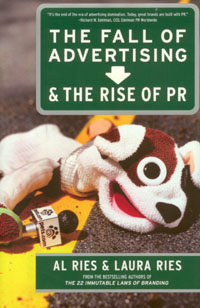
The Fall of Advertising and the Rise of PR

the-fall-of-advertising-rise-of-pr


The Fall of Advertising and The Rise of PR
by Al Ries and Laura Ries

The Fall of Advertising and The Rise of PR is about the role of PR versus the role of advertising in brand marketing. The thesis is that PR is needed to launch a brand and establish its identity; advertising is for maintaining an existing brand’s position.  The reason is that advertising has no credibility, so it can only remind people of what they already believe.

Continue reading “The Fall of Advertising and the Rise of PR”

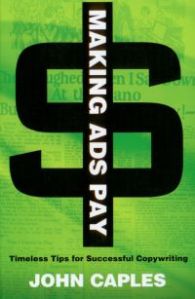
Making Ads Pay: Timeless Tips for Successful Copywriting

making-ads-pay-john-caples


Making Ads Pay: Timeless Tips for Successful Copywriting
by John Caples (1900-1990)

John Caples was a pioneer of direct-response copywriting.  In Chapter 8 he presents as series of paired ads which were tested, followed by analysis of why the winning ads outperformed.  The winner often outperformed the other by a wide margin—up to five times as many responses.

Continue reading “Making Ads Pay: Timeless Tips for Successful Copywriting”

Scientific Advertising

scientific-advertising


My Life in Advertising and Scientific Advertising
by Claude C. Hopkins (1866-1932)

Claude C. Hopkins was a pioneer in the advertising industry. This volume consists of his two books: Scientific Advertising, written in 1923, and My Life in Advertising, written in 1927. NBC and CBS were founded around the time of Hopkins’ retirement, so his work predated the broadcasting era. The media of his time were newspapers, magazines, and direct mail.

“Salesmanship-in-print is exactly the same as salesmanship-in-person.” If the purpose of advertising is to sell, then its effectiveness can be measured by resulting sales volume. Hopkins tested ads on a small scale before risking money on a large-scale campaign. He also compared results using different headlines in order to discover the best performing approach.

Continue reading “Scientific Advertising”