Disrupt Yourself

disrupt-yourself


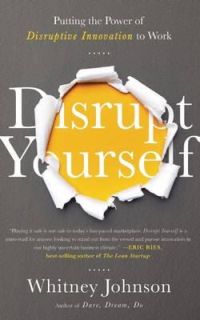
Disrupt Yourself: Putting the Power of Disruptive Innovative to Work
by Whitney Johnson

Clayton Christensen introduced the concept of disruptive innovation in The Innovator’s Dilemma, his seminal book which focused on the computer industry. His successive books applied the concept to health care and education. Now, Whitney Johnson writes about disrupting your own career.

Continue reading “Disrupt Yourself”
Marketing Above the Noise

marketing-above-the-noise


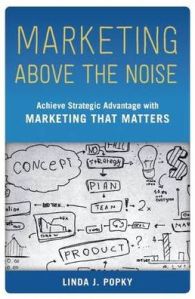
Marketing Above the Noise: Achieve Strategic Advantage with Marketing that Matters
by Linda J. Popky

Grounded in fundamentals and guided by strategic objectives, Linda Popky puts the hype around social media and big data in perspective. “It’s time to move the discussion away from today’s latest hot marketing tools and tactics to what really counts: convincing customers to trust you with their business—not just once, but time and time again.”

Continue reading “Marketing Above the Noise”

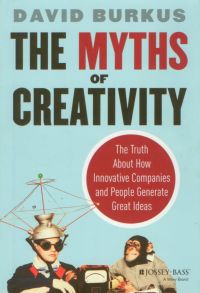
The Myths of Creativity

the-myths-of-creativity


The Myths of Creativity: The Truth About How Innovative Companies and People Generate Great Ideas
by David Burkus

“Creativity is the starting point for all innovation, and most organizations rely on innovation to create a competitive advantage.” In this interesting book, management professor David Burkus debunks 10 myths of creativity, citing academic research and examples from business.

Continue reading “The Myths of Creativity”

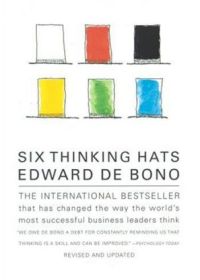
Six Thinking Hats

six-thinking-hats-edward-de-bono


Six Thinking Hats
by Edward de Bono, M.D.

The Six Thinking Hats offers “an alternative to the argument system, which was never intended to be constructive or creative.” The emphasis is on “how we design a way forward—not on who is right and who is wrong.”

A major benefit is time savings. De Bono claims that ABB reduced their multinational project team discussions from 21 days to two days using the Six Hats method. “In the United States, managers spend nearly 40 percent of their time in meetings… Instead of rambling, ego-driven meetings, meetings are now constructive, productive, and much faster.”

Continue reading “Six Thinking Hats”

Crowdsourcing

crowdsourcing


Crowdsourcing
by Daren C. Brabham

Daren Brabham defines crowdsourcing as “an online, distributed problem-solving and production model that leverages the collective intelligence of online communities to serve specific organizational goal.” He emphasizes that “the locus of control regarding the creative production of goods and ideas exists between the organization and the public, a shared process of bottom-up, open creation by the crowd and top-down management by those charged with serving an organization’s strategic interests.”

Continue reading “Crowdsourcing”

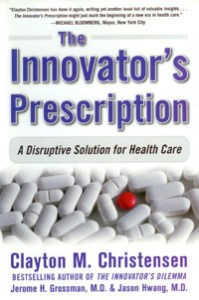
The Innovator’s Prescription


The Innovator’s Prescription
by Clayton Christensen, Jerome H Grossman M.D., and Jason Hwang M.D

Building on the framework of disruptive innovation presented in his prior book The Innovator’s Dilemma, Christensen and two medical doctors present a vision for how to make the American health care system “higher in quality, lower in cost, and more conveniently accessible to all.”

Continue reading “The Innovator’s Prescription”

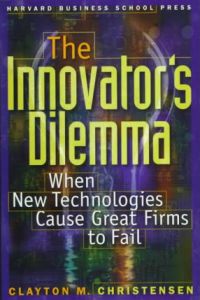
The Innovator’s Dilemma

the-innovators-dilemma-2


The Innovator’s Dilemma
by Clayton Christensen

Why have many once market-leading companies failed to stay relevant?  It would be easy to assume that they had stagnant engineers or complacent management, but Clayton Christensen concludes otherwise: “Because they carefully studied market trends and systematically allocated investment capital to innovations that promised the best returns, they lost their positions of leadership.”

How is that possible? The key is to understand the distinction between sustaining and disruptive innovation.  Large companies are good are sustaining innovation—product improvements demanded by existing customers.

Continue reading “The Innovator’s Dilemma”