The Truth about Search Engine Optimization

the-truth-about-SEO


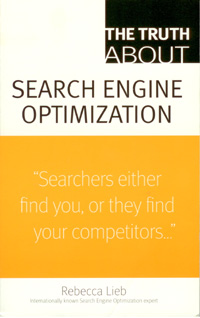
The Truth about Search Engine Optimization
by Rebecca Lieb

The Truth about Search Engine Optimization explains what will improve your website’s visibility within organic search results. Just as importantly, it explains what can get your site penalized by the search engines. If you are looking for a programming manual with lots of sample code, this is the wrong book for you. Think of it as an overview of SEO for the CEO.

Continue reading “The Truth about Search Engine Optimization”

Confessions of an Accidental Businessman

confessions-of-an-accidental-businessman


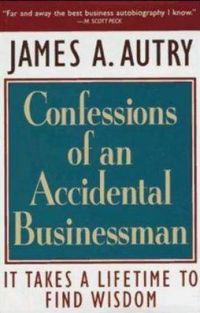
Confessions of an Accidental Businessman: It Takes a Lifetime to Find Wisdom
by James A. Autry

James Autry worked his way up from copy editor of Better Homes and Gardens to president of the magazine division. This memoir gets off to a slow start talking about his childhood and military service, but it gets more interesting when he starts to focus on his publishing career.

There are some memorable lines in this book:

Continue reading “Confessions of an Accidental Businessman”

What Keeps Leaders Up at Night

what-keeps-leaders-up-at-night


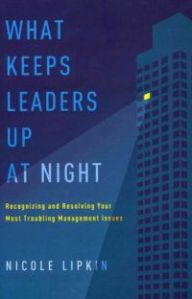
What Keeps Leaders Up at Night: Recognizing and Resolving Your Most Troubling Management Issues
by Nicole Lipkin

In this excellent book, clinical psychologist Nicole Lipkin explains the psychology behind many of the human behaviors that affect productivity and sound decision making in the workplace. “Good leadership requires dealing effectively with messy, quirky, unpredictable, confusing, irrational, and clumsy people. That is what makes the business of leadership so insanely difficult and complex.”

Continue reading “What Keeps Leaders Up at Night”

The One Thing

the-one-thing


The One Thing: The Surprisingly Simple Truth Behind Extraordinary Results
by Gary Keller with Jay Papasan

This book is about finding your focus and making it your top priority in order to achieve extraordinary results.  Identifying your focus comes from asking The Focusing Question: “What’s the ONE Thing you can do this week such that by doing it everything else would be easier or unnecessary?”

“The Focusing Question is a double-duty question. It comes in two forms: big picture and small focus. One is about finding the right direction in life and the other is about finding the right action.”

Continue reading “The One Thing”

Get to the Point

get-to-the-point-danziger


Get to the Point: Painless advice for writing memos, letters, and e-mails your colleagues and clients will understand
by Elizabeth Danziger

Elizabeth Danziger’s advice on using clear, clutter-free language is consistent with the classic On Writing Well by William Zinsser, but this book is more useful as manual, whereas Zinsser’s book is more conceptual.

When is it appropriate to use which or that? The author provides an informal “just do it” rule and a formal “grammar police” rule.

Continue reading “Get to the Point”

The Unpublished David Ogilvy

the-unpublished-david-ogilvy-2


The Unpublished David Ogilvy: His secrets of management, creativity, and success—from private papers and public fulminations

This collection of David Ogilvy’s memos, letters, speech excerpts, and other documents was compiled by an Ogilvy & Mather executive to commemorate the founder’s 75th birthday. The writings span a 50-year period from 1935-1986. The cool thing about this book is that most of the contents were not written with the intent to be published, so it feels like a behind-the-scenes look at his management style as well as his thoughts on various subjects.

Continue reading “The Unpublished David Ogilvy”

How to Write Knockout Proposals

how-to-write-knockout-proposals


How to Write Knockout Proposals: What you must know (and say) to win funding every time.
by Joseph Barbato

The theme of this book boils down to one line on page 117: “Make it as easy as possible for them to give you money.”

Barbato emphasizes the importance of clear writing and attention to detail. He suggests a less-is-more approach: “Instead of offering four prosaic examples of how your project matters, tell one powerful story that drives home the potential of your work.”  A template is included in chapter 24, guiding the reader on how to structure a grant proposal.

The book is concise and well organized in 53 two-page chapters. I like this format, but I think more could have been written about cover letters.


Barbato, Joseph. How to Write Knockout Proposals: What You Must Know (and Say) to Win Funding Every Time. Medfield, Massachusetts: Emerson & Church, 2004. Buy from Amazon.com


Disclosure: As an Amazon Associate I earn from qualifying purchases.