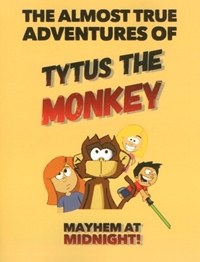
Mayhem at Midnight is a children’s book about autism. But that’s not why I’m featuring it. I am compelled to call attention to the story of the author. And that led me to discover some stunning statistics about illiteracy in America.
Creativity: A Short and Cheerful Guide by John Cleese
The central theme of this short book is tapping into your subconscious thoughts for ideas which you can then develop consciously and analytically. Cleese writes, “I began to realize that my unconscious was working on stuff all the time, without my being consciously aware of it.”
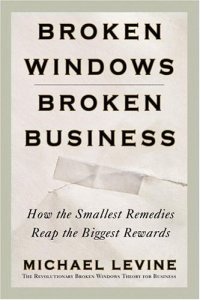
Broken Windows, Broken Business: How the Smallest Remedies Reap the Biggest Rewards by Michael Levine
Broken windows theory came up in a recent conversation. The person I was speaking with said he read the book, but it quickly became apparent that we were talking about two different books. I was talking about Fixing Broken Windows, a book about crime control which I have previously reviewed. He was talking about Broken Windows, Broken Business, which takes the premise of the crime theory and applies it to business.
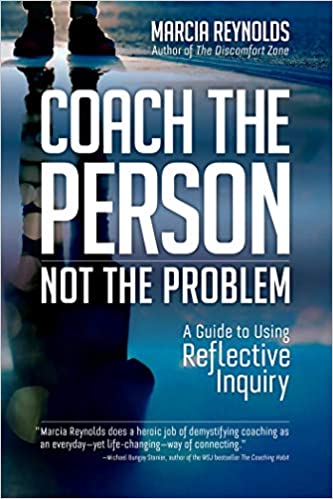
Coach the Person, Not the Problem: A Guide to Using Reflective Inquiry by Marcia Reynolds
Marcia Reynolds trains leaders how to use a coaching approach. “Coaching should be a process of inquiry, not a series of questions. The intent of inquiry is not to find solutions but to provoke critical thinking about our own thoughts. Inquiry helps the people being coached discern gaps in their logic, evaluate their beliefs, and clarify fears and desires affecting their choices. Solutions emerge when thoughts are rearranged and expanded.”
“When people are overwhelmed, stressed, and angry, coaching reminds them of their purpose, visions, and power to move forward.”
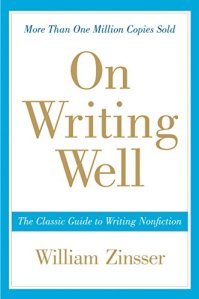
On Writing Well: An Informal Guide to Writing Nonfiction by William Zinsser (1922-2015)
William Zinsser taught nonfiction writing at Yale and he was editor of Book-of-the-Month Club. In a nutshell, the message is that good writing is clear, simple, and unpretentious. My father gave me a copy of the third edition of this book when I graduated from high school in the 1980s. While recently rereading it I was amused by Zinsser’s description of a new invention called a word processor—almost like someone describing their car as a horseless carriage. But otherwise the book stands up to the test of time (and there’s a newer edition available).
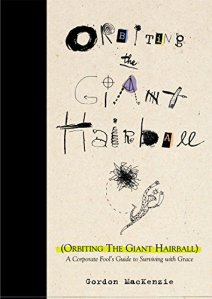
Orbiting the Giant Hairball: A Corporate Fool’s Guide to Surviving with Grace by Gordon MacKenzie
This book is about maintaining creativity within bureaucratic environments. Gordon MacKenzie worked as an artist at Hallmark Cards for 30 years, culminating in a role titled Corporate Paradox.
The Fifth Discipline: The Art and Practice of the Learning Organization by Peter M. Senge
Senge writes, “I believe that, the prevailing system of management is, at its core, dedicated to mediocrity. It forces people to work harder and harder to compensate for failing to tap the spirit and collective intelligence that characterizes working together at their best.”
The subtitle is about the learning organization, but the book is also very much about systems thinking.
WBCN and the American Revolution: How a Radio Station Defined Politics, Counterculture, and Rock and Roll by Bill Lichtenstein
WBCN was a Boston rock and roll radio station from 1968 to 2009. It was instrumental (pun intended) in launching the careers of major bands. It was also part of the social fabric of the Boston college scene. This book and a companion video documentary tell the story of the early years of the station in the context of the era.
Risk Savvy: How to Make Good Decisions by Gerd Gigerenzer
Gigerenzer makes a distinction between risk and uncertainty. He uses the term risk “for a world where all alternatives, consequences, and probabilities are known… Most of the time, however, we live in a changing world where some of these are unknown: where we face unknown risks, or uncertainty. The world of uncertainty is huge compared to that of risk… We have to deal with ‘unknown unknowns.’”
Playing to Win: How Strategy Really Works by A.G. Lafley and Roger L. Martin
Former P&G chairman A.G. Lafley and former dean of University of Toronto’s Rotman School of Management Roger Martin explain, “in our terms, a strategy is a coordinated and integrated set of five choices: a winning aspiration, where to play, how to win, core capabilities, and management systems.”