Choosing Civility: The Twenty-Five Rules of Considerate Conduct by P.M. Forni
Choosing Civility is about counteracting the “coarsening of America.” It was published in 2002, but is more relevant than ever.
“Being civil means being constantly aware of others and weaving restraint, respect, and consideration into the fabric of this awareness… When we approach others assuming that they are good, honest, and sensitive, we often encourage them to be just that.”
“Every act of kindness is, first of all, an act of attention… When we relate to the world as if we were on automatic pilot, we can hardly be at our best in our encounters with our fellow human beings.”
“Restraint is our inner designated driver. We all have it, and we all can learn to summon it whenever we need it… Restraint is an infusion of thinking—and thoughtfulness—into everything we do.”
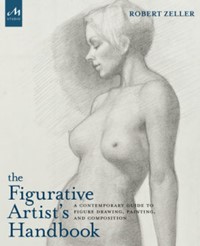
The Figurative Artist’s Handbook: A Contemporary Guide to Figure Drawing, Painting, and Composition by Robert Zeller
Unlike other figure drawing instruction books, this one begins with a 67-page crash course in art history. “Figurative art always conveys a narrative, a point of view. At the present, it is considered vital for a figurative artist to have his or her own artistic voice, and to exhibit some originality. How can you hope to be original, to continue the conversation, if you do not listen to the past, to those who have come before you?”
The instructional chapters of the book are divided by pose category: Standing Figure, Front View; Standing Figure, Back View; Reclining Figure; Portrait Drawing; and Portrait Painting. Here are some of the common themes.
“Gesture is a river of movement, energy, and rhythm that flows through the figure in any given pose… Once you understand gesture you will be able to see the essential rhythm of a pose, which will allow you to properly plan your drawing. Think of gesture as a conceptual road map. Before you start drawing with your hand, first learn to draw with your eyes… Begin by scanning the entire figure for gestures that flow through the various forms, learning to see how all of the parts of the figure are connected… Learn to see this axis of energy first so that when you draw, you will be able to forge greater unity among the various parts of the figure.”
Don’t Sell Me, Tell Me: How to use storytelling to connect with the hearts and wallets of a hungry audience by Greg Koorhan
Greg Koorhan’s main message is to “stop sounding like everyone else and tell your own, unique story.”
“A study by the Emory Institute in Atlanta… found that just thinking about an action triggers the same emotional and sensory area of the brain that performing the action does… So by telling a story associated with you or your business, you can trigger the emotions that make your customer feel, even for a brief moment, as if they’ve experienced the same benefit… Assuming it’s a good experience, don’t you think they’ll want more?”
“When looking at data, the language areas of the brain light up, but not the emotional and sensory areas. These areas are triggered only by stories. This means that your story can engage your audience in ways data can’t… When data and stories are used together, audiences are moved both emotionally and intellectually.”
“Your Story IS Your Brand… Your brand is actually tied closely to your values. And by nurturing your values, you develop a theme. And out of your theme grows your story… Start with your values, then your theme, character archetype and emotional tone. Once you’ve got the elements of your story in place, your entire marketing and advertising platform can grow out of it.”
Edible and Medicinal Mushrooms of New England and Eastern Canada: A Photographic Guidebook to Finding and Using Key Species by David L. Spahr
This book presents photographs and information on more than 20 varieties of mushrooms, including how to find them and prepare them. For this review I will focus on the chapter on Maitake, which is being studied for its potential to boost the immune system and fight cancer.
It’s Not Complicated: The Art and Science of Complexity in Business by Rick Nason
This book may fundamentally change the way you think. Or it may give you a framework to understand why you intuitively know that conventional management practices are sometimes incongruent with reality.
“This book is about systems thinking, and more specifically the important distinction between simple, complicated, and complex systems as applied to common business problems… The world of business is usually complex rather than complicated. That may seem like word play, but the difference between ‘complicated thinking’ and ‘complexity thinking’ is profound. This important distinction is well accepted in the scientific community but is virtually unknown in business.” Nason explains, “The ability to manage complexity is the key to competitive advantage.”
50 Economics Classics: Your shortcut to the most important ideas on capitalism, finance, and the global economy by Tom Butler-Bowden
Tom Butler-Bowdon has summarized 50 economics books spanning 240 years (1776 to 2016), however 40% of the books were published in the 21st-century, thus offering contemporary relevance with historical context. Indeed he notes in the introduction, “if there is anything that the financial crisis of 2007-08 told us, it is that economic and financial history matters.”
Each book is distilled to about six pages. Among the many topics covered are: the euro, the Great Depression, subprime loans and the 2008 financial crisis, the value of a college education, the economics of cities, free trade, protectionism, globalization, the gold standard, income inequality, innovation and entrepreneurship, investing in the stock market, employment, technology, poverty, famines, crime, foreign aid, property, dead capital, and behavioral economics.
101 Things I Learned in Law School by Vibeke Norgaard Martin with Matthew Frederick
Vibeke Norgaard Martin is a lawyer who has practiced commercial litigation and civil rights law. She has also taught law at U.C. Berkeley. Here are some of her insights on how to think like a lawyer.
“Honesty and truthfulness are not the same thing. Being honest means not telling lies. Being truthful means actively making known the full truth of a matter. Lawyers must be honest, but they do not have to be truthful… Counsel may not deliberately mislead the court, but has no obligation to tell the defendant’s whole story.”
101 Things I Learned in Culinary School by Louis Eguaras with Matthew Frederick
“The culinary world is ever evolving, as familiar techniques and experiences continually give way to new ones and force chefs to reevaluate their comfort zones. A chef’s understanding of food and cooking thereby needs to extend beyond knowledge of ingredients, technique, tools, and equipment. A chef must be a scholar of colors, textures, and fragrances. He or she must know the history of food, its chemistry and alchemy, the art of presentation, and how to keep customers safe. A chef has to know how to manage and meet customers’ needs and expectations, how to create and manage budgets, and how to delegate and answer to those working around him or her.”
This book introduces a variety of such topics. Here’s a sample of items covered in the book.
“Why the chef’s jacket is double breasted. The front of a chef’s jacket is reversible. This allows a chef to wear the clean side over the dirty side if entering the dining room to greet guests. Additionally, the double layer of heavy cotton protects against hot spills and splatters. Cloth toggles are used instead of buttons, which can snag, break, or melt into food. The vented cuffs turn up, getting them out of the way of foods and leaving a fresh edge to turn down when entering the dining room.”
“Good beef is 30 days old. Beef is aged to allow an animal’s natural enzymes to break down tough connective tissues, resulting in deeper flavor and improved texture. Dry aging needs at least 11 days and may take more than 30 days. The meat is hung and exposed to climate controlled air, where it loses 15 to 30% of its weight, mostly due to water evaporation, becomes meatier and more buttery, and develops a more concentrated flavor. Dry aged beef is rarely found in supermarkets.”
“Artists assimilate a whole range of psychological, aesthetic, political, and emotional data points, and they then make forms to organize and give meaning to them. That takes skill and practice, working in tandem with intelligence and keen observation… Basic form-giving skills help the student make the bridge between thought and embodiment.”
Kit White is an associate professor in the MFA program at Pratt Institute. Here’s a sample of his insights:
“Art is continuing a dialogue that stretches back through thousands of years. What you make is your contribution to that dialogue. Therefore, be conscious of what has come before you and the conversation that surrounds you. Try not to repeat what has already been said. Study art history and stay alert to the dialogue of your moment.”
“Composition is the foundation of image making. It is the spatial relationships between all of the parts in an image. Whether a drawing, a painting, a sculpture, a photograph, a video, or an installation, how a thing is composed determines its look, its feel, and its meaning. Compositional variation, like musical tunes, is limitless.”
101 Things I Learned in Film School by Neil Landau with Matthew Frederick
“In my… twenty years of teaching, screenwriting, and filmmaking, I have been continually struck by how the creative process of filmmaking is at once painstakingly deliberate and fortuitously experimental,” writes Neil Landau, who teaches at the UCLA School of Theater, Film, and Television.
Creating a film or television program entails a variety of skills including budgeting, screenwriting, directing, acting, and numerous technical proficiencies. Here’s a sampling of the insights shared by the author.
“Film is a director’s medium; television is a writer’s medium. A movie is a one-of-a-kind undertaking: The production team and actors come together for several weeks or months to create a unique world that disappears upon the completion of filming. A strong director is essential in defining this world—form its artistic details to its broad nuances, script approval to casting, set design to special effects, and lighting and equipment to the overall visual style. A successful television series, by comparison, is long running, and production becomes rather standardized during its first season. The greatest challenge becomes the generation of new material each week, giving the gifted writer a proportionately greater opportunity to shine.”




 The Key Point