The Laws of Wealth


The Laws of Wealth: Psychology and the Secret to Investing Success
by Daniel Crosby

Psychologist Daniel Crosby works in the field of behavioral finance. “Given that you, as a member of the human family, have tendencies toward impatience, arrogance and a fetish for complexity, it is very likely that you will screw this up… At my last count, psychologists and economists had documented 117 biases capable of obscuring lucid financial decision-making.”

Crosby presents 10 rules of behavioral self-management.

Rule #1 – You Control What Matters Most. “The behavior gap measures the loss that the average investor incurs as a result of emotional responses to market conditions.” As an example, the author notes that the best performing mutual fund during the period 2000-2010 was CGM Focus, with an 18.2% annualized return; however the average investor in the fund had a negative return! The reason is that they tended to buy when the fund was soaring and sell in a panic when the price dipped. More on volatility later…

Continue reading “The Laws of Wealth” →
You’re Not That Great


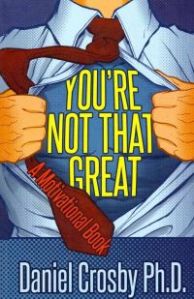
You’re Not That Great
by Daniel Crosby

Psychologist Daniel Crosby tells it like it is in this book about the numerous ways human nature can work against us, not the least of which is egoistic self-absorption (solipsism).

“The biggest finding to emerge from the self-esteem movement was that praise did not predict self-esteem, accomplishment did… Many of the theories about self-esteem that had impacted policy were simply junk science.”

Continue reading “You’re Not That Great” →

The Art of Seeing

the-art-of-seeing


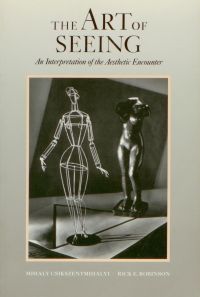
The Art of Seeing: An Interpretation of the Aesthetic Encounter
by Mihaly Csikszentmihalyi and Rick E. Robinson

This book explores the enjoyment of viewing art within the framework of flow, the psychology of optimal experience. Flow is an intrinsically rewarding feeling of total involvement in an activity. To be fully engaged in a state of flow, one must be skilled and challenged. The author studied museum professionals as a proxy for the more general art viewing population.

“The experience is one of an initial perceptual hook followed by a more detached, intellectual appreciation that returns the viewer to the work with a deeper understanding.”

“The best examples of objects containing such challenges are works whose meaning appears to be inexhaustible.” As one respondent put it, “‘A good painting will never be used up.’”

Four dimensions of aesthetic experience are explored: cognitive, perceptual, emotional, and communicative.

Continue reading “The Art of Seeing” →

The Prophet

the-prophet


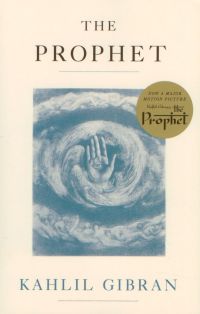
The Prophet
by Kahlil Gibran

The Prophet offers wisdom on 26 topics—about three pages on each. Gibran writes in poetic prose with a liberal use of archaic words, presumably to sound biblical. Some of the meaning is immediately clear, while other parts require some reflection to decipher the deeper meaning.

On Work. The author stresses the importance of finding work you enjoy. “For if you bake bread with indifference, you bake a bitter bread that feeds but half man’s hunger. And if you grudge the crushing of the grapes, your grudge distils a poison in the wine.”

On Marriage. Gibran observes that marriage is a union between individuals, not a merger. “Let there be spaces in your togetherness, and let the winds of the heavens dance between you… The oak tree and the cypress grow not in each other’s shadow.”

Continue reading “The Prophet” →

The Tao of Pooh

the-tao-of-pooh


The Tao of Pooh
by Benjamin Hoff

The Tao of Pooh is about “how to stay happy and calm in all circumstances.” Benjamin Hoff uses the characters and stories from Winnie-the-Pooh and The House at Pooh Corner to explain basic concepts of Taoism. He also brilliantly integrates his own brief dialogue with the characters as segues into explanations of Taoist principles. Tao (pronounced DAO) means “the way.”

Continue reading “The Tao of Pooh” →

Be Nobody

be-nobody


Be Nobody
by Lama Marut

Lama Marut, aka Brian K. Smith, was a professor of comparative religion, he studied Hinduism and Sanskrit in India, he was a Buddhist monk, and he is the son of a Baptist preacher. So he presents a well-informed viewpoint rather than a myopic dogma. Fortunately, you don’t need to climb a mountain to be enlightened by this wise man; he imparts wisdom in his book, Be Nobody.

Marut writes about living in the iEra. “Our contemporary culture of consumerism, materialism, narcissism, and the worship of fame encourages the idea that we will be happy only when we become exceptional. But maybe we’ve got it wrong—exactly wrong. Maybe our deepest and most authentic happiness will be found only when we finally lay down this heavy burden of trying to be a somebody… Maybe true fulfillment in life requires an emptying, not a filling.”

Continue reading “Be Nobody” →

Taking the Leap

taking-the-leap-pema-chodron


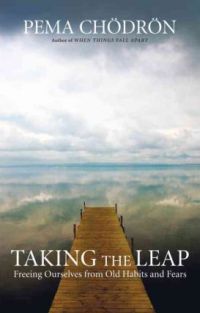
Taking the Leap: Freeing Ourselves from Old Habits and Fears
by Pema Chӧdrӧn

Pema Chӧdrӧn is a Buddhist nun. She writes about “unhooking” ourselves from negative thoughts and emotions.

She tells a story about a Native American grandfather who explains to his grandson the catalyst for violence and cruelty in the world. “He said it was as if two wolves were fighting in his heart. One wolf was vengeful and angry, and the other wolf was understanding and kind. The young man asked his grandfather which wolf would win the fight in his heart. And the grandfather answered, ‘The one that wins will be the one I choose to feed.’” The author explains that emotions have very short natural lifespan, but we extend that “by feeding it with an internal conversation about how another person is the source of our discomfort… This is a very ancient habit.”

Continue reading “Taking the Leap” →

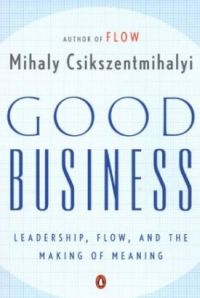
Good Business

good-business-mihaly-csikszentmihalyi


Good Business: Leadership, Flow, and the Making of Meaning
by Mihaly Csikszentmihalyi (1934-2021)

Good Business is about enjoyment of work and productivity. It is based on the author’s research on flow, the psychology of optimal experience.

Flow is “a deep sense of enjoyment.” To be fully engaged in a state of flow, one must be skilled and challenged. “Basically, the more a person feels skilled, the more her moods will improve; while the more challenges that are present, the more her attention will become focused and concentrated.”

Continue reading “Good Business” →