Always Look on the Bright Side of Life: A Sortabiography by Eric Idle
This is an autobiography of a very funny writer and performer. The book includes many stories of how Monty Python projects came to be. But it is also the story of friendships and the healing power of comedy.
Eat, Sleep, Innovate: How to Make Creativity an Everyday Habit Inside Your Organization by Scott D. Anthony, Paul Cobban, Natalie Painchaud, Andy Parker
My grandfather used to tell me I was full of beans when I was being rambunctious. In contrast, this book is full of BEANS—behavior enablers, artifacts, and nudges—which are ways to encourage a new behavior.
The book is about developing a culture of innovation—not just for engineers and scientists, but throughout the organization. Three of the co-authors are with Innosight, a consulting firm co-founded by Harvard Business School professor Clayton Christensen (1952-2020), who wrote The Innovator’s Dilemma. Paul Cobban is Chief Data and Transformation Officer at DBS Bank, the largest bank in Singapore.
An interview with Peter McGraw
author of Shtick to Business: What the masters of comedy can teach you
about breaking rules, being fearless, and building a serious career.
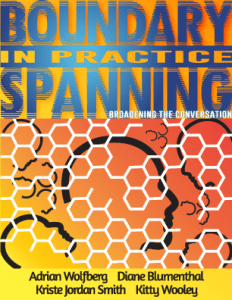
Boundary Spanning in Practice and Unfettered: Mission-Aligned Boundary Spanning by Kitty Wooley et al. (interview)
Senior Fellows and Friends is a group of current and former U.S. government employees. Spearheaded by Kitty Wooley, members of the group have published two compilations of articles about breaking through the silo mentality. They encourage inter-agency collaboration throughout the hierarchy to achieve greater institutional learning, more motivated staff, and greater effectiveness in executing organizational missions. While their context is government, the topics also apply to large businesses and nonprofit organizations.
Freeing Yourself from Anxiety: 4 Simple Steps to Overcome Worry and Create the Life You Want by Tamar E. Chansky, Ph.D.
2020 has been a mentally-draining year. In this 287-page book, psychologist Tamar Chansky explains why our minds get overwhelmed with worry and she offers advice on how to deal with it. Here are some highlights.
Anxiety is “the first-reaction of a sensitive system that is wired to keep us alert to danger and protected from harm… But today, with our best interests in mind, anxiety sometimes makes mistakes, overshooting… grabbing your attention from what you need to focus on and insisting that you instead grapple with worst-case scenarios.”
Thinking in Systems by Donella H. Meadows (1941-2001)
Systems thinking helps to understand how things work in so many contexts, including ecological, economic, and social. This book explains the elements and dynamics of systems and points out some of the common traps in trying to manage them.
An Interview with D.B. Dowd, author of Stick Figures: Drawing as a Human Practice. The discussion topics are primarily from chapters 5-7 of the book.
[01:05] Drawing as a human practice. Drawing as nonlinear thinking. Salience. Tacit Knowledge.
[26:58] Reconceiving art education. Drawing is usually taught as an antecedent for painting. This is fine for people who want to paint. But most people use drawing as a tool for thinking, planning, and communication. Drawing as a way of understanding structures, e.g. in science classes. How STEAM relates to innovation.
[47:45] Illustration and cartooning as part of cultural history.
Authentic Leadership: Rediscovering the Secrets to Creating Lasting Value by Bill George
Former Medtronic chairman and CEO Bill George wrote this book following a series of corporate scandals, including Enron, Sunbeam, Tyco, and Worldcom—just to name a few. These companies imploded because management was fixated on maximizing short-term shareholder value.
To paraphrase my favorite line in the book: you are running a business, not a stock. That said, the compound annual growth rate of Medtronic split-adjusted stock price was 28.5% during George’s 12-year tenure, according to my calculations. Not too shabby!
The first part of the book deals with the character, values, and sense of purpose required to inspire employees. George also shares his wisdom and personal experiences regarding customers, quality, market share, growth, innovation, acquisitions, FDA approval delays, Wall Street analysts, and corporate governance.
Statistical Questions from the Classroom by J. Michael Shaughnessy and Beth Chance
I was talking with a mathematically-astute friend of mine and told him I lacked confidence in my grasp of statistics. (Insert clever joke about confidence intervals here.) So he recommended this 88-page book published by the National Council of Teachers of Mathematics as a good refresher on some basic concepts. The book consists of 11 chapters, each one addressing a question frequently asked by statistics students.