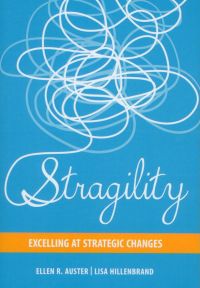
Stragility

stragility


Stragility: Excelling at Strategic Changes
by Ellen R. Auster and Lisa Hillenbrand

“Tragically, more than 70 percent of change efforts fail and in most cases the organization emerges weaker—exhausted, demoralized, and confused.”  To combat this, authors Auster and Hillenbrand have coined the portmanteau word “Stragility” to represent a skill set for “strategic, agile, people-powered change… Without ongoing agility, even good strategies will fail.”

Continue reading “Stragility”
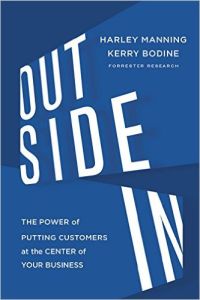
Outside In

outside-in


Outside In: The Power of Putting Customers at the Center of Your Business
by Harley Manning and Kerry Bodine

“Customer experience is how your customers perceive their interactions with your company. Once you understand that, you can manage your business from the outside in… To achieve the full potential of customer experience as a business strategy… you must manage from the perspective of your customers, and you must do it in a systemic, repeatable, and disciplined way.”

The benefits of providing exceptional customer experience are “higher revenues resulting from better customer retention, greater share of wallet, and positive word of mouth, plus lower expenses due to happier customers who don’t run up your service costs.” One example from the book is a $1.7 billion per year savings in customer service costs and bill credits as a result of Sprint simplifying its confusing plan options.

Continue reading “Outside In”

Contagious

contagious


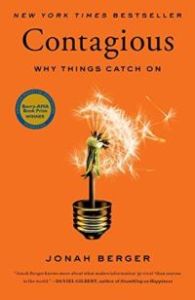
Contagious: Why Things Catch On
by Jonah Berger

Wharton marketing professor Jonah Berger has studied why certain ideas and products get talked about and shared more than others. He refers to the “psychology of sharing” and identifies six common attributes: Social Currency, Triggers, Emotion, Public, Practical Value, and Stories.

Berger puts the hype of viral marketing in context. “Word of mouth is the primary factor behind 20 percent to 50 percent of all purchasing decisions.” However, “Research by the Keller Fay Group finds that only 7 percent of word of mouth happens online…

Continue reading “Contagious”

A Gallery Without Walls

a-gallery-without-walls


A Gallery Without Walls: Selling Art in Alternative Venues
by Margaret Danielak

“This book is about selling art in alternative venues and in innovative, cost-effective ways” based on the author’s experience as an artist’s representative. What I like most about this book is that it opens the door to nontraditional sales channels, so you are not competing in the same sandbox with everyone else.

Continue reading “A Gallery Without Walls”

Vision and Art: The Biology of Seeing

vision-and-art


Vision and Art: The Biology of Seeing
by Margaret Livingstone

Unexpectedly, the most fascinating art book I’ve ever read is written by a Harvard Medical School professor of neurophysiology. “This book is about vision—the process of receiving and interpreting light reflected from objects—and what art reveals about how we see.”

Continue reading “Vision and Art: The Biology of Seeing”

The Artist’s Complete Guide to Figure Drawing

ryder-artists-complete-guide-figure-drawing


The Artist’s Complete Guide to Figure Drawing: A Contemporary Perspective on the Classical Tradition
by Anthony Ryder

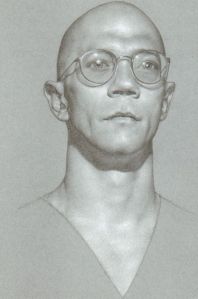
Anthony Ryder presents a thorough and meticulous process for drawing the human figure. This is definitely not a quick sketch approach. “On average, I put in about twelve three-hour sessions for each finished drawing.” Ryder works with either pencil on white paper or pencil and white charcoal on toned paper.

ryder-p92-phases-of-dane-1998-pencil-gray-paper
Phases of Dane, 1998.
Continue reading “The Artist’s Complete Guide to Figure Drawing”

The Artist’s Model: From Etty to Spencer

the-artists-model-etty-to-spencer


The Artist’s Model: From Etty to Spencer
by Martin Postle and William Vaughan

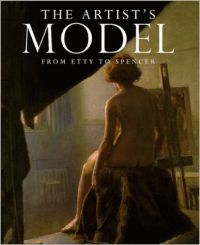
This book is a catalog of figurative artwork produced in Britain from the mid-1800s to the early-1900s, published in conjunction with an exhibition held in 1999. The works, featuring nude and clothed figures, range from anatomical studies to finished drawings and paintings, as well as a few photographs and sculptures. In addition to the artwork, there are four interesting chapters about artists, models, and attitudes of this period. Extensive captions provide additional insights about particular artists and models. A sampling of the artwork follows this review.

Continue reading “The Artist’s Model: From Etty to Spencer”