A Technique for Producing Ideas by James Webb Young
This concise booklet was first published in the 1940s by James Webb Young, who became vice president of the advertising firm J. Walter Thompson and the first chairman of The Advertising Council. He wrote it in response to the question, “How do you get ideas?”
Before explaining the process, Young presents two principles.
Life’s a Pitch: The Essential Guide to Presentations by Terry Ward
Terry Ward uses a broad definition of the word presentation. “Every time you want to persuade, motivate, or inspire, you are making a presentation… The spoken word is a persuasive media… If you want to move people to action, speak to them.”
“The most important aspect of being an effective presenter is your state of mind… We are talking about adopting a state of mind that is listener focused…The more you disappear into your message, the more your audience will trust and respect you… The speakers we remember most are the ones who talked to us in plain English and with sincerity and simplicity. They were authentic in their intentions to bring value to the listeners.”
A recurring theme in this book is to keep things simple and concise. “Present only information that is CORE—concise, organized, relevant, and essential—to your listener… Make it simple and easy to understand… In fact all four essential elements of communication—behavior, content, interaction, and state of mind—benefit from a focus on keeping it simple.”
Pitch Perfect: How to Say It Right the First Time, Every Time by Bill McGowan
Bill McGowan was a broadcast journalist before becoming a media coach and trainer to executives, athletes, and celebrities. This book provides guidance on preparing for media interviews, speeches, conference panels, wedding toasts, eulogies, and other situations.
The Seven Principles of Persuasion are the foundation.
The New Rules of Marketing and PR, Fourth Edition by David Meerman Scott
David Meerman Scott is an experienced marketing executive who says that interruption-based marketing techniques are ineffective. “I’ve done it the old way. It doesn’t work anymore.” Under the new rules, marketers publish their own content and speak directly with buyers.
“The Internet has made public relations public again… Your newsroom is for your buyers, not just the media… By building a media room that targets buyers, you will not only enhance those pages as a powerful marketing tool but also make a better media site for journalists.”
Big Data Marketing: Engage Your Customers More Effectively and Drive Value by Lisa Arthur
“Why don’t you know your customers better?” Lisa Arthur’s diagnosis: “Your data is fragmented.”
“Today’s marketers must engage buyers and prospects with conversations, solicit and act on customer feedback, and deliver experiences that are personalized, timely, and relevant.” Big data marketing makes this possible.
Content Marketing: Think Like a Publisher—How to Use Content to Market Online and in Social Media by Rebecca Lieb
“Instead of advertising, the shift is toward publishing… Companies are sharing: knowledge, expertise, and how-to. They know customers who might not have 30 seconds to spend on watching one of their ads might gladly surrender 30 minutes to dive into truly useful content.”
Continuing the ‘think like a publisher’ theme, an editorial calendar “ties that broader schedule together with specifics such as holidays, trade shows, company announcements, events (such as webinars), or new product launches… The editorial calendar also serves as an invaluable map for repurposing content.”
The 1% Windfall: How Successful Companies Use Price to Profit and Grow by Rafi Mohammed
Rafi Mohammed is an economist who consults on pricing strategy. The 1% windfall refers to the large impact on operating profits resulting from small adjustments to price. “A study by McKinsey & Company of the Global 1200 found that if they increased their prices by just 1%, and demand remained constant, on average each company’s operating profits would increase by 11%.” The book is about creating a portfolio of pricing options to appeal to as many customers as possible, thus maximizing profit.
Marketing Insights from A to Z: 80 Concepts Every Manager Needs to Know by Philip Kotler
Professor Kotler covers a lot of ground quickly as he reflects on 80 marketing-related topics—the average chapter length is 2.3 pages. “My 40-year career in marketing has produced some knowledge and even a little wisdom… Zen emphasizes learning by means of meditation and direct, intuitive insights. The thoughts in this book are a result of my meditations on these fundamental marketing concepts and principles.”
In the chapter on customer satisfaction, Kotler comments on the impact of customer retention on profitability.
To Sell is Human: The Surprising Truth about Moving Others by Daniel H. Pink
This book is about sales, but also “selling in a broader sense—persuading, influencing, and convincing others… Physicians sell patients on a remedy. Lawyers sell juries on a verdict. Teachers sell students on the value of paying attention in class.”
The old-school image of a dodgy salesman relied on what Daniel Pink calls information asymmetry—the seller had access to information which the buyer did not have. Clearly that environment has changed. The author replaces the old sales training mantra Always Be Closing with “the new ABCs—Attunement, Buoyancy, and Clarity.”
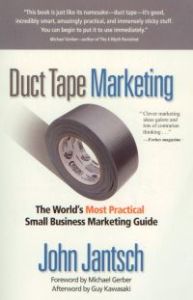
Jan Jantsch writes, “Marketing is getting people who have a specific need or problem to know, like, and trust you.” The Duct Tape Marketing System is about identifying the target customer, articulating a consistent core message, generating qualified leads, educating prospects, and encouraging existing customers to refer new business. The author presents many good ideas for marketing small businesses.