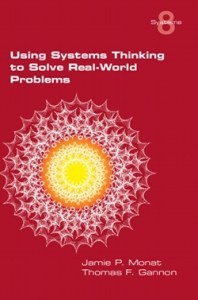
Using Systems Thinking to Solve Real-World Problems by Jamie P. Monat and Thomas F. Gannon
“Systems thinking focuses on the relationships among system components and the interactions of the system with its environment, as opposed to focusing on the components themselves… Those relationships typically dominate the behavior of systems.” As an antidote to myopia, systems thinking takes a holistic and integrative approach.
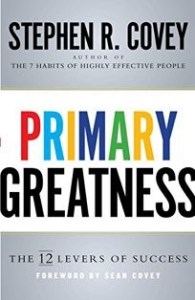
Primary Greatness: The 12 Levers of Success by Stephen R. Covey
This is a book about integrity and character. It is about leadership as well as personal development. “There’s no such thing as organizational behavior, only individual behavior… Leadership is communicating to another person their worth and potential so clearly they are inspired to see it in themselves… The common thread in the best thinking on management and leadership is this: People both want and need to feel that their lives and work have meaning.”
“Primary greatness is who you really are—your character, your integrity, your deepest motives and desires. Secondary greatness is popularity, title, position, fame, fortune, and honors… Going for secondary greatness without primary greatness doesn’t work. People don’t build successful lives on the unstable sands of what is outwardly or temporarily popular, but they do build successful lives on the bedrock of principles that do not change.”
“Character is foundational. All else builds on this cornerstone. Even the very best structure, system, style, and skills can’t compensate completely for deficiencies in character… People get lost when they use a local norm or internal standard to justify covert or corrupt business practices… Universal principles like respect, empathy, honesty, and trust ultimately govern.”
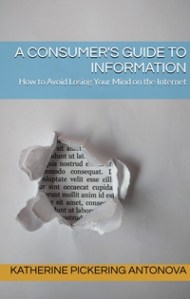
A Consumer’s Guide to Information: How to Avoid Losing Your Mind on the Internet by Katherine Pickering Antonova
“Critical thinking is a rational process of sorting and weighing information so that we can find what we need and have confidence in what we know… We have to train ourselves to work past our first reactions… Even people who have many years of training and experience in research fields still need to constantly remind themselves to question their own biases.”
The theme of this book by history professor Katherine Pickering Antonova is evidence-based critical thinking. She covers the structure of logical arguments, logical fallacies, reliability of sources, the charade of opposing-view talking head television, search engine tips, and some basic concepts about science and statistics.
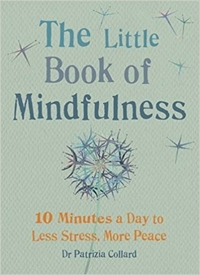
The Little Book of Mindfulness: 10 Minutes a Day to Less Stress, More Peace by Dr. Patrizia Collard
Dr. Patrizia Collard is a psychotherapist, stress management consultant, and lecturer at the University of East London. She writes, “The goal of any mindfulness practice is simply to experience life as it unfolds. To stay present and calm and not slip back into thinking/worrying mode, we choose an anchor of awareness—a point of focus we direct our mind to.”
“Mindfulness is being aware of or bringing attention to this moment in time deliberately and without judging the experience. So, when we go for a mindful walk we really notice every little detail and all we encounter—trees, cars, flowers growing out of small cracks, or a cat crossing the road—rather than creating to-do lists.”
“When we procrastinate and distract ourselves with ‘busyness,’ we avoid engaging with the real thing—our lives… Living in the moment, and seeing everything afresh without judgment and worry lets us experience life rather than simply get through it.”
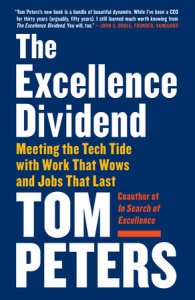
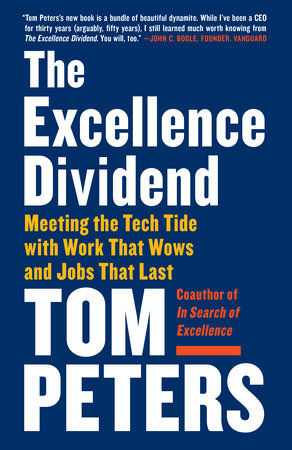
The Excellence Dividend: Meeting the Tech Tide with Work That Wows and Jobs That Last by Tom Peters
Tom Peters makes a renewed call to excellence in the context of an increasingly data-driven and dehumanized world. His “putting people first” mantra is even more on point than it was when his seminal work In Search of Excellence was published in 1982.
“The primary defenses against AI-driven job destruction are widespread, relatively unconstrained creativity and novel organizational arrangements designed to produce products and services that will stand out in an automated world. I unequivocally believe that such creativity is antithetical to algorithmic optimization of human affairs.”
“So what is this Excellence Dividend? In short, businesses that are committed to excellence in every aspect of their internal and external dealings are likely to be survivors. They are better and more spirited places to work. Their employees are engaged and growing and preparing for tomorrow. Their customers are happier and inclined to spread tales of their excellence far and wide. Their communities welcome them as good neighbors. Their vendors welcome them as reliable partners. That in turn translates directly into bottom-line results and growth. And, AI and robotics notwithstanding, it translates into jobs that last and the likely creation of new jobs as well.”
I have posted a review of The Excellence Dividend with some key points, but in this post I wanted to call attention to the vast number of books that Tom Peters refers to. The guy has read A LOT of books. I’ve compiled a list of 137 books mentioned throughout the text. I’ve read a few of them. The bold listings link to my review on The Key Point; the others link to Amazon.com.
101 Things I Learned in Advertising School by Tracy Arrington with Matthew Frederick
“To some, advertising has no soul, no center… It’s the art of lying.” Advertising executive Tracy Arrington writes, “I would argue the opposite. Advertising is the art of telling the truth. An ad campaign succeeds when it brings forward an embedded truth—about the product or service, our needs or idiosyncrasies as consumers, our daily foibles, or the fixations and biases of our culture. An ad campaign resonates when it shows us, at some level, who we are.”
Here’s a sampling of the expertise shared by the author.
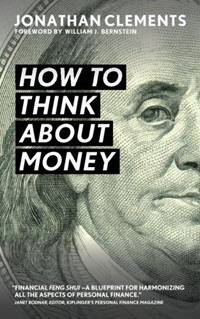
How to Think About Money by Jonathan Clements (1963-2025)
Jonathan Clements, a personal-finance columnist at The Wall Street Journal for some 20 years, advises how to think about work, debt, investments, and insurance at various stages of life. He puts an emphasis on preparing for retirement, starting at a young age.
“Chronologically, retirement might be our final financial goal, but we should always put it first. Amassing enough for a comfortable retirement is our life’s great financial task.” Given longer life expectancy, “we need to get ourselves on the right financial track as early in our adult life as possible, so we quickly achieve some measure of financial freedom.”
The Most Important Thing: Uncommon Sense for the Thoughtful Investor by Howard Marks
Howard Marks is the co-founder and co-chairman of Oaktree Capital Management and he ranks #374 on the 2017 Forbes 400 list of wealthiest Americans. In this book he covers 20 topics: second-level thinking; market efficiency and its limitations; intrinsic value; the relationship between price and value; understanding risk; recognizing risk; controlling risk; market cycles; the pendulum; combating negative influences; contrarianism; finding bargains; patient opportunism; knowing what you don’t know; having a sense for where we stand; appreciating the role of luck; investing defensively; avoiding pitfalls; adding value; and pulling it all together.
Can you guess which one is the most important thing?
Only the Paranoid Survive: How to Exploit the Crisis Points that Challenge Every Company by Andrew S. Grove (1936-2016)
“A strategic inflection point is a time in the life of a business when its fundamentals are about to change. The change can mean an opportunity to rise to new heights. But it may just as likely signal the beginning of the end.”
Andy Grove (1936-2016), former chairman of Intel, describes six categories of 10X changes: competition, technology, customers, suppliers, complementors, and regulation. “When a Wal-Mart moves into a small town, the environment changes for every retailer in that town. A 10X factor has arrived. When the technology for sound in movies became popular, every silent actor and actress personally experienced the 10X factor of technological change. When container shipping revolutionized sea transportation, a 10X factor reordered the major ports around the world.”


 The Key Point