The Powell Principles


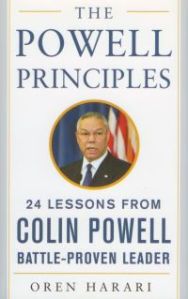
The Powell Principles: 24 Lessons From Battle-Proven Leader Colin Powell
by Oren Harari

Business professor Oren Harari (1949-2010) encapsulated Colin Powell’s (1937-2021) lessons of leadership in 24 three-page chapters. “The Powell Principles constitute a clear, strategic, philosophical, value-based, and ethical blueprint. The blueprint guides Powell, but the blueprint has enormous flexibility and opportunism built into it.” The 24 lessons are:

Continue reading “The Powell Principles”

The Crime Fighter


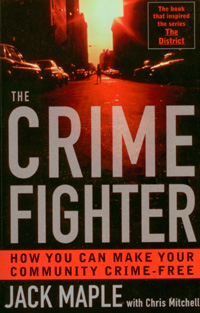
The Crime Fighter: How You Can Make Your Community Crime Free
by Jack Maple

Engaging stories from Maple’s career as a detective for the NY Transit Police, deputy commissioner of NYPD, and consultant to Newark, Philadelphia, and New Orleans police departments make this a very interesting read. The fact that the problems and solutions discussed are relevant to other cities—not just NYC—broadens the appeal of this book. While some of the principles will apply to smaller police jurisdictions, the context of all examples is with large cities.

Continue reading “The Crime Fighter”

The No Asshole Rule


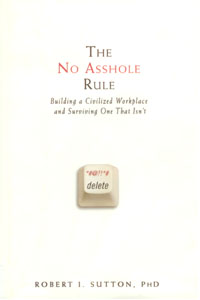
The No Asshole Rule: Building a Civilized Workplace and Surviving One That Isn’t
by Robert I. Sutton

Assholes create a toxic work environment, destroying productivity. Sutton introduces the Total Cost of Assholes (TCA) metric. In the case of a salesman named Ethan, the cost was estimated at $160,000, including time spent by Ethan’s manager, HR professionals, senior executives, outside counsel, as well as the costs related to high turnover of support staff.

Sutton warns not to hire wimps and polite clones. “A series of controlled experiments and field studies in organizations show that when teams engage in conflict over ideas in an atmosphere of mutual respect, they develop better ideas and perform better. For this reason, Intel requires all new employees to take “constructive confrontation class.”


Sutton, Robert I. The No Asshole Rule: Building a Civilized Workplace and Surviving One That Isn’t. New York: Business Plus, 2010. Buy from Amazon.com


Disclosure: As an Amazon Associate I earn from qualifying purchases.

The Innovator’s Prescription


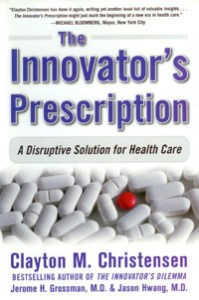
The Innovator’s Prescription
by Clayton Christensen, Jerome H Grossman M.D., and Jason Hwang M.D

Building on the framework of disruptive innovation presented in his prior book The Innovator’s Dilemma, Christensen and two medical doctors present a vision for how to make the American health care system “higher in quality, lower in cost, and more conveniently accessible to all.”

Continue reading “The Innovator’s Prescription”

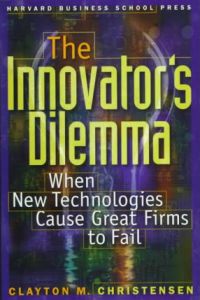
The Innovator’s Dilemma

the-innovators-dilemma-2


The Innovator’s Dilemma
by Clayton Christensen

Why have many once market-leading companies failed to stay relevant?  It would be easy to assume that they had stagnant engineers or complacent management, but Clayton Christensen concludes otherwise: “Because they carefully studied market trends and systematically allocated investment capital to innovations that promised the best returns, they lost their positions of leadership.”

How is that possible? The key is to understand the distinction between sustaining and disruptive innovation.  Large companies are good are sustaining innovation—product improvements demanded by existing customers.

Continue reading “The Innovator’s Dilemma”

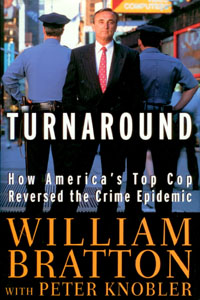
Turnaround


Turnaround: How America’s Top Cop Reversed the Crime Epidemic
by William J. Bratton

I think of Turnaround as a management book by a highly-accomplished chief executive (police) officer. The book reads like an autobiography, from Bill Bratton’s childhood in Boston, until after his falling out with Rudy Guiliani. Through his experiences, I learned a lot about police work and his management style

Continue reading “Turnaround”

Words That Work


Words That Work: It’s not what you say, it’s what people hear
By Dr. Frank Luntz

Frank Luntz is a communication strategist for corporate and political clients. Although he’s done a lot of work for Republicans (including the Contract with America) this is not a book about political ideology. It’s about persuasive communication in political campaigns, product marketing, and labor disputes.

Words that work do not happen by chance. Luntz uses market research techniques (polls, focus groups, dial sessions) to test how audiences respond.

Continue reading “Words That Work”

The Thank You Economy


The Thank You Economy
by Gary Vaynerchuk

The Thank You Economy is about connecting with customers through social media, but it is not a book about Facebook, Twitter, or any other specific technology.  It’s about creating a culture of caring relationships, like when your great-grandmother shopped with local merchants. Those relationships disappeared as the economy evolved from mom-and-pop shopkeepers to big box stores, but social media offers a means of restoring that human touch in a scalable way.

Continue reading “The Thank You Economy”

18 Minutes


18 Minutes: Find Your Focus, Master Distraction, and Get the Right Things Done
by Peter Bregman

Peter Bregman writes, “The world doesn’t reward perfection. It rewards productivity.”  18 Minutes is a book about choosing your priorities and getting things done.

The author suggests finding your focus based on your strengths, weaknesses, differences, and passions. “Assert your differences… Don’t waste your year trying to blend in… Understand your obsessions and you will understand your natural motivation.”

Continue reading “18 Minutes”