The B Corp Handbook

the-b-corp-handbook


The B Corp Handbook: How to Use Business as a Force for Good
by Ryan Honeyman

What is a B Corp? B Corporations are for-profit organizations which serve a variety of stakeholders rather than to enrich shareholders exclusively. Stakeholders include employees, the community, the environment, as well as the firm’s owners. B stands for benefit.

The term applies in two contexts: Certified B Corps and a form of incorporation offered by several U.S. states. The majority of this book is about the former. The latter is addressed at the end of this summary.

Continue reading “The B Corp Handbook”

Steal Like an Artist

steal-like-an-artist


Steal Like an Artist: 10 Things Nobody Told You About Being Creative
by Austin Kleon

Austin Kleon writes, “All advice in autobiographical… This book is me talking to a previous version of myself… These ideas apply to anyone who’s trying to inject some creativity into their life and their work. (That should describe all of us.)” The book is thoughtfully written and designed in a creative six-inch by six-inch format.

The idea behind stealing like an artist is that “nothing is completely original… All creative work builds on what came before… If we’re free from the burden of trying to be completely original, we can stop trying to make something out of nothing, and we can embrace influence instead of running away from it.”

Continue reading “Steal Like an Artist”

TED Talks Storytelling

ted-talks-storytelling


TED Talks Storytelling: 23 Storytelling Techniques from the Best TED Talks
by Akash Karia

The premise of this book is that “the best speakers on the TED stage were the ones who had mastered the art of storytelling.”

The first 30 seconds are critical. “Opening with a story is a tested and proven method for grabbing audience attention and keeping your audience mentally engaged.”

Continue reading “TED Talks Storytelling”

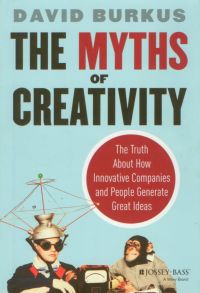
The Myths of Creativity

the-myths-of-creativity


The Myths of Creativity: The Truth About How Innovative Companies and People Generate Great Ideas
by David Burkus

“Creativity is the starting point for all innovation, and most organizations rely on innovation to create a competitive advantage.” In this interesting book, management professor David Burkus debunks 10 myths of creativity, citing academic research and examples from business.

Continue reading “The Myths of Creativity”

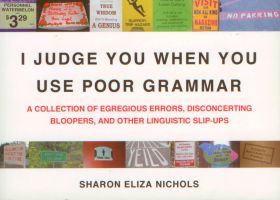
I Judge You When You Use Poor Grammar

i-judge-you-grammar-280-200


I Judge You When You Use Poor Grammar: A Collection of Egregious Errors, Disconcerting Bloopers, and Other Linguistic Slip-Ups
by Sharon Eliza Nichols

This  collection of linguistically impaired signs includes dangling modifiers, apostrophe errors, misspellings, and other amusing misadventures. As a coffee table book, it is sure to get a few laughs.

Here are some examples:

Continue reading “I Judge You When You Use Poor Grammar”

Drawing From Observation

drawing-from-observation


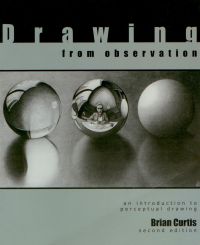
Drawing From Observation
by Brian Curtis

This is a highly informative book about observational drawing. One of the recurring themes is the distinction between what you see (percepts) and what you know (concepts). “There is meaningful conflict between what is perceived (convergence of parallel tracks) and our traditional rational understanding (Euclid’s theorem that parallel lines never meet)… To prevent your concepts from distorting your perceptions you must record the proportion you see, not the proportion you know.”

Continue reading “Drawing From Observation”

Life’s a Pitch

lifes-a-pitch


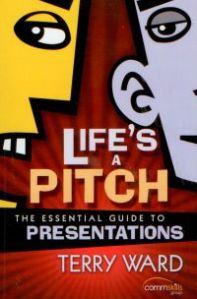
Life’s a Pitch: The Essential Guide to Presentations
by Terry Ward

Terry Ward uses a broad definition of the word presentation. “Every time you want to persuade, motivate, or inspire, you are making a presentation… The spoken word is a persuasive media… If you want to move people to action, speak to them.”

“The most important aspect of being an effective presenter is your state of mind… We are talking about adopting a state of mind that is listener focused…The more you disappear into your message, the more your audience will trust and respect you… The speakers we remember most are the ones who talked to us in plain English and with sincerity and simplicity. They were authentic in their intentions to bring value to the listeners.”

A recurring theme in this book is to keep things simple and concise. “Present only information that is CORE—concise, organized, relevant, and essential—to your listener… Make it simple and easy to understand… In fact all four essential elements of communication—behavior, content, interaction, and state of mind—benefit from a focus on keeping it simple.”

Continue reading “Life’s a Pitch”

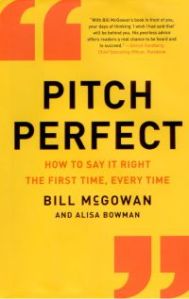
Pitch Perfect

pitch-perfect


Pitch Perfect: How to Say It Right the First Time, Every Time
by Bill McGowan

Bill McGowan was a broadcast journalist before becoming a media coach and trainer to executives, athletes, and celebrities. This book provides guidance on preparing for media interviews, speeches, conference panels, wedding toasts, eulogies, and other situations.

The Seven Principles of Persuasion are the foundation.

Continue reading “Pitch Perfect”

What You’re Really Meant to Do

what-youre-really-meant-to-do


What You’re Really Meant to Do: A Roadmap for Reaching Your Unique Potential
by Robert Steven Kaplan

“The key to achieving your aspirations lies not in ‘being a success’ but rather in working to reach your unique potential… Remember, lots of people will tell you what you should do and what you should want, but they don’t have to live your life. Chances are, moreover, that they’re not very happy with their own lives.”

Continue reading “What You’re Really Meant to Do”

The Power of Small: Why Little Things Make All the Difference

the-power-of-small


The Power of Small: Why Little Things Make All the Difference
by Linda Kaplan Thaler and Robin Koval

You may not be familiar with their names, but you are probably familiar with the authors’ work. They are the founding partners of the Kaplan Thaler Group, the advertising agency responsible for the Aflac duck campaign. One of them wrote the “I want to be a Toys R Us Kid” jingle earlier in her career. Linda Kaplan Thaler and Robin Koval previously wrote The Power of Nice: How to Conquer the Business World With Kindness.

This book is about paying attention to little things which have a big impact.

Continue reading “The Power of Small: Why Little Things Make All the Difference”