Stragility: Excelling at Strategic Changes by Ellen R. Auster and Lisa Hillenbrand
“Tragically, more than 70 percent of change efforts fail and in most cases the organization emerges weaker—exhausted, demoralized, and confused.” To combat this, authors Auster and Hillenbrand have coined the portmanteau word “Stragility” to represent a skill set for “strategic, agile, people-powered change… Without ongoing agility, even good strategies will fail.”
Team of Teams: New Rules of Engagement for a Complex World by General Stanley McChrystal with Tantum Collins, David Silverman, and Chris Fussell
When General Stanley McChrystal took command of the Joint Special Operations Task Force in 2003, he was fighting a 21st-century war with a 20th-century military. This engaging book is about the reconfiguration which led to faster decisions and greater results. McChrystal’s mission was to defeat Al Quaeda in Iraq (AQI), but his leadership insights are applicable to business as well.
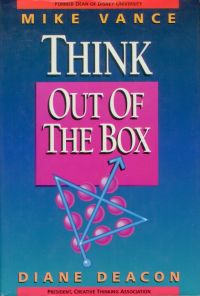
Think Out of the Box by Mike Vance and Diane Deacon
People use the term “think out of the box” in reference to creativity, innovation, or unconventional approaches to solving a problem. I suspect many people who use this cliché have no idea where it came from.
The term was popularized in 1995 by the book Think Out of the Box. The box is a puzzle.
Managing the Unexpected: Assuring High Performance in an Age of Complexity by Karl E. Weick and Kathleen M. Sutcliffe
University of Michigan business school professors Weick and Sutcliffe studied common management attributes of “high reliability organizations” (HROs) such as aircraft carriers and nuclear power plants, where glitches can have deadly consequences. “The key difference between HROs and other organizations in managing the unexpected often occurs in the earliest stages, when the unexpected may give off only weak signals of trouble… Managing the unexpected is about alertness, sensemaking, updating, and staying in motion.”
People Tools For Business: 50 Strategies for Building Success, Creating Wealth, and Finding Happiness by Alan C. Fox
Alan C. Fox writes with the tone of a grandfather sharing lessons learned “in business and in life,” drawing from more than forty-five years of experience as a lawyer and commercial real estate investor. There are 50 brief chapters.
Fox shares a great metaphor explaining the difference between a short-term transactional attitude and a long-term relationship building approach. “Not every sales call, or every contact, results in a sale. And each sale does not always produce a profit. I read an article in the Wall Street Journal that compared the American style of business to the Asian model. Americans were described as hunters, with the goal of making as much profit as possible from a single kill. The Asian model was more like farming—cultivating the fields of their business relationships.”
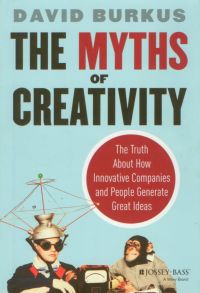
The Myths of Creativity: The Truth About How Innovative Companies and People Generate Great Ideas by David Burkus
“Creativity is the starting point for all innovation, and most organizations rely on innovation to create a competitive advantage.” In this interesting book, management professor David Burkus debunks 10 myths of creativity, citing academic research and examples from business.
What You’re Really Meant to Do: A Roadmap for Reaching Your Unique Potential by Robert Steven Kaplan
“The key to achieving your aspirations lies not in ‘being a success’ but rather in working to reach your unique potential… Remember, lots of people will tell you what you should do and what you should want, but they don’t have to live your life. Chances are, moreover, that they’re not very happy with their own lives.”
The Power of Small: Why Little Things Make All the Difference by Linda Kaplan Thaler and Robin Koval
You may not be familiar with their names, but you are probably familiar with the authors’ work. They are the founding partners of the Kaplan Thaler Group, the advertising agency responsible for the Aflac duck campaign. One of them wrote the “I want to be a Toys R Us Kid” jingle earlier in her career. Linda Kaplan Thaler and Robin Koval previously wrote The Power of Nice: How to Conquer the Business World With Kindness.
This book is about paying attention to little things which have a big impact.
Flow is “a deep sense of enjoyment.” To be fully engaged in a state of flow, one must be skilled and challenged. “Basically, the more a person feels skilled, the more her moods will improve; while the more challenges that are present, the more her attention will become focused and concentrated.”
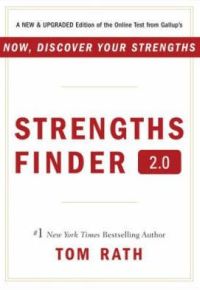
The premise of this book is that people are happiest and most productive when their work is well suited to their strengths. Conversely, many people pursue the “path of most resistance.” The book includes a code to access an online assessment which will identify your top five strengths.
“Gallup has surveyed more than 10 million people worldwide on the topic of employee engagement… People who do have the opportunity to focus on their strengths every day are six times as likely to be engaged in their jobs and more than three times as likely to report having an excellent quality of life in general.”